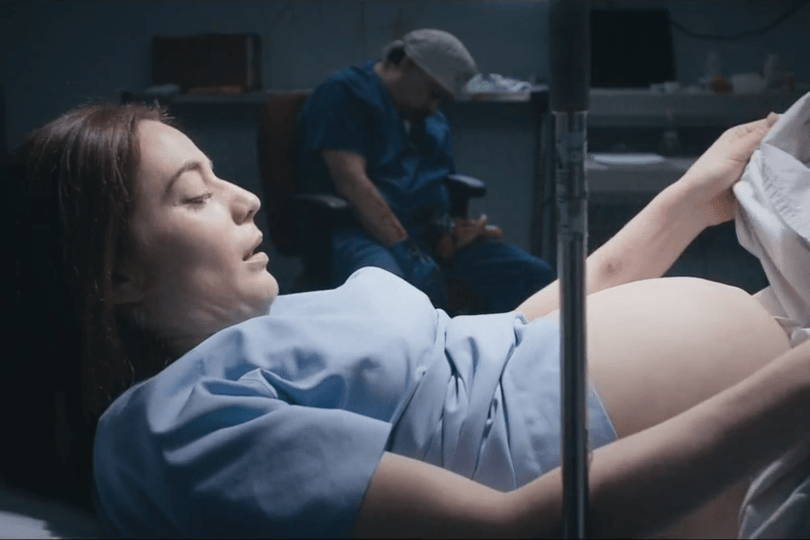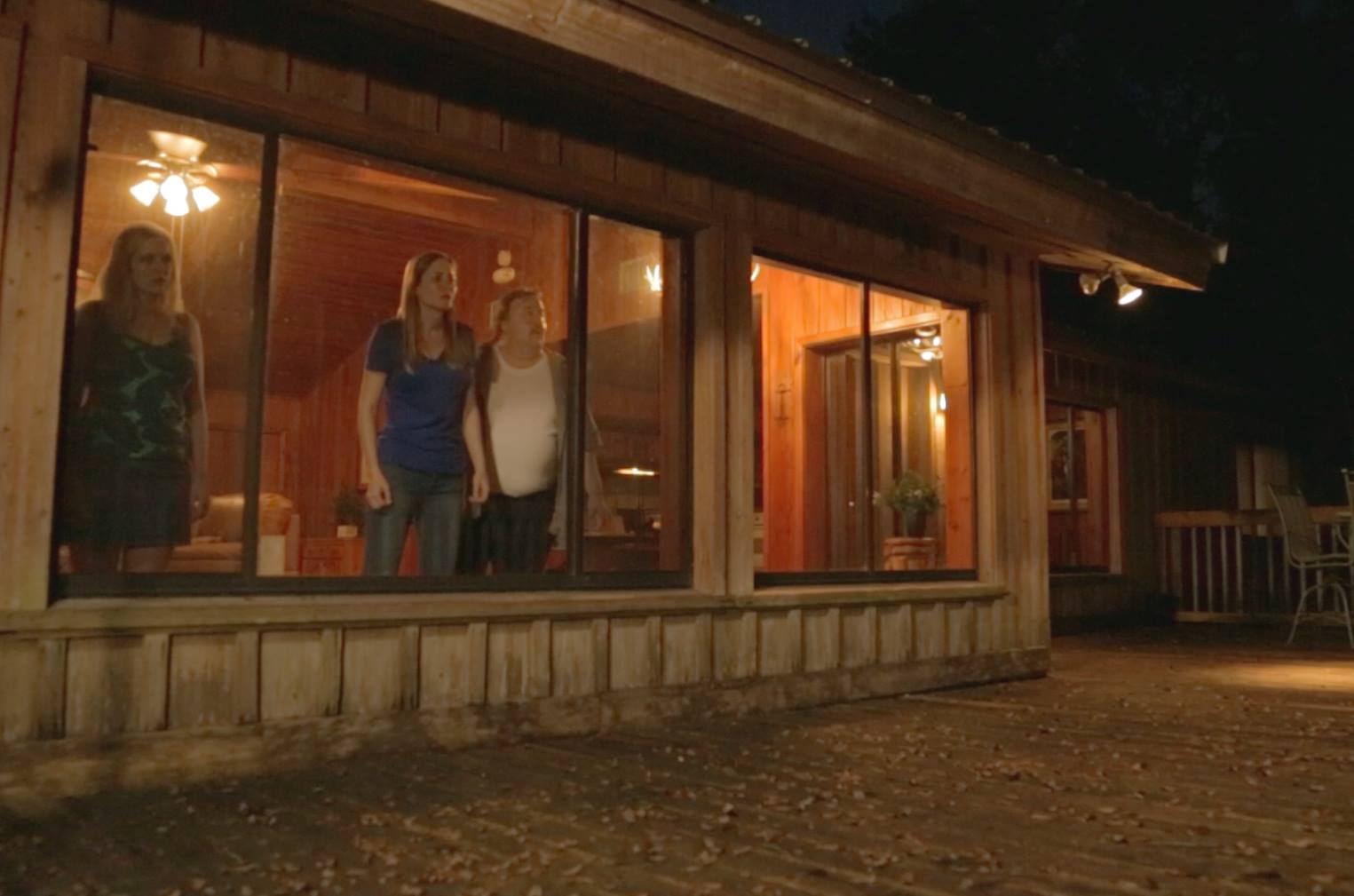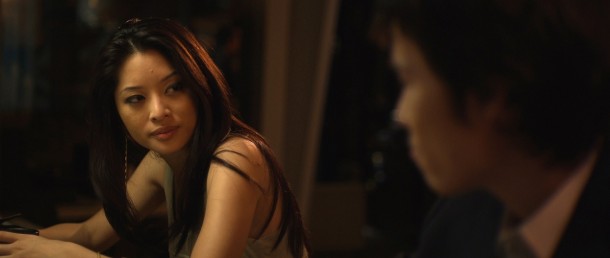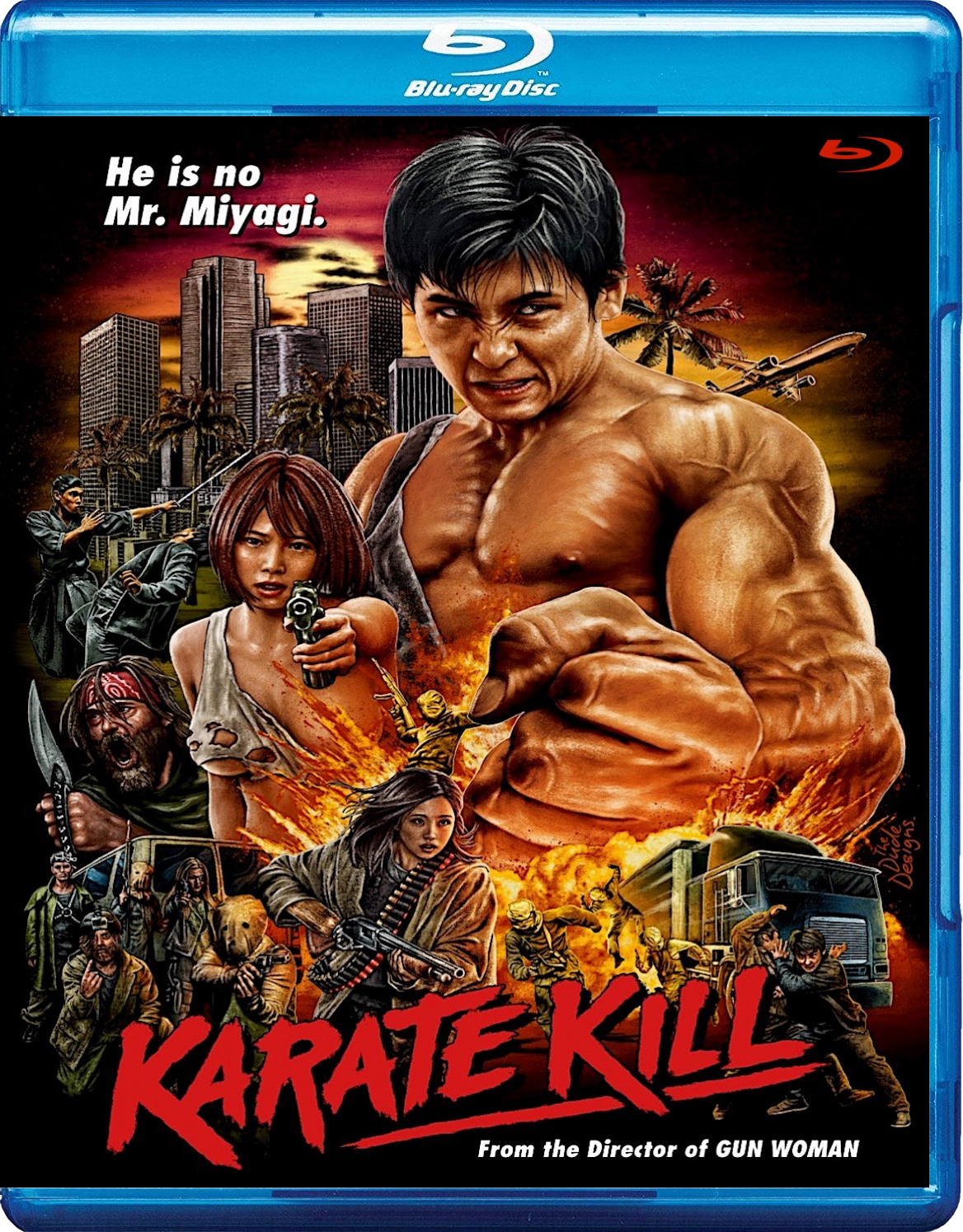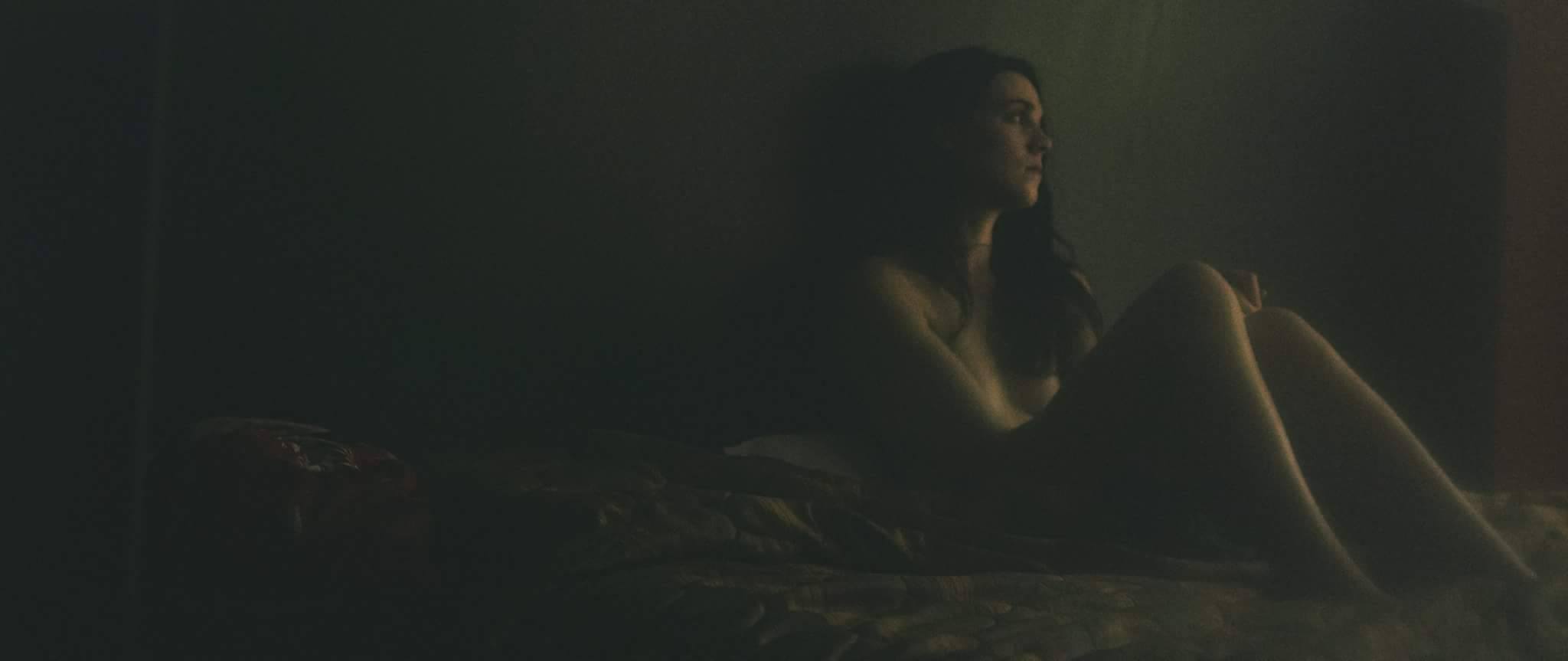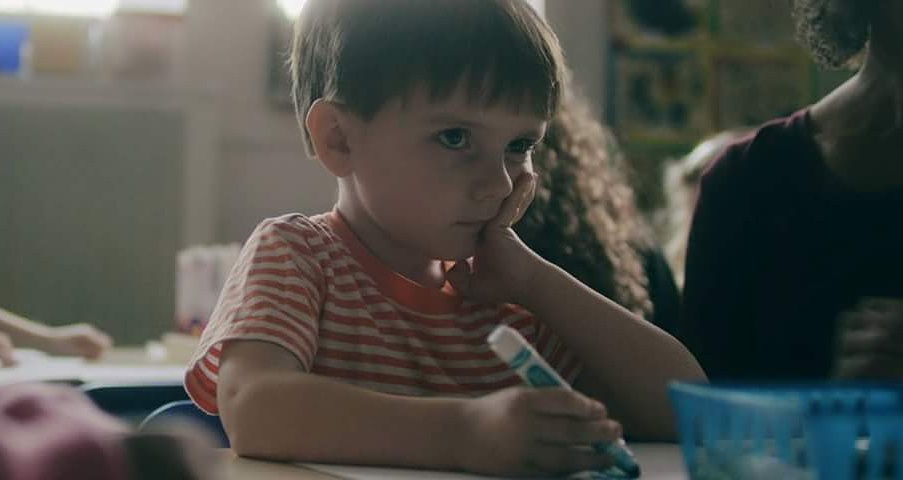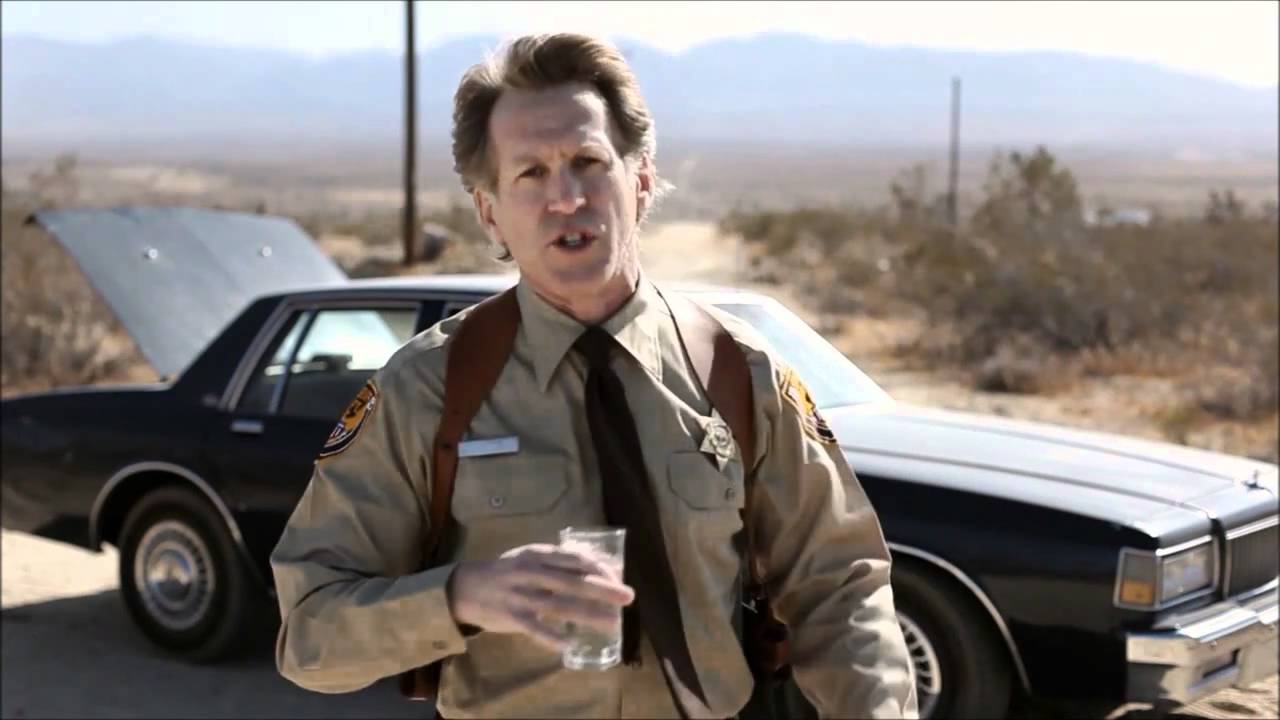
Condado Macabro aka Massacre County (Review)

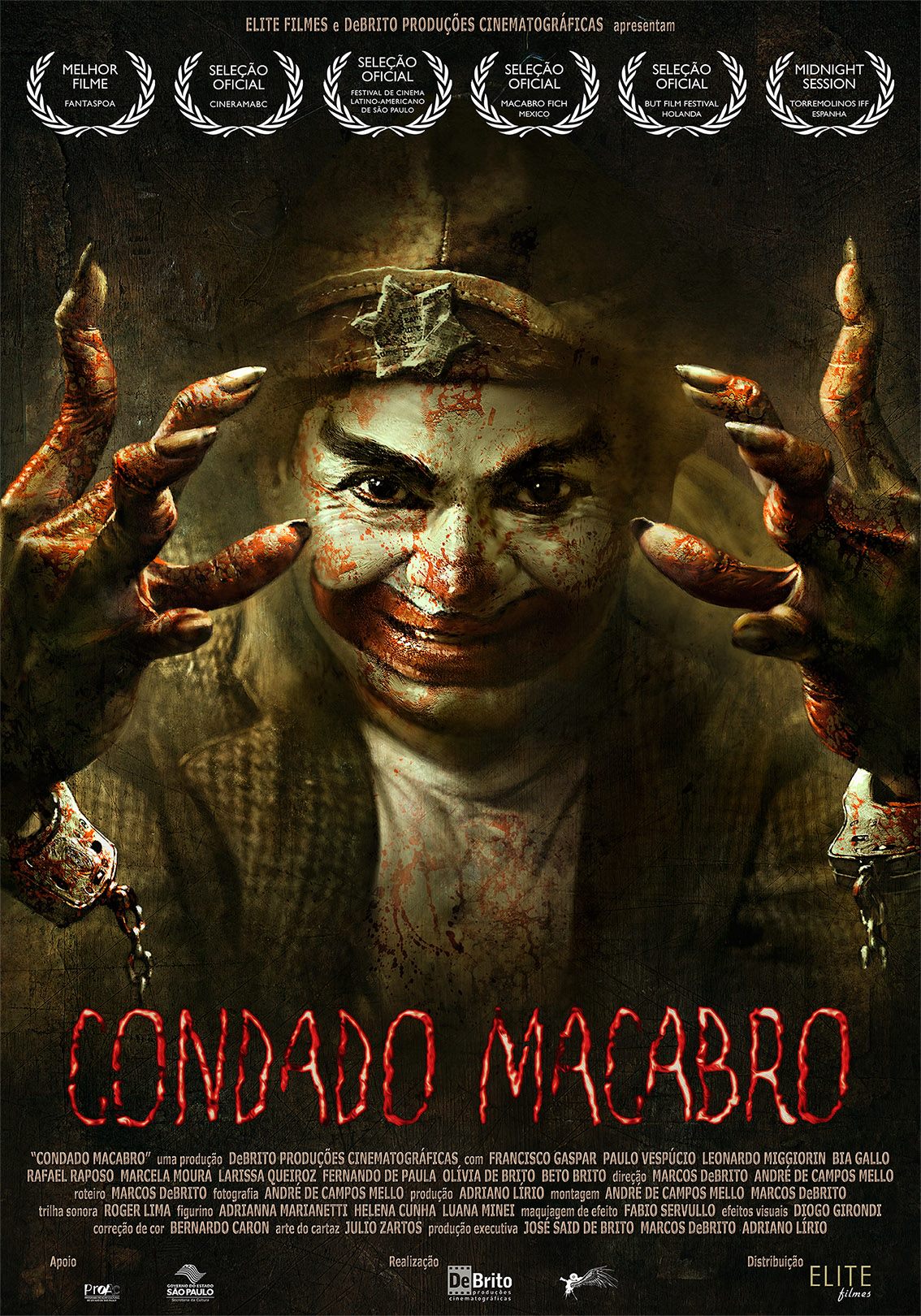
CONDADO MACABRO


THE SETUP

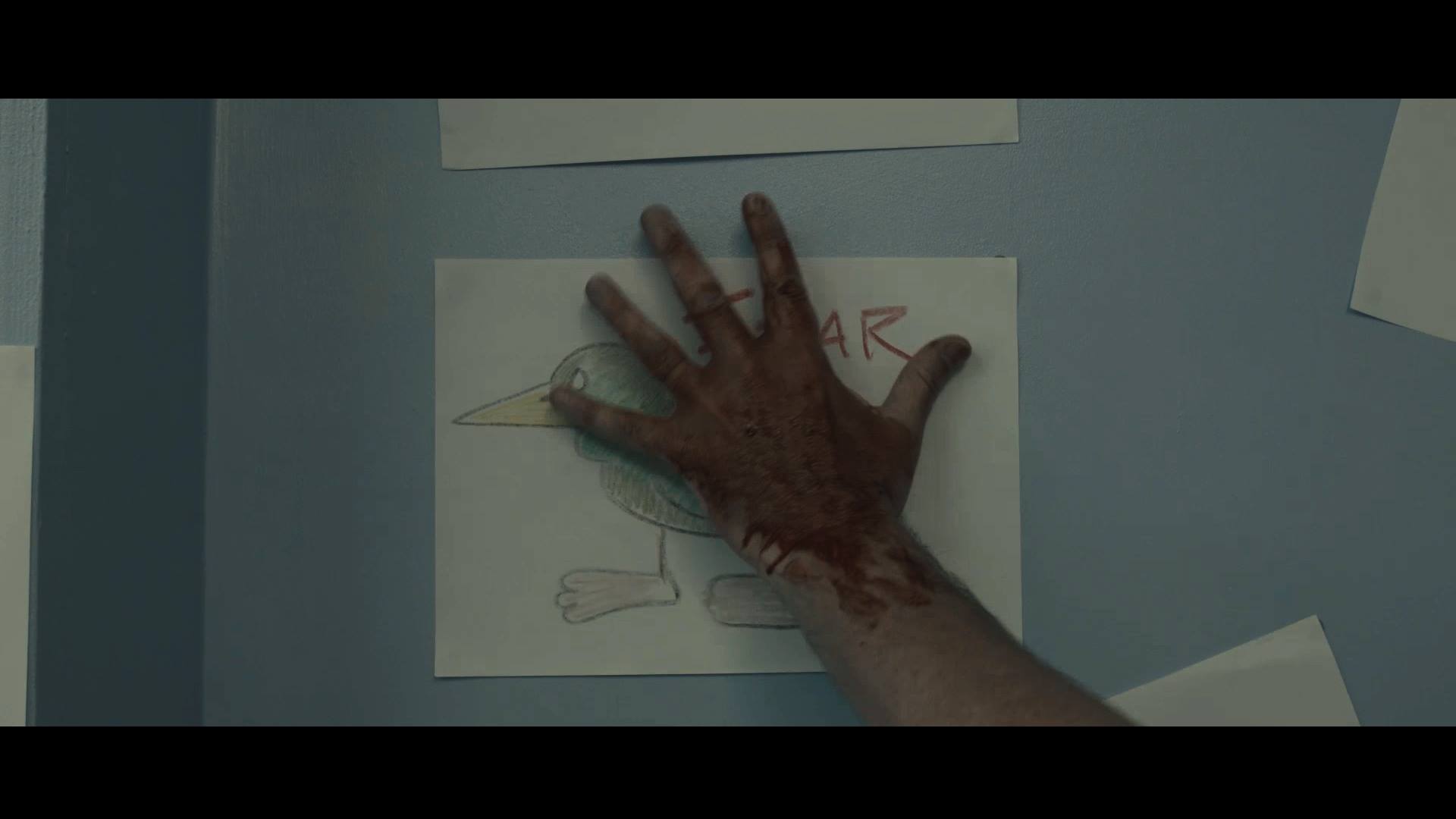
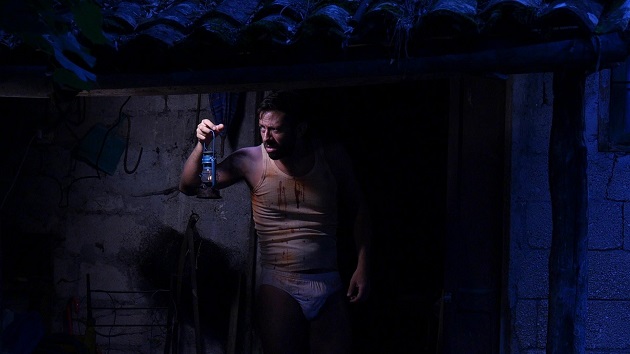
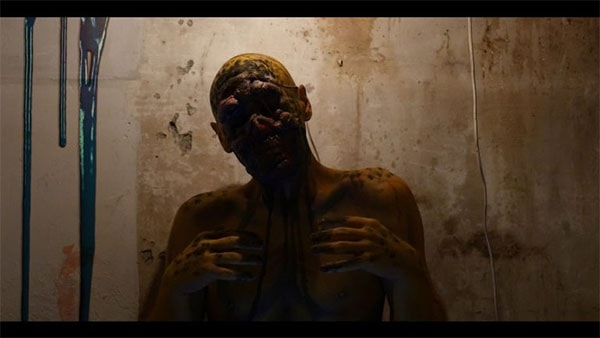
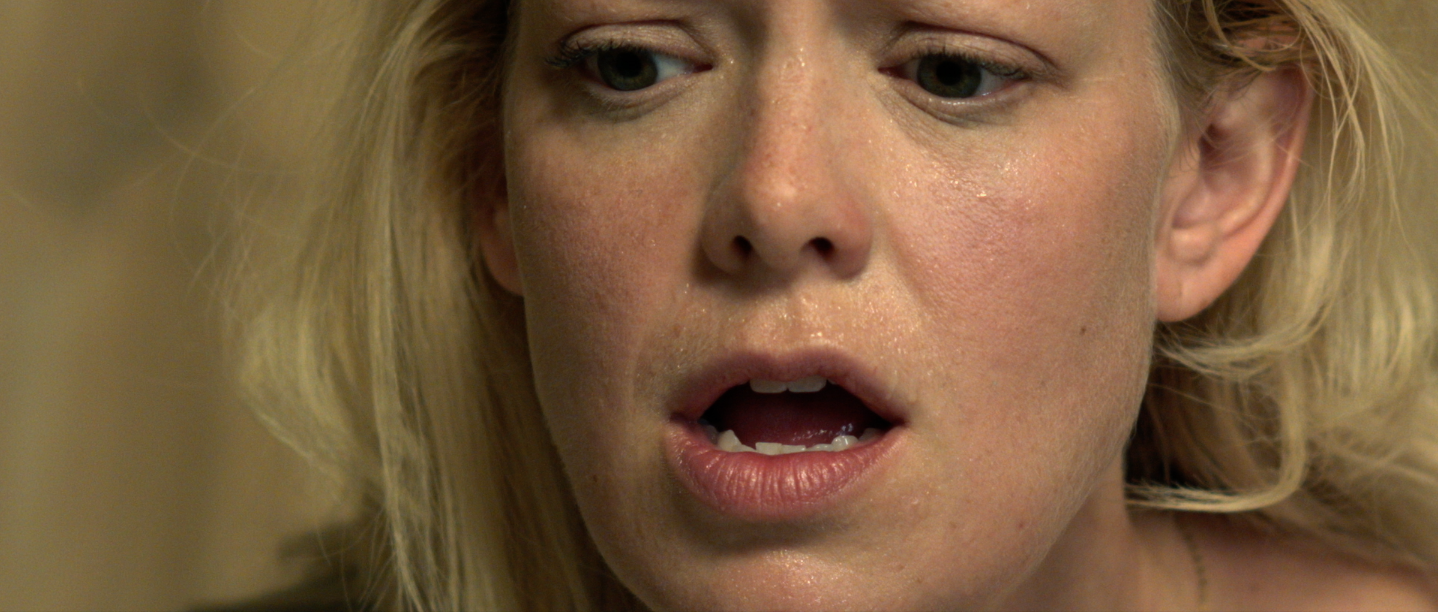
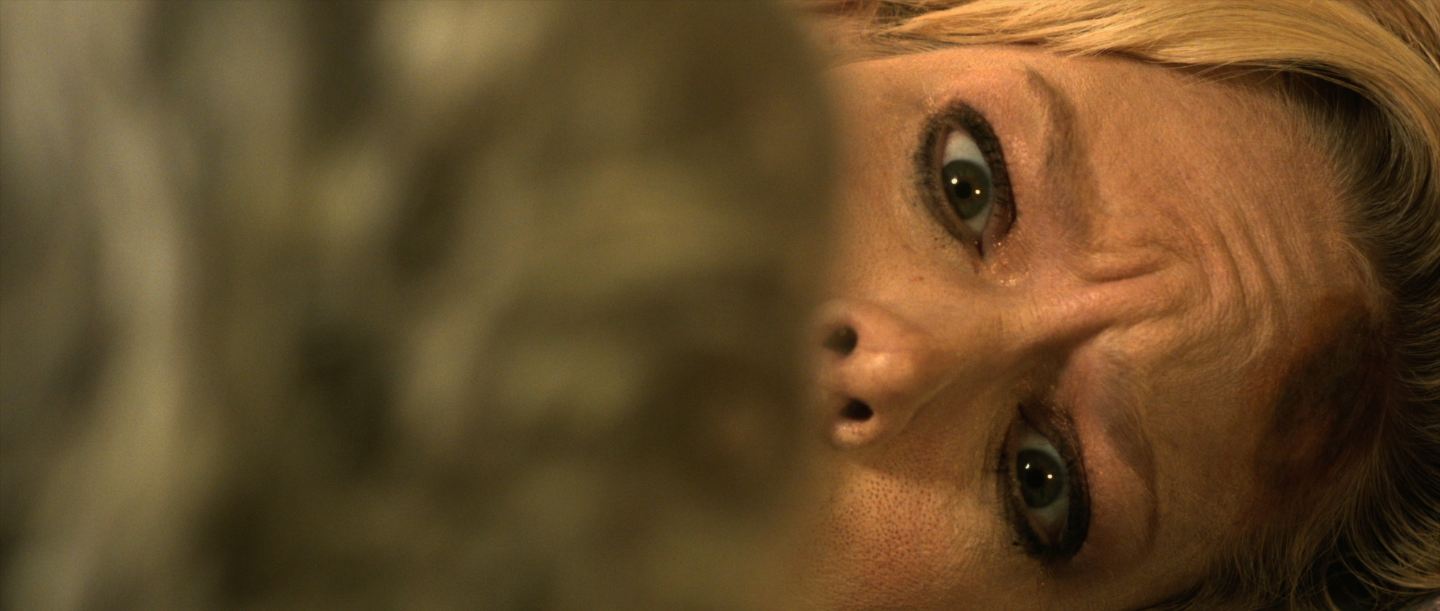
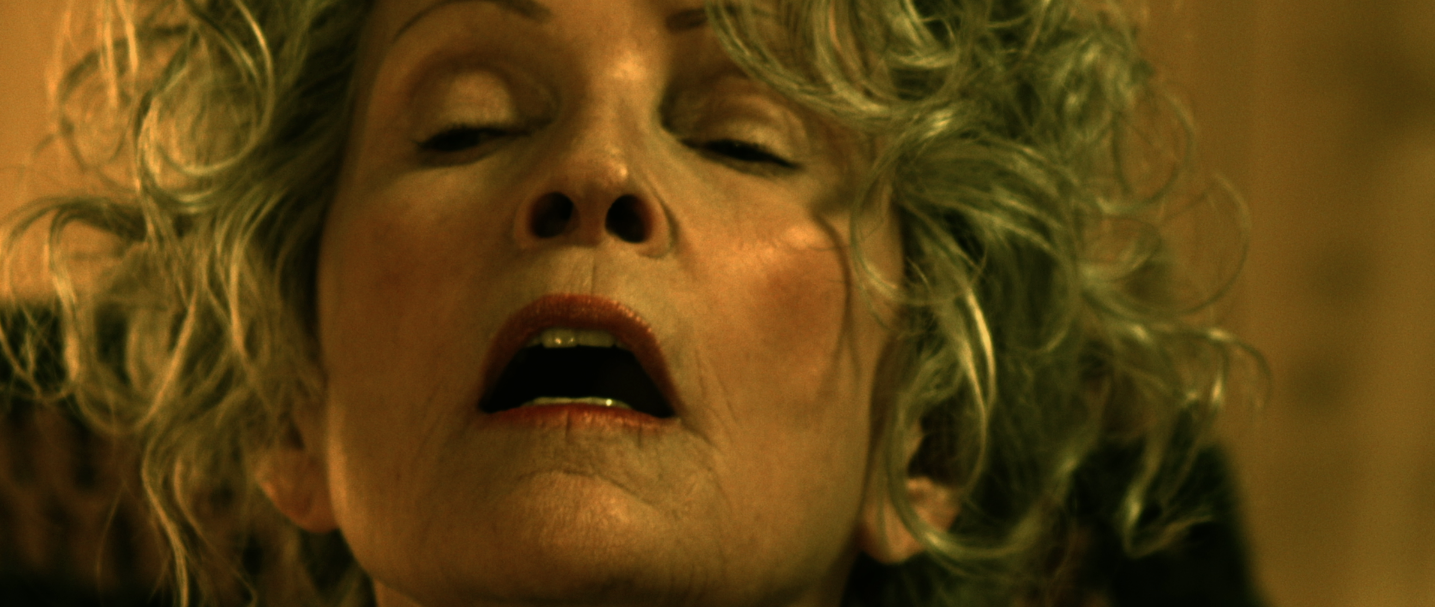
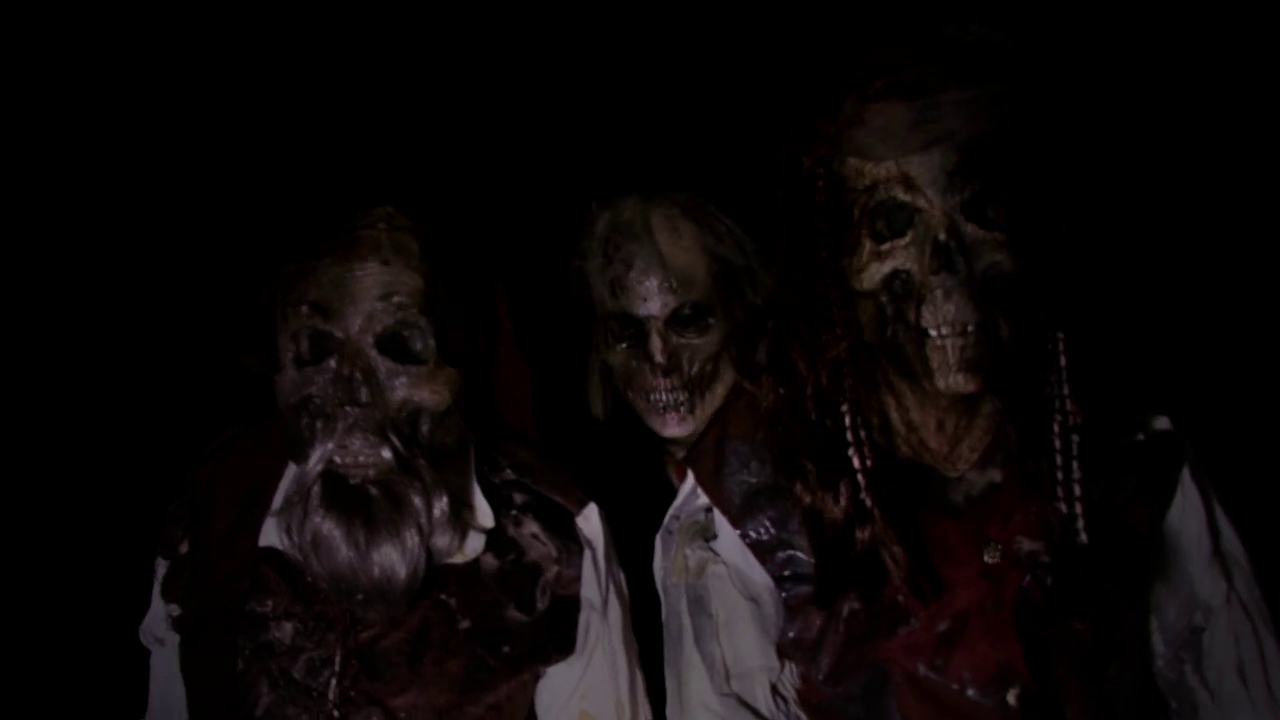
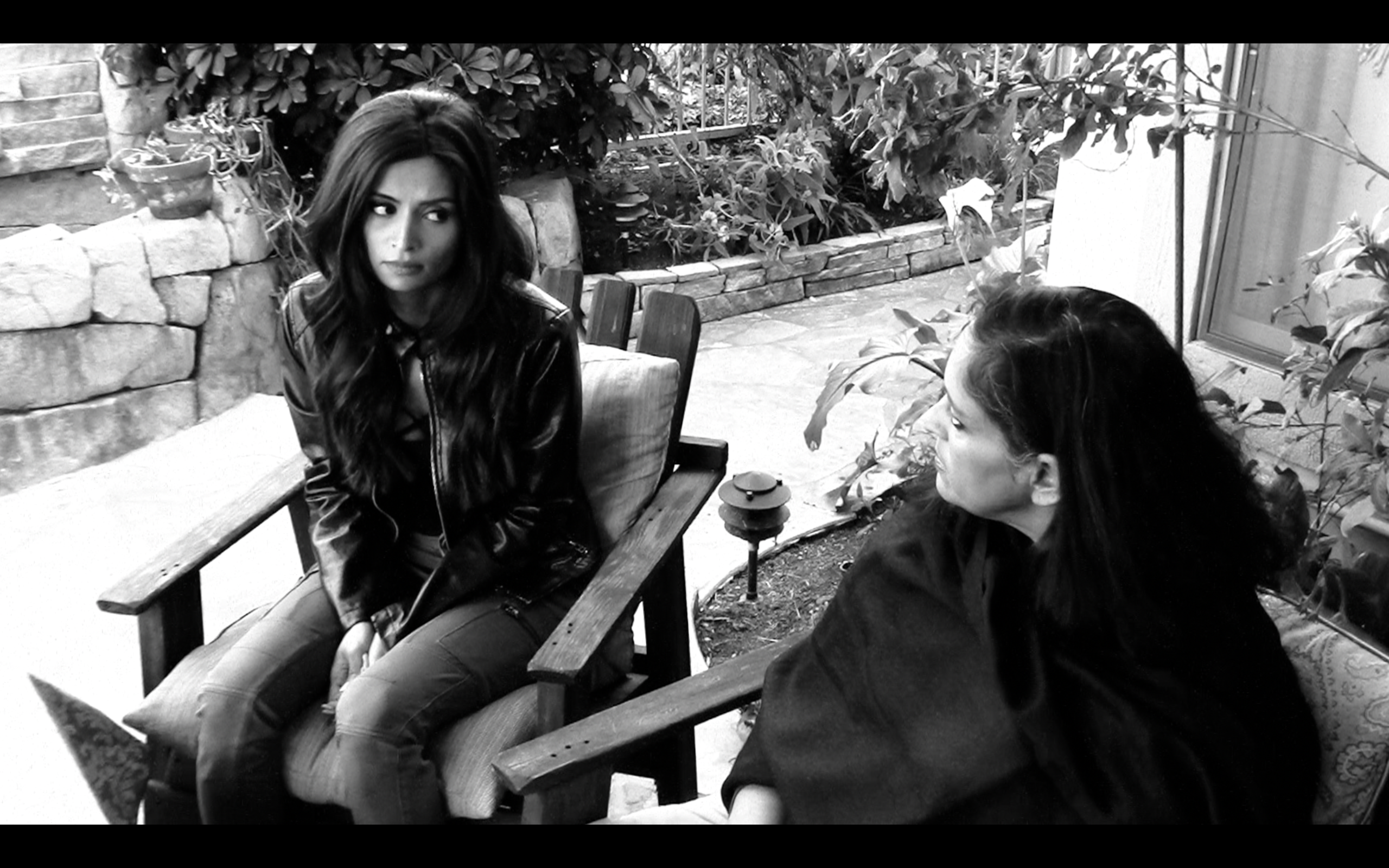
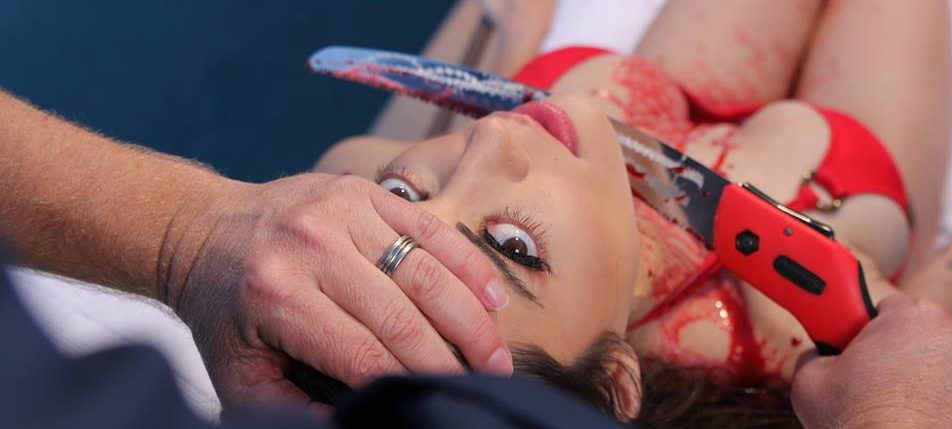
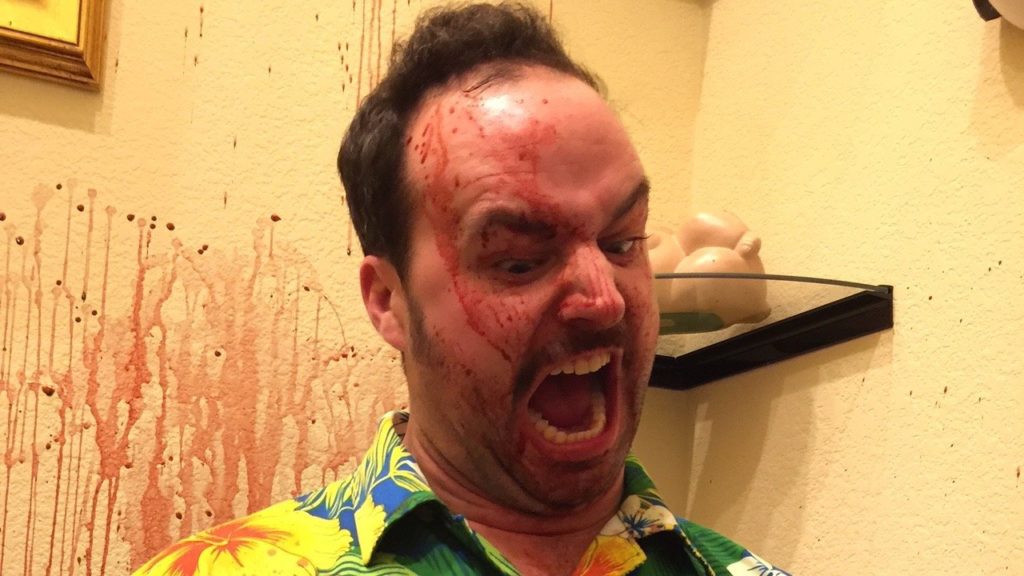
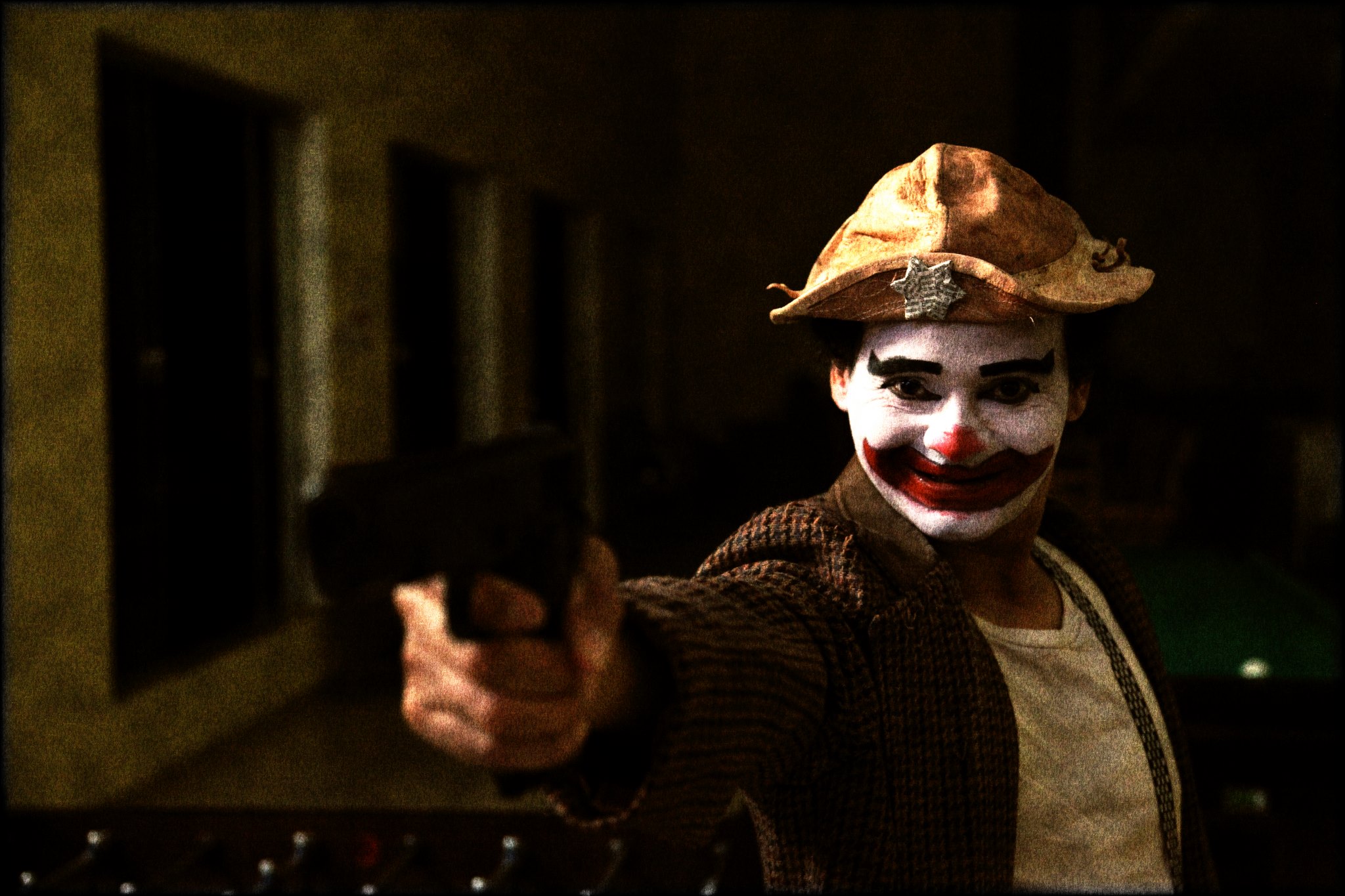
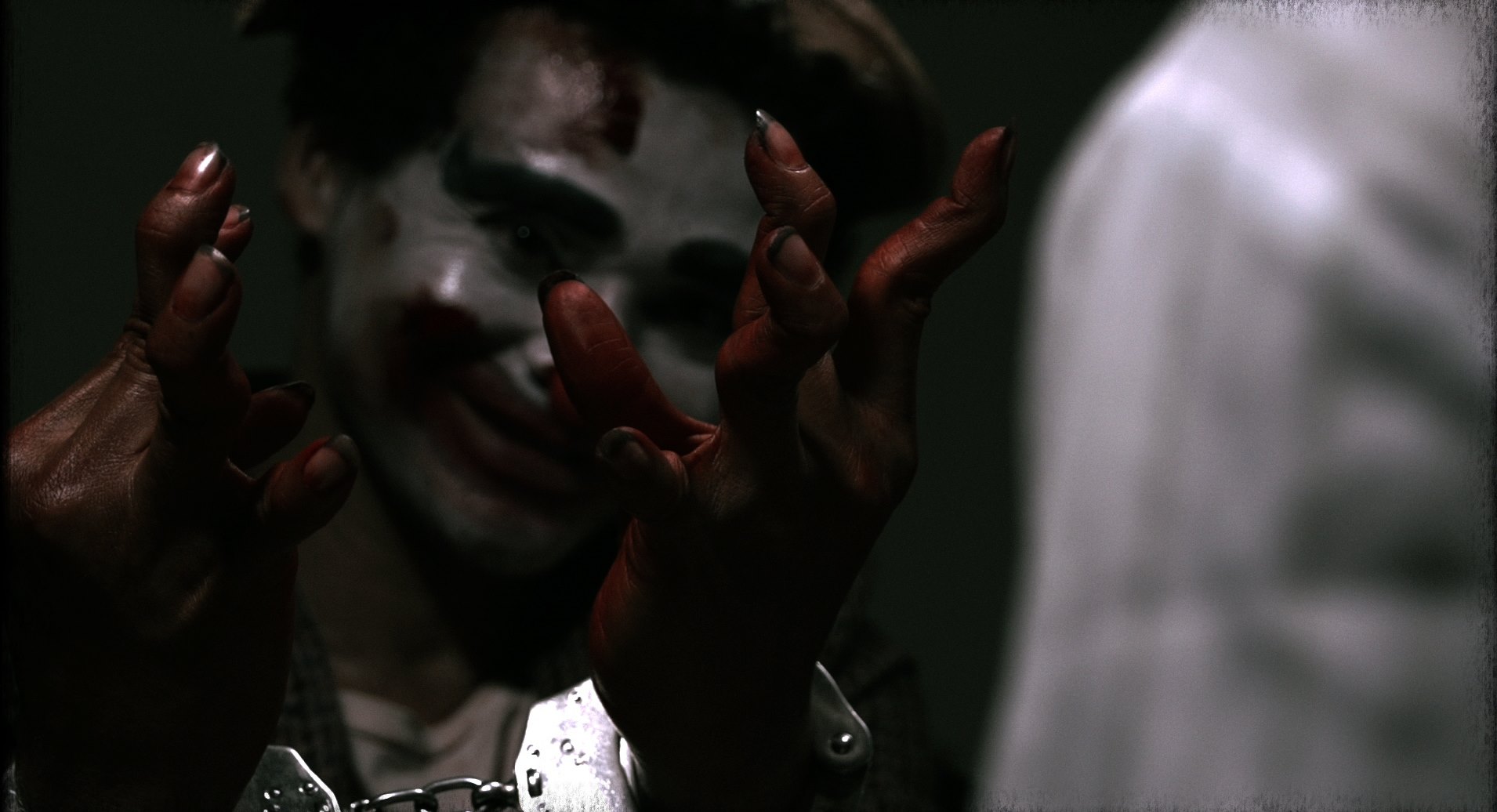
Firstly, I’d just like to say thank you to Co-Directors, Andre de Campos Mello and Marcos DeBrito (who also wrote the screenplay) for giving me access to an online screener of their 2015 Horror/Mystery film, “Condado Macabro” aka “Massacre County”. Massacre County is a Brazilian made horror film that follows the aftermath of a series of murders that recently occurred in a mansion by the forest. Inside an interrogation room, traveling street clown, Cangco (played by Francisco Gaspar) attempts to plead his innocence to key investigator, Moreira (Paulo Vespucio). With blood stained hands and a hazy memory, Cangco must convince the authorities that someone or something else was in the house that night. The film also stars Bia Gallo, Leonardo Miggiorin, Rafael Raposo, Larissa Queiroz, Fernando de Paula, Marcela Moura and Olivia de Brito. The language spoken in   the film is Portuguese but the screener contains hard-coded English subtitles.
THE GOOD

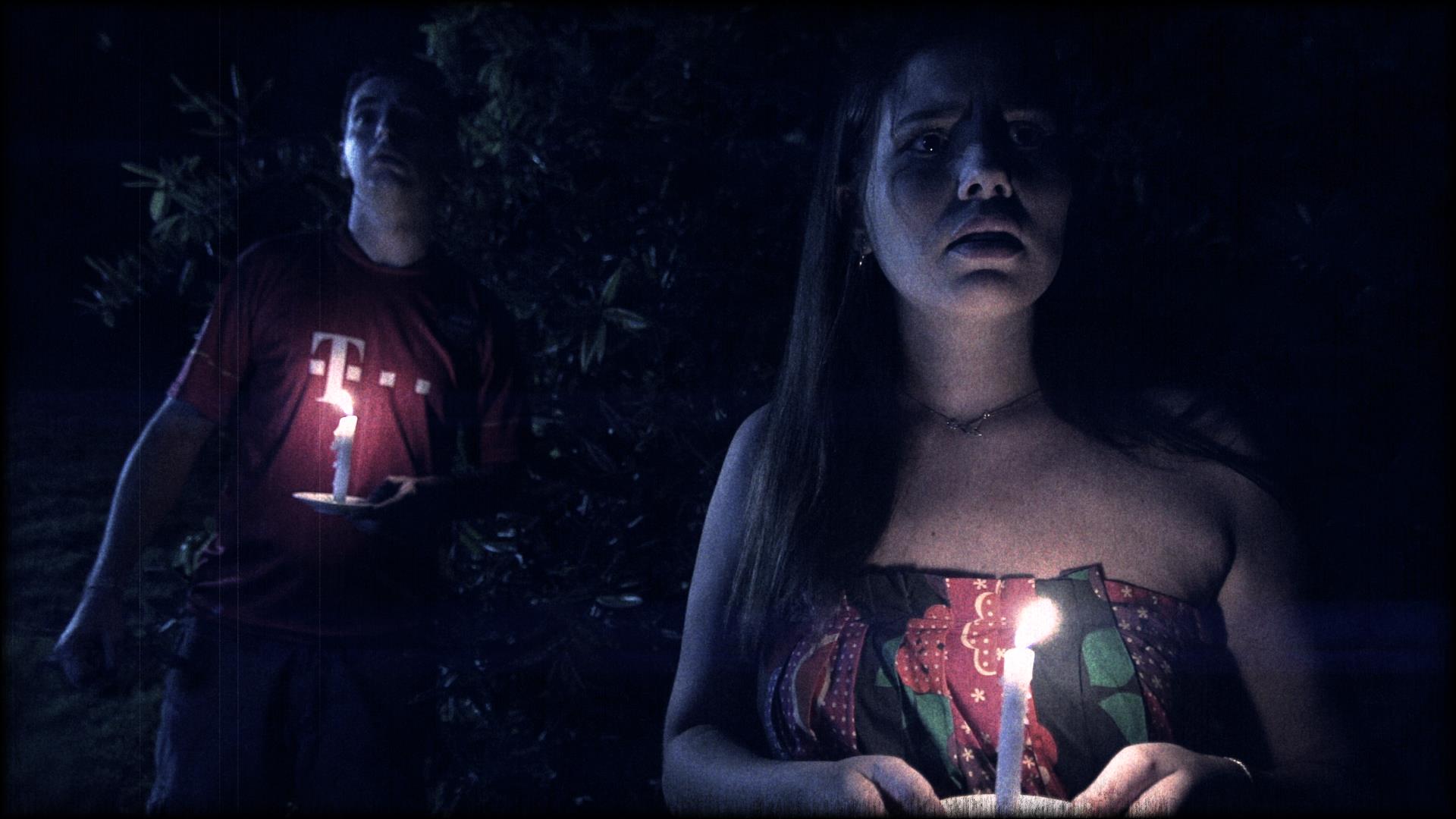
Right off the bat, Mello and DeBrito informed me that Condado Macabro was somewhat of a homegrown love letter to American horror films, that and they were attempting to fuse it with their own sense of humor. The film primarily centers on five young adults. Siblings, Theo and Mari (played by Miggiorin and Queiroz), their friends, Lena and Beto (Gallo and Raposo) and last but not least, fifth wheel, Vanessa (Brito). Naturally, being a horror film, these individuals make up the genre of stereotypes required for a weekend getaway to a private mansion. Theo is your shy, oblivious and less than protective brother. Mari is the level-headed, beautiful and confident one that keeps the group uniform. Lena, the promiscuous popular girl, and Beto, the not so smooth, douche bag jock. I suppose I shouldn’t forget Vanessa (even though the group always does). She’s a heavier girl with a questionable taste in music, and unfortunately precariously positioned in the middle of two potential pairings for most of the film. I know a lot of people are sick of seeing the same elements and sets of rules applied to the slasher genre, but there’s a reason they’re there. It’s a formula that’s worked for so long and it gives its hardcore fan base what they expect.
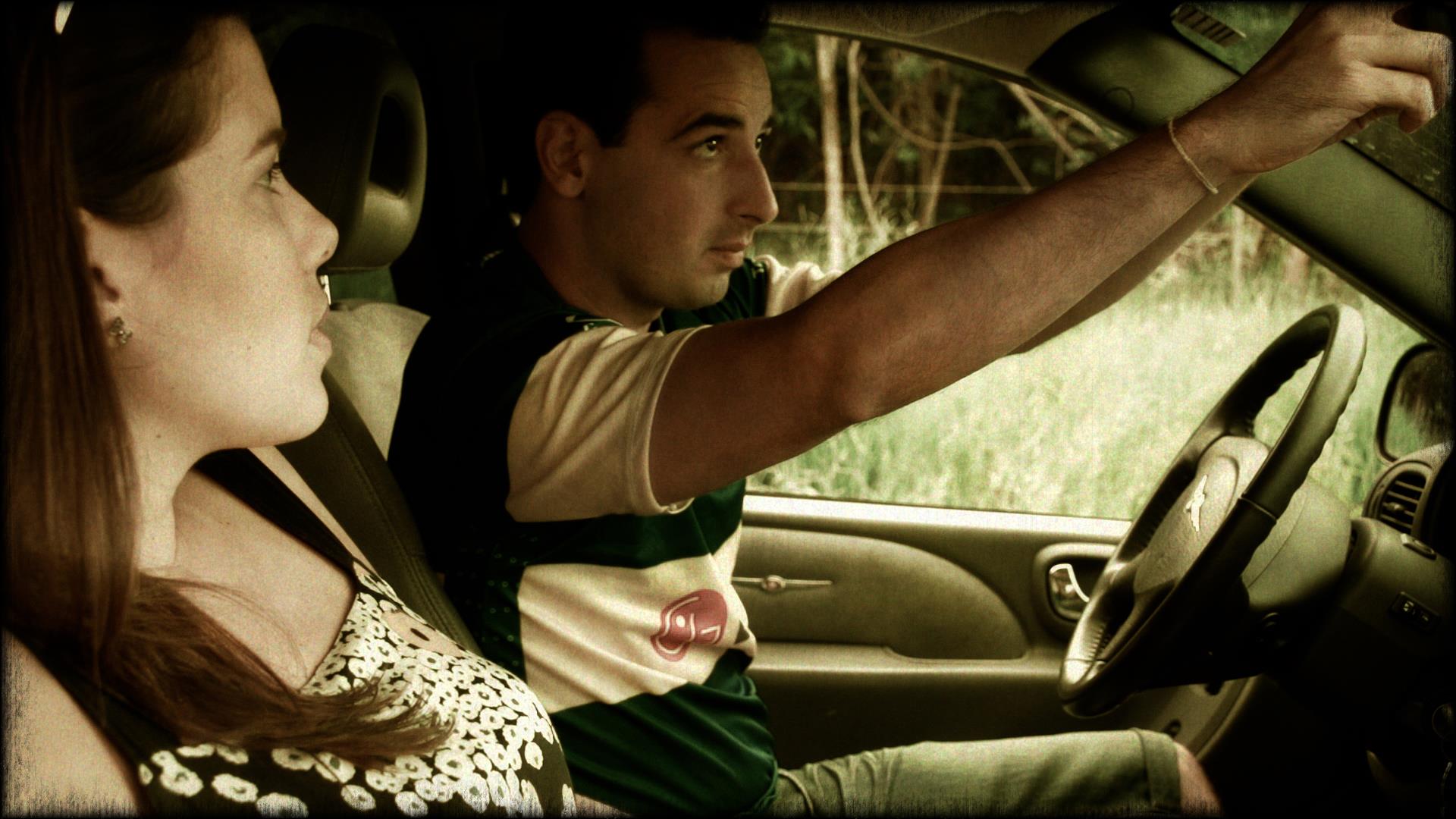
Mello’s camera work is fairly solid considering the films small budget. Most of the framing looks nice and there’s a couple of effective tracking shots throughout. My favourite sequence of shots are at the beginning of the film. There’s a great one of Lena in her underwear lying on the bed, followed by a series of sharp quick cuts as she grabs her belongings and leaves the house. The in-car shots were done quite well too. Roger Lima’s music structure doesn’t always work but it’s at its best when the carnival style music cues during scenes between Cangaco and his sidekick, 8-Ball (played by Paula). Some of the pop rock music the group plays on their IPod sounds alright as well. Overall, the acting is okay. About what you’d expect from a low-budget slasher film with non-English actors. I thought Bia and Francisco delivered two of the better performances in the film, though it helps that Gallo is easy on the eyes (especially that booty of hers). Mello and DeBrito have obviously seen their fair share of horror content, namely Tobe Hooper’s “The Texas Chainsaw Massacre” and don’t shy away from eluding (often through dialogue) to what keeps fans of the genre entertained. Beto even mentions “The Devils Rejects” and “Nekromantik” in relation to how graphic things have to be in order for him to really enjoy it. The first bit of gore comes just 20 minutes into the film and it involves a pig. It looks quite graphic and bloody (so here’s hoping it wasn’t a real pig). There’s a sizeable amount of practical blood spray during the climax of the film and a commendable decapitation a bit earlier.
THE BAD

Massacre County has quite a long running time for a movie of this nature, too long. It clocks in at just over 110 minutes and could have quite easily had 20 minutes trimmed off of it and not lost anything. Big chunks of the subtitles don’t translate as well as they could, a lot of the phrasing is out of sequence (probably to be expected from a foreign film). The attempted humor didn’t appeal to me at all, it mostly consists of immature sexual innuendo and these “kids” are clearly too old to be acting the way they do. In fairness to Mello and DeBrito, they did say that the comedy might not translate as well to English audiences. The washed out color grading looks to have been molded on that of the aforementioned Texas Chainsaw Massacre, to boot. Specifics such as that, on such a small budget, usually only hinder the quality of the overall product. Most of the internal scenes, particularly at night, look better than anything shot during the day time. The broken film reel filter and static marks that they use to transition in the edit don’t really fit the design of the film and just loom as convenient. Even with the film boasting a heap of practical effects in the latter part, the CG manufactured blood when present, looks really patchy. Picking up a hitch hiker (albeit a street clown this time), the sowing of dead skin, wielding of a chainsaw and a bloody girl on the street are just a few examples of things on display in Massacre County that come straight out of either the original TCM or the 03′ remake. I don’t mind a nod here and there but it’s got to be done right and in this case I don’t think it warranted it.
Some of the finer points of the script and continuity in regard to characters actions could have used some editing. Theo and Beto present as best friends, but personality wise they’re about as different as you can get. Theo’s more reserved, quieter and far more mature (reminds me of myself) and Beto acts like a 15-year-old trapped in an adult’s body. He’s constantly talking about sex, hitting on two out of three girls at every chance and basically making a complete fool of himself. Theo doesn’t seem at all phased by Beto’s sleazy advances on his sister, Mari. I didn’t really believe that they could actually be friends because they’re so different. There’s a couple of continuity issues both of which involve Lena in action scenes. At one stage she thwarts an assault from Cangaco and kicks him numerous times, unfortunately there’s no force in her movement and it comes off looking visibly staged. Toward the end of the film, one of the property owners (without spoilers) is shown sneaking up on Lena, whose facing side on in a small dwelling with no other doors. We see the owner approach her front on, yet when Lena looks up the owner’s not there, and then suddenly lunges at her from the side, it doesn’t make any sense logistically. In the second half of the film, DeBrito chose to revisit a handful of previous sequences from in an around the house, only now showing them from different characters points of view that we didn’t know existed. On one hand, I give him credit for trying to introduce something new to the narrative, but in this case the entire pacing ends up suffering because of it. The most disappointing thing about Massacre County is that fans have to wait over an hour to see their first kill (and it’s off-screen), and another fifteen minutes on top of that to finally see one shown in detail.
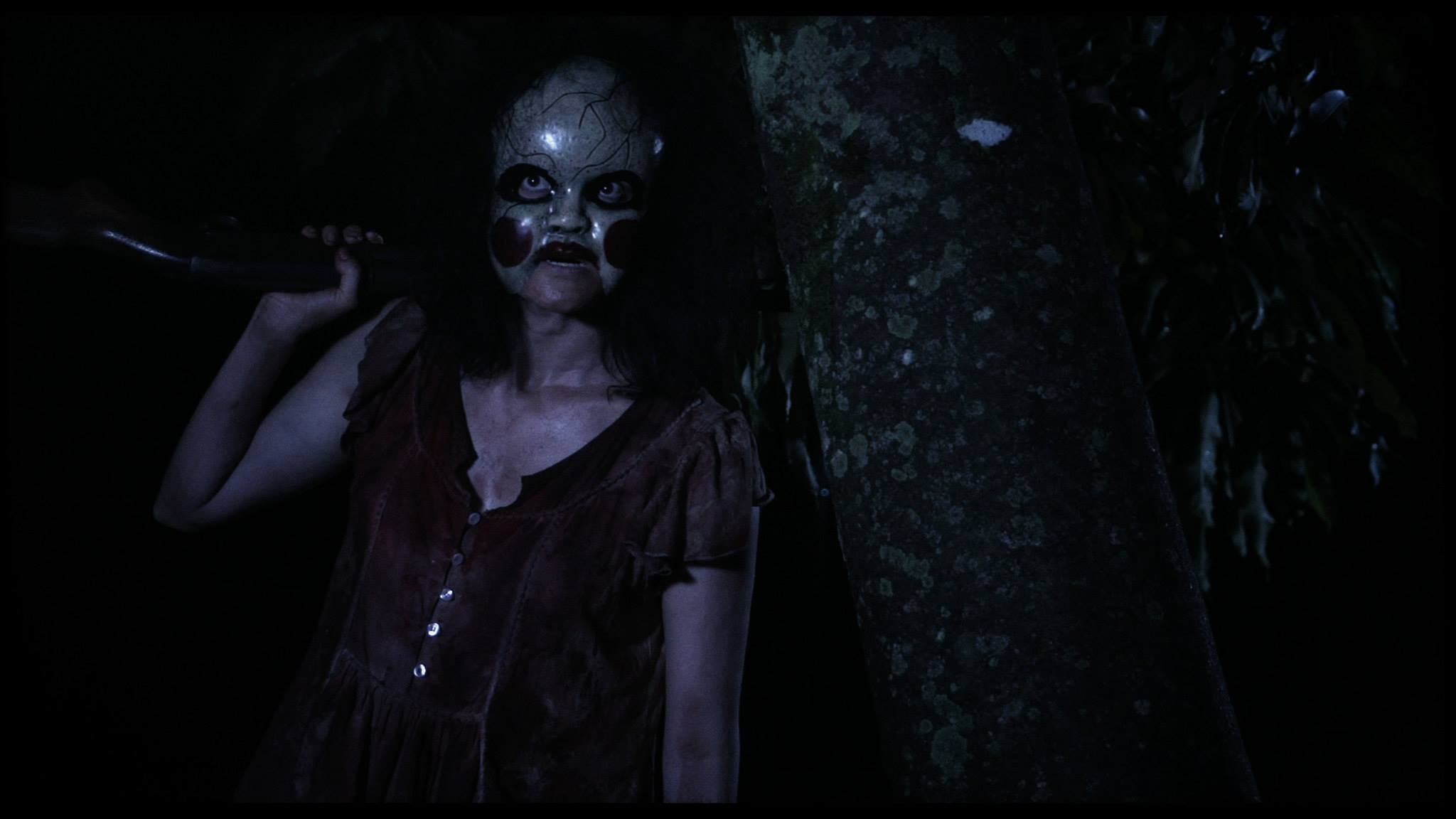
I believe that Condado Macabro, aka Massacre County is my first foray into South American horror. Andre and Marcos were upfront about their passion for the genre and the intent behind their film. The characters and location were intentionally established with the parameters of your conventional horror film in mind, and that’s bound to give viewers a clear picture of what they’re in for. The camera work, audio track and music were all serviceable given the crews limited amount of experience. The acting wasn’t bad, I certainly enjoyed watching Bia Gallo and Larissa Queiroz in all their glory, and the two sets of antagonists and different points of view were refreshing in a way, though they do drag the momentum down. There are a number of kills utilizing practical blood and gore but the drawback is that you’ve got to wade through a lot of fluff to get there. The subtitles are irregular, the comedy juvenile and the coloring and editing somewhat amateurish. There’s a handful of continuity issues, which isn’t uncommon, and the movie is a little too  influenced by The Texas Chainsaw Massacre. The overly long running time and stale progress of getting to the killing that most fans want from the outset, hurts the re-watch ability factor of Massacre County. I still think that hardcore fans of the genre might enjoy this one and let’s be honest, how often do you get to see a Brazilian horror film? Check out the trailer below!

My rating for “Condado Macabro” is 5/10
The Quacky Slasher (Review)

THE QUACKY SLASHER


THE SETUP

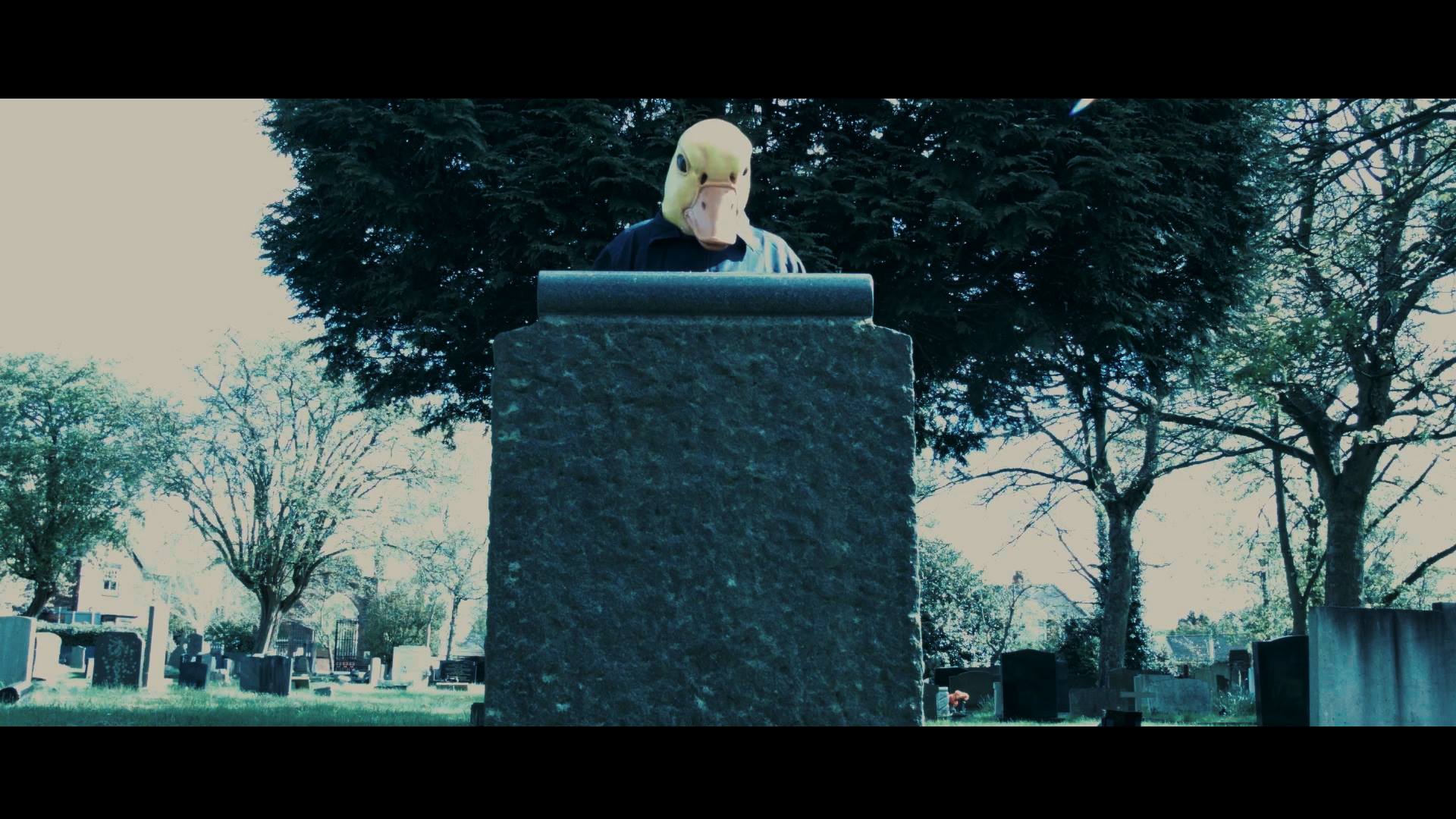
Firstly, I’d just like to say thank you to Writer/Director, Peter McKeirnon for allowing me access to an online screener of his 35 minute Horror/Comedy short, “The Quacky Slasher”. The Quacky Slasher tells the story of Michael Quackers (played by Andrew Butterworth), a patient whose spent the last 20 years in a psychiatric facility after having been traumatized as a child. He breaks out of the facility and decides that it’s time to rid the local town of its criminal underbelly, led by Mr Mozzarella (Neil Gallagher). Michael will have to deal with seedy store owners, a peculiar hitman and a pair of overly jovial detectives. The film also stars Michael Hagen, Jayne Kinsella, Jacqueline Mercer, Andy Coffey and Ian Finney.

THE GOOD

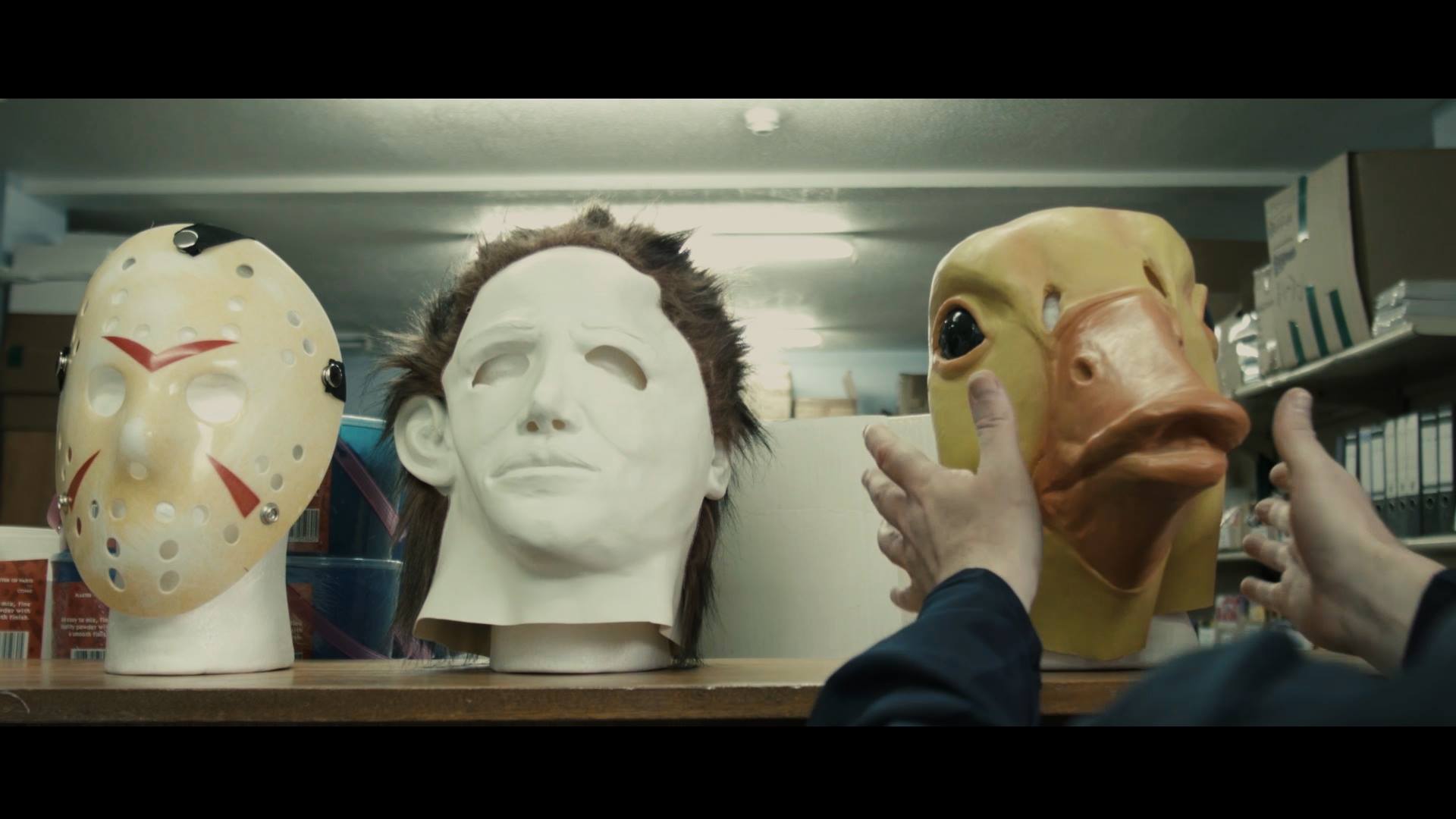
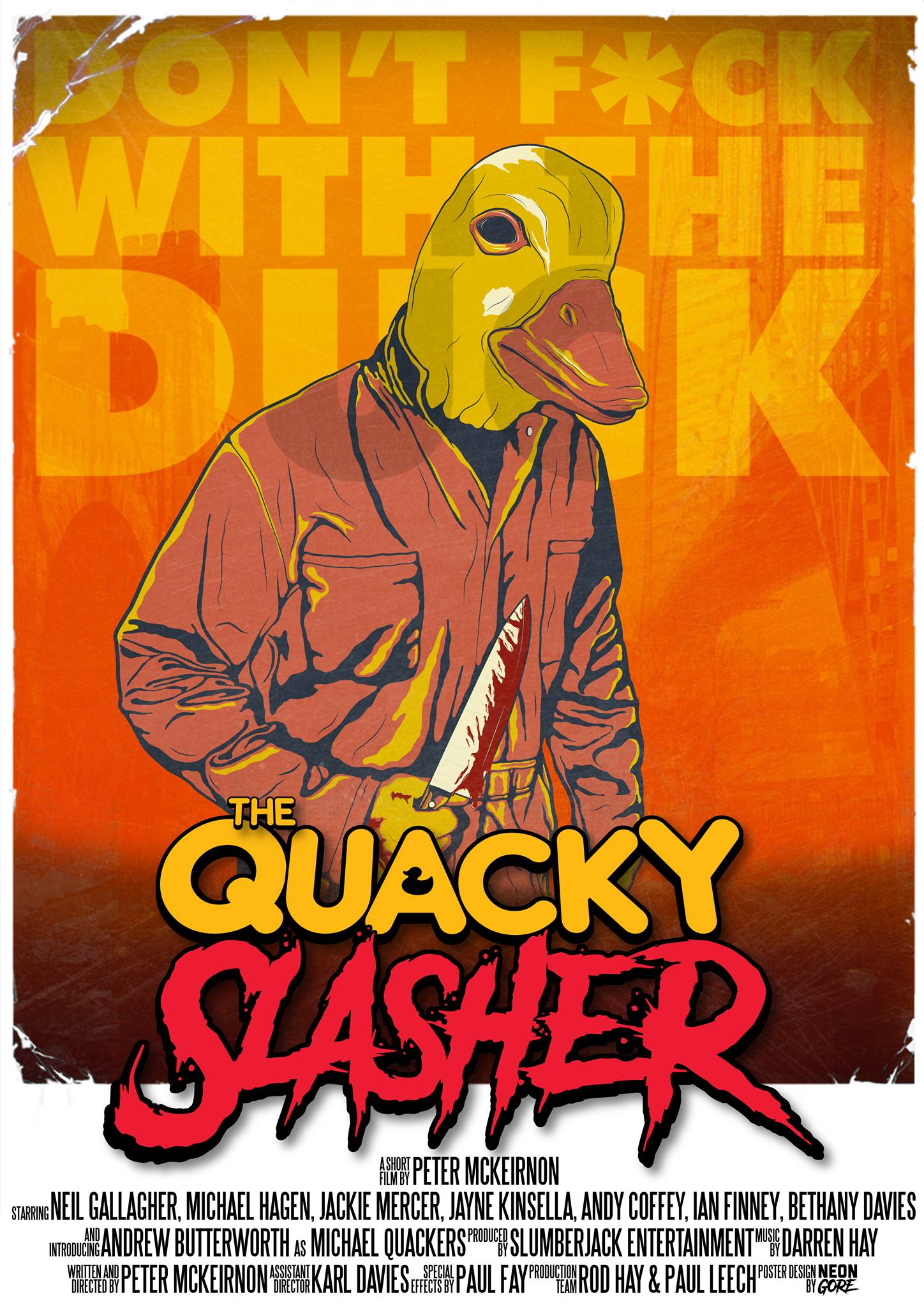
I only recently saw an article and trailer pop up on DreadCentral.com (my go to for most things horror related) for this zany Horror/Comedy coming to us from the UK. With its extremely eye-catching and colorful poster art, and the fun (albeit cliché) tagline, how could you not want to venture into this bizarre world of McKeirnon’s. The horror portion of the synopsis probably sounds familiar, and so it should. Everything from the name Michael, and the facility he inhabits, through to the jumpsuit and kitchen knife he wields, it’s all Carpenter’s iconic killer Michael Myers, only sporting a duck mask instead. Peter makes no apologies for paying homage to 1978’s “Halloween”, and he does so in such an obvious way (those details mentioned aside), e.g, the Myers mask on the shelf in the store. On a separate note, the comedic writing here relays a love of quintessential British comedy of years gone by. McKiernon’s cinematography is really clean and superbly framed, raising the production value of Quacky Slasher immensely. The film opens with a series of grand aerial shots, something unheard of in a film with a budget of under $1,500. Following those, there’s a nice tracking sequence as we see bodies strewn across the floors of a housing facility. The audio track is smooth and the 80’s inspired, synth and bass pumping score really gives the film extra life.

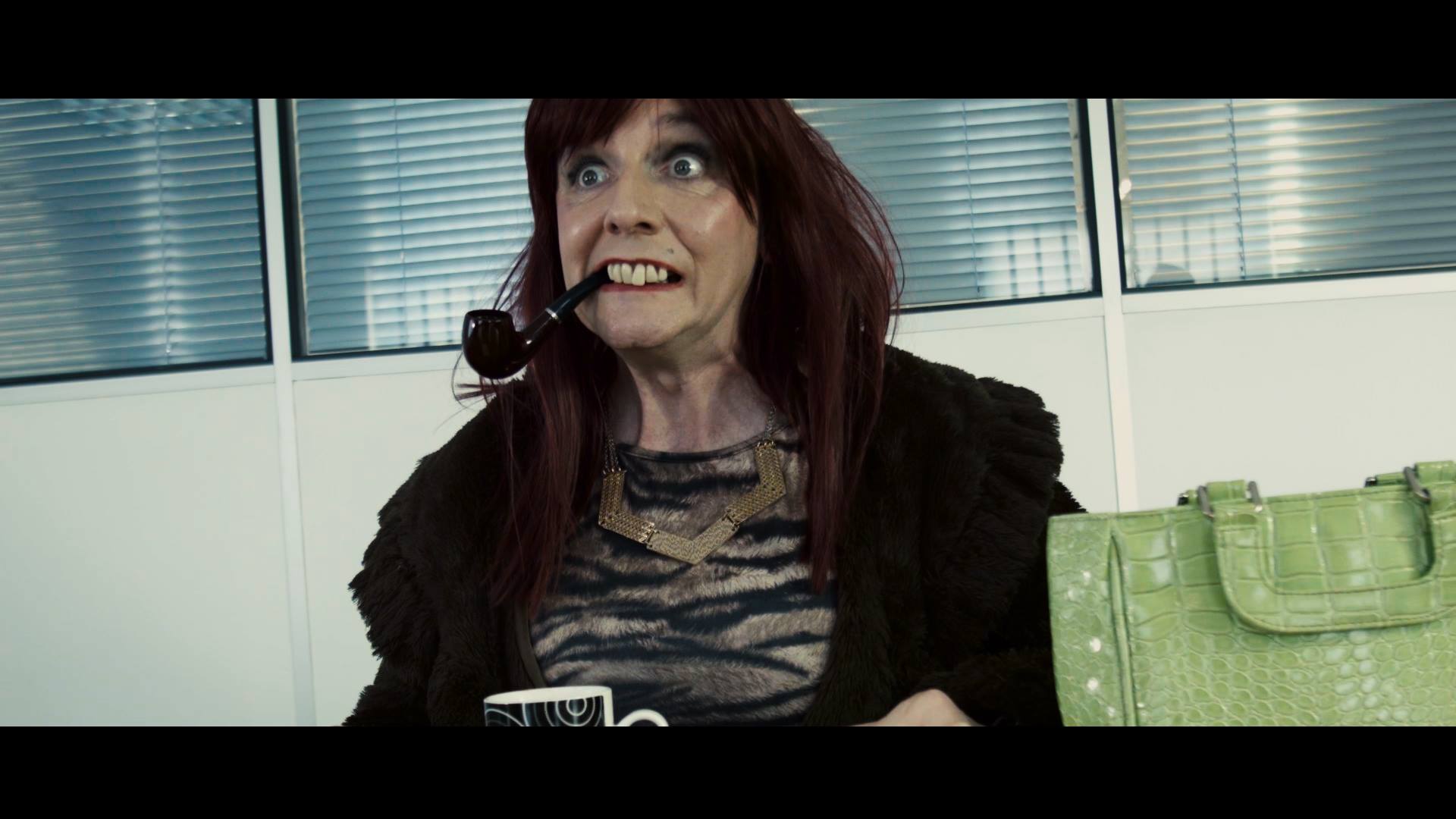
The Quacky Slasher presents with several different chapters, each introduced with a clever and entertaining anecdote in writing. My favourite is “Some time between 3:00 and 3:01” (haha) but the others are amusing too. Peter’s script plays far more as a comedy than a horror, and although I’d have preferred the latter, most of the humor does work. Think Edgar Wright’s, “Hot Fuzz” when it comes to our dogged detective pairing and then 90’s TV comedy, “Keeping Up Appearances” during the scenes where Michael’s mother (also played by Gallagher) answers questions from police. The delivery is contrasting, because while it’s quite over the top, the material is actually rather dry. Mrs Quackers (who can be seen in the image below), along with the two detectives, are definitely the funniest parts about The Quacky Slasher. Gallagher actually plays three roles in the film, the concerned “cockney” mother being the best of the bunch. He dons a long wig, a pipe and some extremely crooked teeth that see him talking like he’s got gigantic dentures in, it’s hilarious. There’s a straight forward but priceless line said to her son that goes something like “You’re just a mental in a duck mask”. The opening sequence with creepy store owner, Farraday (Finney) is good for a laugh and once the banter between Detectives, Dampsy and Mantelpiece (Kinsella and Mercer) begins, it gets even better. McKiernon utilizes some practical blood spray amidst a couple of the kills and even generates a decapitation, notwithstanding the lack of punch.

THE BAD

On the technical front there was really just the one inconsistency that I noticed. It’s evident in the first frame of the bar scene that when Johannson (played by Michael Hagen) is seated, there’s a really odd split screen type of shadow across part of his face (though it might have just been a glitch in the screener though). There’s a couple of sections of feeble and unnecessarily crass dialogue between Mr Mozzarella, Johansson and the somewhat simple man with Tourette’s Syndrome (again, played by Gallagher). If I’m honest, the trio of Johansson, The Wet Dream and the simple man, were characters that all partially spoilt this living up to its maximum potential. Peter wrote these three off-beat characters, none of which were really essential to the narrative and wore thin rather quickly. First you’ve got, Johansson, Mozzarella’s right hand man. Unfortunately Hagen delivers his lines like he’s doing a Russian impersonation of Sean Connery, and frankly it gets annoying. There’s a scene with him and Mozzarella standing by a river talking about the hatred/fear of ducks for about five minutes (at least that’s what I think it was I sort of tuned out). Then Andy Coffey plays The Wet Dream, who is a hitman of sorts sent to kill Michael Quackers. No doubt Coffey is just playing it as it’s written but as the character experiences what can only be described as spikes of internal dialogue/noise, he proceeds to convey that by making orgasm sounds and it’s extremely cringe worthy and awkward. Gallagher’s small part as an inflicted simple man felt a little redundant as well. As I stated earlier, I was hoping to see more impactful kills and further practical blood and gore effects, but I can acknowledge Peter’s budget limitations here.

Those of you who’ve been following Adamthemoviegod.com for a while would know by now that The Quacky Slasher is just the type of craziness I usually go in for. I’m glad I stumbled across this quirky Horror/Comedy from UK film maker, Peter McKiernon. The artwork and tagline are great and I love the intent behind the film’s horror element. If you’re a fan of John Carpenter’s iconic film you’ll find plenty of nods to indulge in, and if you like your dry comedy I can guarantee plenty of laughs. The camera work, audio levels and score are all really well-conceived given the budget limitations. A majority of the performances are solid and the film is at its most entertaining when Kinsella and Mercer are riffing off of each other and Gallagher is putting on a show as Mrs Quackers. There’s some blood spray and a decent body count but the film exhibits far more comedy than horror. Not all the dialogue works though, and I personally didn’t enjoy those three characters I mentioned earlier or the respective performances. Despite a couple of inconsistencies and those inferior characters occupying more screen time than warranted, The Quacky Slasher comes from the right place and remains a really fun short film that definitely calls for a bloodier sequel. Keep an eye out for this soon and check out the trailer below!

My rating for “The Quacky Slasher” is 7/10

Scarecrowd (Review)

SCARECROWD


THE SETUP

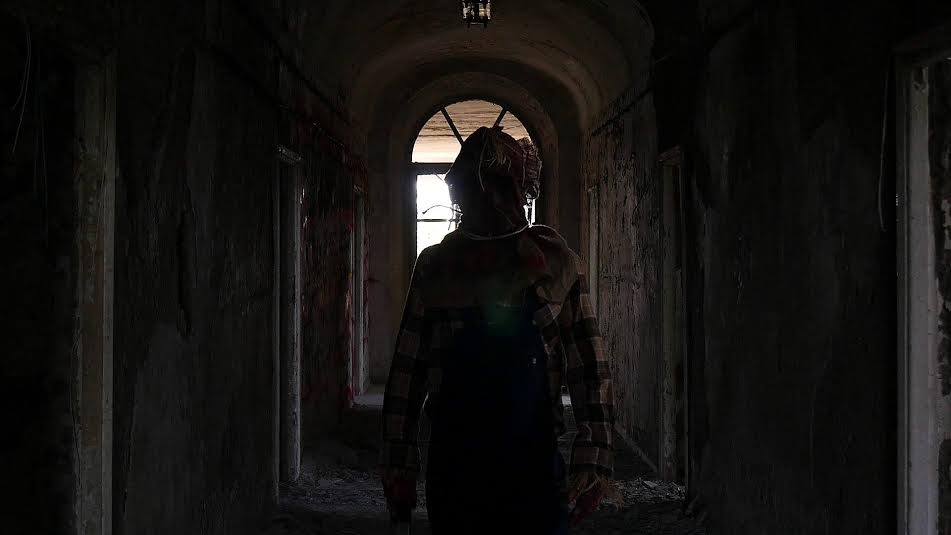
Bought to us from SRS Cinema and Melting Pictures, comes “Scarecrowd”, the debut feature film from Writer/Director, George Nevada. Scarecrowd is a part American, part Italian, Horror/Sci-Fi film about a local farmer named Tony Maio (played by Fabrizio Occhipinti), who mysteriously transforms into a demented mutant following a meteoroid crashing to earth. He disguises himself as a scarecrow and begins to rid earth of its humanity. The film also stars Gabrielle Bergere, Antony Ferry, Ruby Miller, Karen Lynn Widdoss, Frances Williams, Danny Willis and Raphael Willis.

THE GOOD

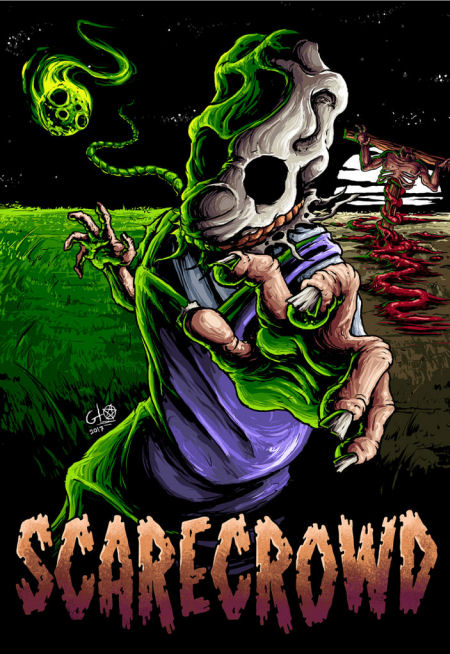
I stumbled across the IMDB page for “Scarecrowd” (formerly known as The Musk) a while back and after having networked with Antony Coia, who composed the films score, I jumped at pre-ordering the Blu Ray from the guys at http://srscinema.com/. I’m a huge advocate for low-budget and independent film making and it’s websites like the aforementioned who are releasing this type of content, so make sure you support them. I really like the Scarecrowd poster art and the Giallo inspired, psychedelic opening credits to the film. With a multitude of diverse influences, Nevada throws caution to the wind by engineering means with which to include said connections, even if the film doesn’t really call for it. The grindhouse element is present through Nevada employing a constant flickering and popping of the image. The exploitation on display with the way he lingers on female nudity, the voyeuristic component of the shower scenes comes to mind. The camera work is generally pretty good, a lot of simple still shots that coincide with the films small budget. Some of the low angle framing works nicely and there’s the odd highlight in editing, most notably when a young man’s bike headlight fades out and turns to a shot of the moon. A big portion of the film takes place at night and most of it was lit atmospherically. Coia’s heavy reliance on ambient synth in the mix complements Scarecrowd’s trace of 80’s nostalgia.

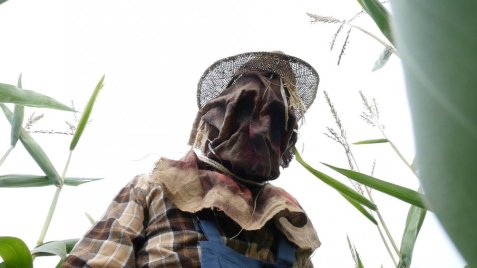
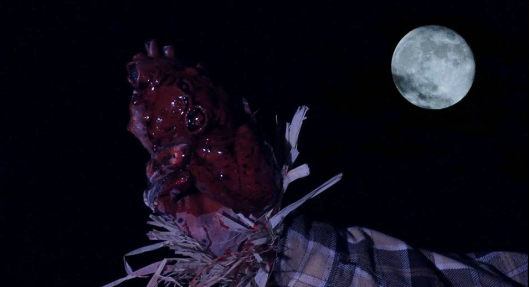
While the look of our newly modified farmer isn’t exactly original, calling to mind villains of films like “Scarecrows”, “The Redwood Massacre” and “Husk” (just to name a few), he’s still well conceived. Nevada does right by his core audience with the subsequent rules of Horror 101 by introducing an early kill and some nudity as well. Given the films short running time, the body count is relatively high and the blood flows adequately throughout. Most of the kills do occur on-screen and when they’re boasting their practical effects it’s usually resourceful. The tearing of flesh from the face of one unfortunate park-goer is probably the standout kill, though Nevada does attempt a decapitation, albeit it looks so-so. I have to commend George on his commitment to the visual effects side of the story. There’s a handful of scenes in space and others involving the crashing comet and its after effects, which generally look better than what you’d expect from a $40,000 film. The digital compositing is one of the hardest things to get right and even though some of it does look pretty cheesy, its ambitious all the same. There’s a hodgepodge of ideas at play in Scarecrowd but I’ll admit that the Psycho inspired shower scene was a good bit of fun. I say it’s inspired by, but let’s be honest, everything from the torn curtain, to the girls reaction and the crimson water gushing down the drain, it’s Hitch’s iconic scene straight up lifted, only void of suspense.

THE BAD

Like just about all low-budget films from first time filmmakers, Scarecrowd has plenty of technical issues and things that reek sub-standard. Some of the framing looks a little tight and uneven at times, only further compounded by some horribly bright and colorful filters that are used on several occasions as we watch from Tony’s point of view. The indisputable ADR (additional dialogue recording) that goes back and forth between actors, appears present in just about all the dialogue sequences (which fortunately are few and far between). The reaction times from those actors are quite poor, either that or the mix is just horribly off. A lot of the foley effects are problematic and seldom do they even match the desired action. E.g, Machete piercing skin sounds more like someone punching a bulky item. Despite the better than expected CG in early parts of the film, the digital blood was atrocious and some of the worst that I’ve seen in recent times. What makes matters even worse is that it wasn’t necessary. The practical gore wasn’t anything special but they used it during most of the films kills, so why not in all of it? Rig up some tubing and spray it back at the actor instead of editing trickling blood onto the lens. At one stage there’s even a CG car that a couple are sitting in, Why would you use a CG car for that!? At least I think it was CG, either that or someone did something very strange with the lighting and backdrop in post. This group of rather raw actors seemed determined to deliver their lines like those in a 50’s B movie and I really didn’t like it (as much as I like 50’s B movies). When you combine the delivery with the clashing ADR, you end up with a bunch of lowly performances right across the board. I did enjoy sections of Coia’s score but there’s also some very random blues music thrown in that really doesn’t fit.

Despite the speedy 77 minute run time, the pacing still seems sluggish, and if not for multiple scenes that run twice as long as they needed to, I very much doubt Nevada would’ve had enough content to warrant a full length film. There’s two repeated sequences of shots, one as Tony watches a young woman through the window and the other displays the women from the neck up as the water rolls down her. Later, horses are shown in an around a stable for what feels like five minutes, followed by a stable hand who sweeps hay and cleans up, I’m not sure what the point was of any of that. In the beginning of the film there’s a deceptively lengthy shot of a beautiful young girl frolicking through the cane fields, it’s pretty lame in all honesty. You’re sort of led to believe that someone is chasing her, though unlikely based on the way she’s dawdling along. Long story short, eventually something other than fooling around with her boyfriend happens, but with a hollow scream and a lack-lustre first kill, it’s somewhat of an uninspiring start to proceedings. Other specifics such as characters never running away from Tony with any sense of urgency tended to annoy me (unless of course you’re implying comedy), so to did a lot of the complete randomness within the film. There’s way too much patchwork in Scarecrowd that the movie loses all sense of its tone. From the graphic novel captions so far removed from the slasher sub-genre, to the bizarre science fiction sub-plot involving the entity wanting to re-populate its own planet with human seed. It all seems redundant to what is ultimately a revenge fueled slasher film about a simple downtrodden man. Cryptic other worldly narration, baffling salutes to The Wizard Of Oz and a random muscular camper playing Queen on a harmonica are just a few more examples of the obscurity in Scarecrowd, I ask again, Why? What drove all these ideas?

Scarecrowd is an extremely ambitious low-budget undertaking from a first time film maker in George Nevada, and although it wasn’t entirely what I expected or wanted, I have to commend the effort. It’s a hard film to categorize but it feels like a mix of the straight to video “Scarecrow” from 2002 and the popular 80’s film “Pumpkinhead”. I think there’s a few too many techniques on display here but the film works best with its grindhouse presentation. The camera work is solid, the lighting is nicely conveyed and the odd creative cut, if nothing else, makes for an interesting edit. Tony’s look and attitude as a killer works in the confines of a slasher flick and there is a high body count for those who get bored rather easily. The vfx aren’t too bad and a couple of sequences are pretty entertaining, especially when the practical effects are on display. Far too many of the technical aspects are well below par though and therefore become a burden to the end result. The colorful filters are amateurish, the ADR stands out like crazy, and chunks of CG blood and visuals are bordering cringe worthy. Unfortunately I couldn’t get behind any of the performances and the film continues to run over its previously established ground on more than one occasion. The mishmash of random events and character quirks took me right out of the film, and for that reason it’s not something I’d really recommend to fans of the slasher genre. That said, If you do like a mix of the bat shit crazies within your horror, you might find something here that I couldn’t.

My rating for “Scarecrowd” is 4/10

The Killing Ground (Review)

KILLING GROUND


THE SETUP

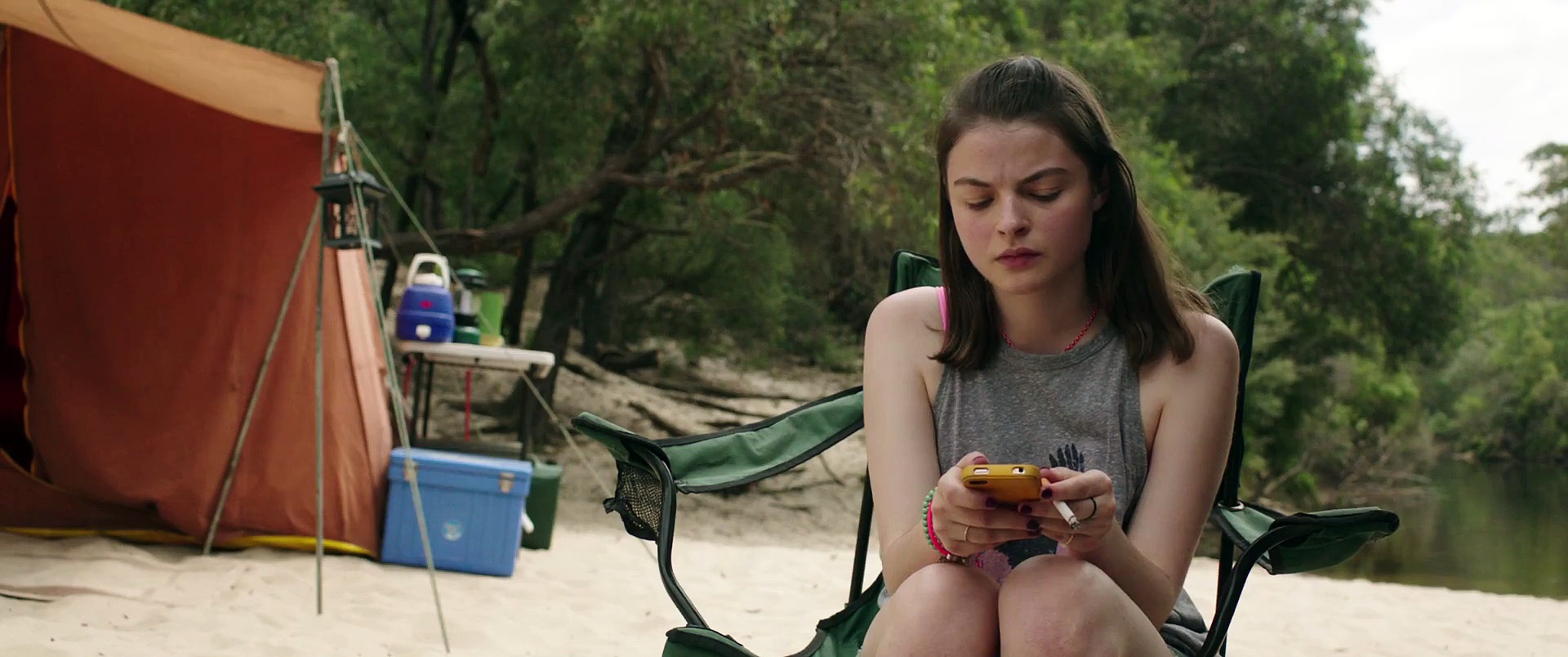
Coming to us from the wonderful people at IFC Midnight is the debut feature-length Horror/Thriller “Killing Ground”, Written and Directed by Damien Power. Killing Ground sees young adult couple, Sam and Ian (played by Harriet Dyer and Ian Meadows) take a weekend camping trip off the beaten path in the Australian bush land. Shortly after arriving, the duo notice a tent and remnants from fellow hikers have been left, unknowingly they stumble onto the scene of a crime and now must try to survive the weekend. The film also stars Aaron Pedersen (Mystery Road), Aaron Glenane (Drift), Tiarnie Coupland, Maya Stange and Liam and Riley Parkes.

THE GOOD

Killing Ground is most certainly at home with its backcountry roots, Powers clearly inspired by the likes of John Boorman (Deliverance) and to a greater extent, fellow Aussie film maker, Greg Mclean (Wolf Creek). KG is not so much your typical revenge soaked thriller (as good as they are) as it is, raw survival story. We’re introduced to a fairly down to earth couple in Sam and Ian, mid transit, on route to a secluded camping spot for the weekend. He’s a doctor and she’s a publisher of sorts (at least that’s what I gathered). Upon advice from German (Pedersen), a local who Sam engages with outside the pub (aka bar), the couple change their destination specifics for the promise of more picturesque surroundings. It’s a decision that proves to be more costly than first thought. Right off the bat, audiences are bound to be drawn into this beautiful and tucked away location, the sand and gorgeous little lake further highlight its appeal. DP, Simon Chapman (who worked on The Devil’s Candy and Cut Snake) gives Killing Ground a cinematic and sharp-looking production value. There’s an abundance of nice establishing shots, well placed tracking and panning and everything is framed expertly. My favourite sequence is an effective long take of Sam trekking along a path while heading back to the car, in the background you can see a little figure walking and stumbling and it’s quite unnerving. Leah Curtis’s score is another facet of Killing Ground that I really enjoyed. It begins with some rural panache, the orchestral theme comparable to that of a Western or something out of Jeff Nichols, “Mud”. It progresses with slick sounding strings and bass as the films tension level ratchets up a notch. Curtis adopts a lot of that big sweeping violin you’d usually hear in something like “Game Of Thrones”, but it works surprisingly well here.

The determining success of Powers film, rests in big part on the shoulders of our two leads in Dyer and Meadows. A seemingly trivial car ride game between the two, where Sam tries to get Ian to connect the bones (for lack of a better term), helps set up the natural chemistry between the two right from the start. Being a Doctor, he’s able to correct her with his tongue in cheek approach and it’s a rare light moment in the 87 minute run time. I’m usually quite cynical when it comes to Australian films and their performances, because I just don’t think we make a lot of great content. A lot of talent has come out of this country, and most of it never sticks around (and for good reason). Dyer and Meadows both deliver even and enjoyable performances, as to do the villains and the trio of actors led by Coupland, that play another family who are on their own camping trip. The way in which Powers sustains subtly with his villains (well for most of the duration anyways), makes for a real change of pace for the genre. We’re used to seeing the overt and manic actions of desperate and psychotic killers, there’s never any build up or real grounding to it. With the duo of German and Chook (played by Pedersen and Glenane respectively) being your everyday country Aussies (within reason), it makes the situation they enter into even more barbaric and horrifying then say Mick Taylor’s of “Wolf Creek”. Killing Ground is definitely a slow-burn thriller, and while not layered with action, it is presented in an original structure. I’ve got to give credit where it’s due regarding Damien’s crossing of timelines and the two separate character group arcs. Even though I’m not necessarily sold on it altogether, I respect it. However, I do think it might throw some viewers for a loop. It’s worth mentioning that there are some brief on-screen kills and one really impressive car stunt toward the end of Killing Ground.

THE BAD

Killing Ground’s audio track is the one technical aspect that could have used some work (keep in mind this is a review of a screener though). Dialogue is a little hard to hear in spots, most notably during a short scene where German and Chook talk to a couple of girls in the pub. Once you add loud music to the mix, extras and background noise it makes it hard. Sections of the foley either sound like they’ve been mixed with excessive reverb or the effect itself doesn’t match the action. Dog barking, car doors, and a number of other sounds seem to echo, that and characters feet squish as they walk in the scrub or down a path, it just doesn’t sound quite right. Most of the film takes place during the day and that’s a wise creative decision for logistical reasons, but a lot of the night scenes are almost too dark and you can’t always see what’s in the frame. The films continuity is mostly in tact, and considering the irregular timeline, that surprises me. That being said, one character does mention that Christmas was only four days prior, yet on the same night they’re ringing in the new year (the 29th). Shortly into proceedings Ian carries out the most lifeless proposal to Sam that I think I’ve ever seen (haha), it isn’t technically an issue, it’s more about him and just lame. I found a couple of the characters reactions just weren’t realistic. For example, Chook and Ian head off at one point to try to get some help for young Ollie and later stumble across some bodies. Surely if you’re Ian and you haven’t seen a single other soul since you arrived, you ask the question of Chook? Or at the very least approach him with some trepidation, Right? Speaking of Chook, there’s a rather lengthy moment during a hunt with German where he shows signs of having a conscience and not wanting to act on whatever urges he has. In the greater scheme of things, it’s fleeting and quickly stamped out. We haven’t seen anything up to that point to support a moment of clarity, he’s a pretty unsympathetic kind of guy so I found it hard to believe that he’d have that capacity (plus he’s no brains trust).

Damien Powers debut feature-length, Killing Ground is a fittingly tense piece of Aussie outback thriller. Tapping into equally as harsher landscapes as in the aforementioned “Wolf Creek” and blending elements of criminally underrated films like Haneke’s “Funny Games” and to a greater extent, Koldo Serra’s 2006 “The Backwoods”, makes this an all to real game of cat and mouse. The location is lovely, as is the sharp cinematography, both a perfect contrast to the vicious nature of what goes on in these woods. The score is wonderfully composed and on quite a grand scale, in turn, becoming much more impactful than your by the book thrillers. The protagonists are likeable and relatable and the villains aren’t written so plainly. Each of the performances were stronger than I thought they’d be and there were some tense scenes throughout. The writing is generally pretty solid and I think I’m warming to Powers narrative structure (although it might take another viewing to be sold on it). The sound wasn’t the best, so here’s hoping the audio track is a little better on the hard copy. Some of the night scenes lack a bit of clarity, and like most films, there’s the odd continuity fault and the characters don’t always react how you’d want them to. In the end, Powers manages to rise above the expectations of Australian film making, usually described as serviceable at best, to give us one of the best independent films to come out of the country in the last five years. Keep an eye out for Killing Ground which comes to cinemas nationwide, August 24th.

My rating for “Killing Ground” is 7/10

The Ice Cream Truck (Review)

THE ICE CREAM TRUCK


THE SETUP

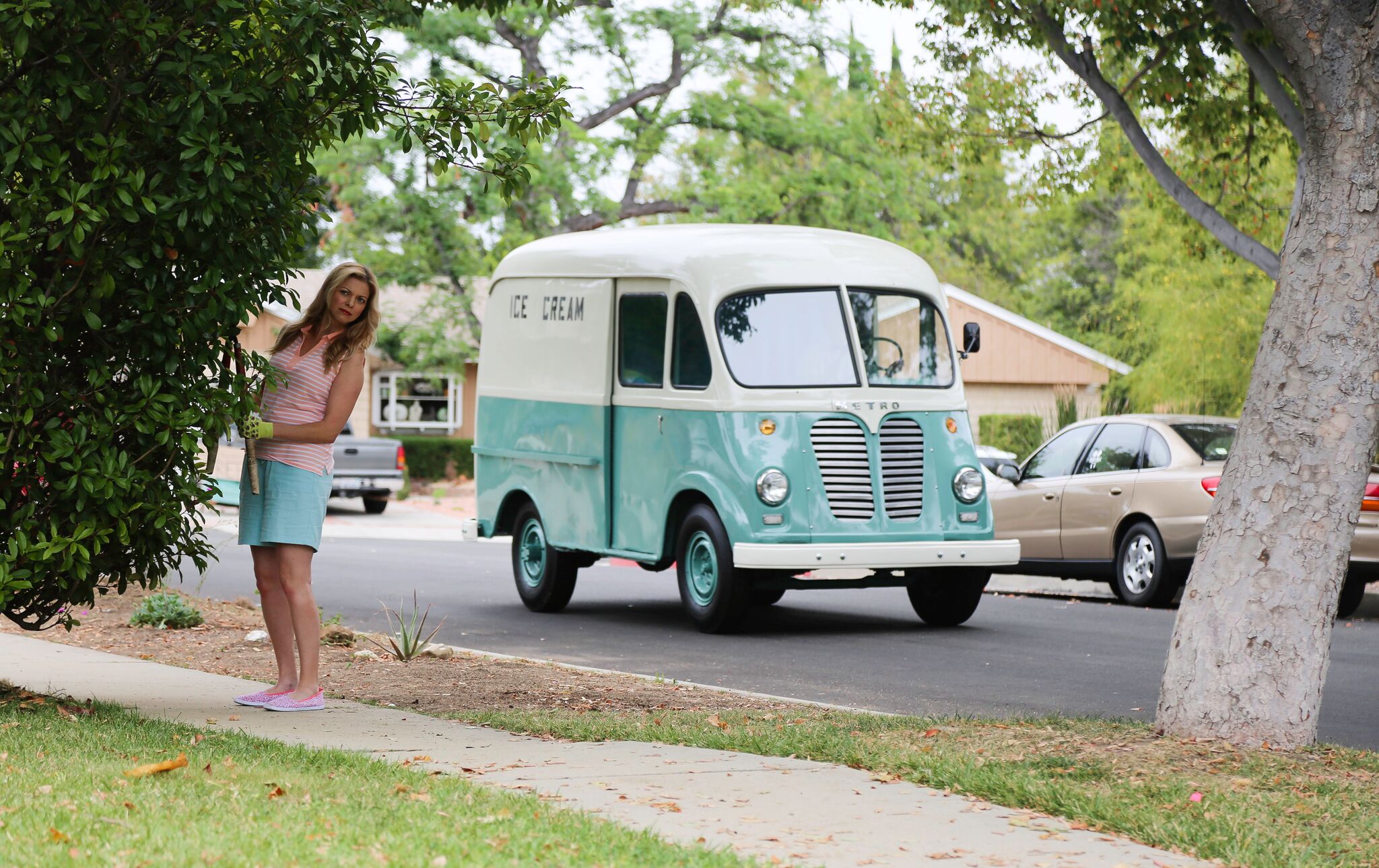
Firstly, I’d just like to say thank you to Judrina Kymantas and Uncork’d Entertainment for allowing me access to an online screener of the Horror/Slasher film “The Ice Cream Truck”, Written and Directed by Megan Freels Johnston. The Ice Cream Truck centers around young wife and mother, Mary (played by Deanna Russo of Rest Stop) who moves back to her suburban hometown in LA. With her husband on the road for work, kids in tow, she agrees to go ahead and start setting up the new home early. Shortly after arriving she’s introduced to a nosy trio of mothers, headed by Jessica (Hilary Barraford), she encounters strange delivery men and Max (played by John Redlinger), a younger man from the neighborhood. Life in the burbs is not quite how Mary remembered it, that and there’s something not right about the local ice cream truck and the creepy man who drives it. The film also stars Emil Johnson, Sam Schweikert, Bailey Anne Borders (Raze) and Jeff Daniel Phillips (31 and The Lords Of Salem). I’ve followed the developments of The Ice Cream Truck since it’s inception and I’m glad to see it’s finally been completed.

Geez… neighbors can be nosy

THE GOOD

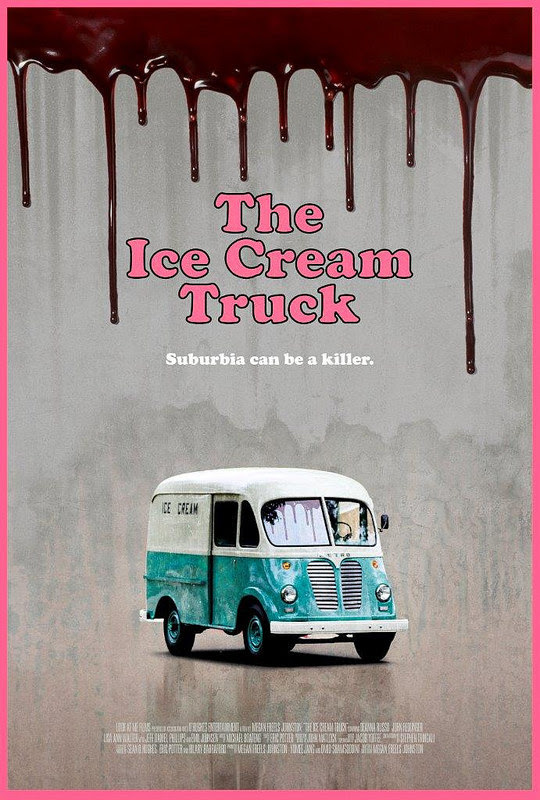
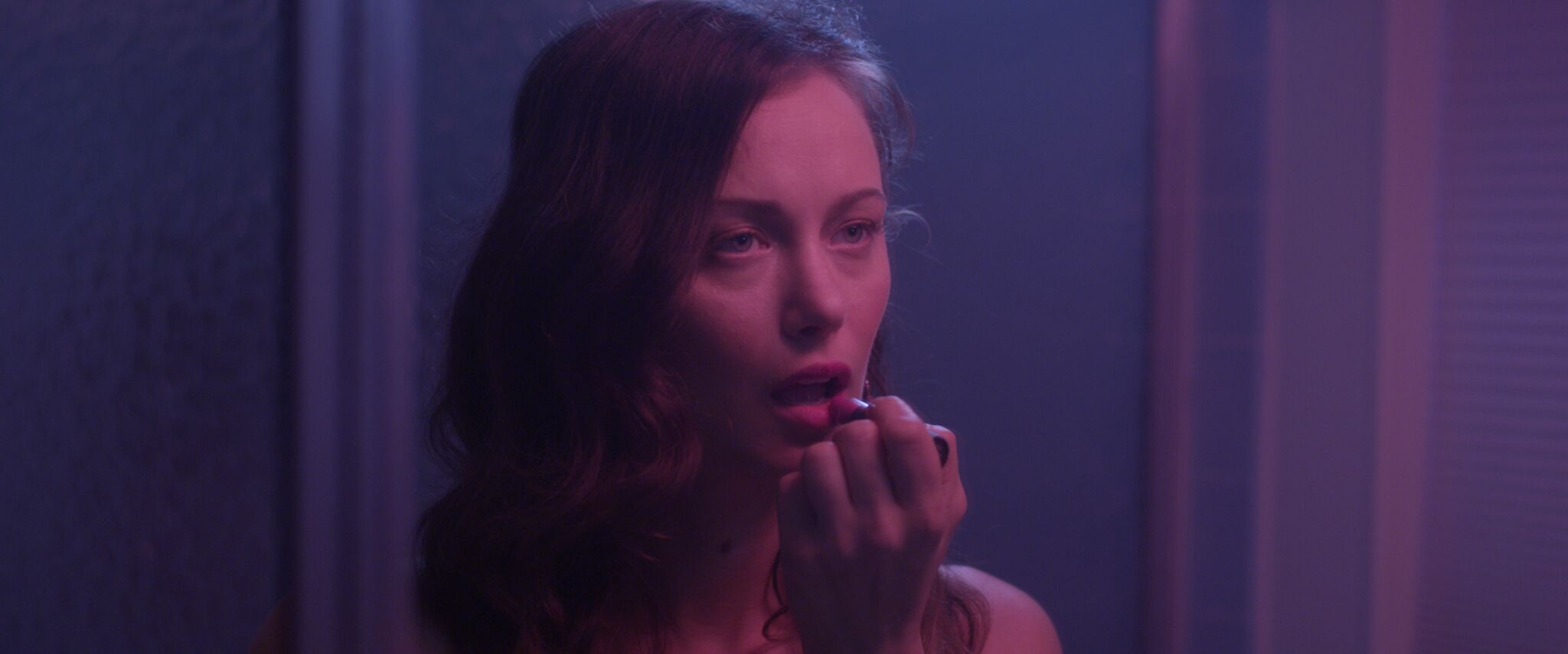
It’s evident right from the beginning of The Ice Cream Truck, in which the quiet, picturesque serenity of small town suburbia is established, that Johnston’s scoop of the slasher cone is clearly inspired by similar films from the 80’s and 90’s. The original one sheet (which can be seen above) looks superior to that of the latest artwork, hence I’m hoping it’s the official cover art. With the classic central image and eye-catching pink font and bordering, it really has that 80’s vibe down pat. DP, Stephen Tringali’s extensive work on short films has certainly held him in good stead for shooting feature lengths. The cinematography in The Ice Cream Truck is simple but effective, everything is well shot and nicely framed (likely in 4k). Tringali makes use of some brief and gentle panning, as well as a particularly smart aerial shot, hovering over the lifeless bodies of a young adult couple. This gorgeous and vibrant part of Los Angeles lends itself to a high quality image, that and the warm color grading really lifts the production value on what is likely a modest, low-budget film (I’d wager to bet). During the day, the streets have that feeling of being almost too quiet, the neighborhood too perfect like something out of “The Stepford Wives”. At night, the lane and its luminous street lights give off the same sinister vibe that Elm St did for Nancy Thompson in Wes Craven’s iconic film “The Nightmare On Elm St”. With sizeable chunks of the film taking place outdoors, it’s nice to hear a consistently clear audio track. Michael Boateng’s energetic and superbly composed synth score is perhaps my favourite thing about The Ice Cream Truck. He gauges a similar atmosphere to what was created in films like “Maniac” and “The Funhouse”, keeping things moody with the bass but pumping the odd keyboard spike. Like most of us, I’m sure Megan has seen plenty of films in the genre. Influences from filmmakers like Dario Argento can’t be denied when you watch scenes like Mary in front of the mirror, head in frame, bathed in purple and pink lighting, synth slowly building in the mix, I love that kind of stuff.

Mary prepping herself for a late night rendezvous (Suspiria eat your heart out)

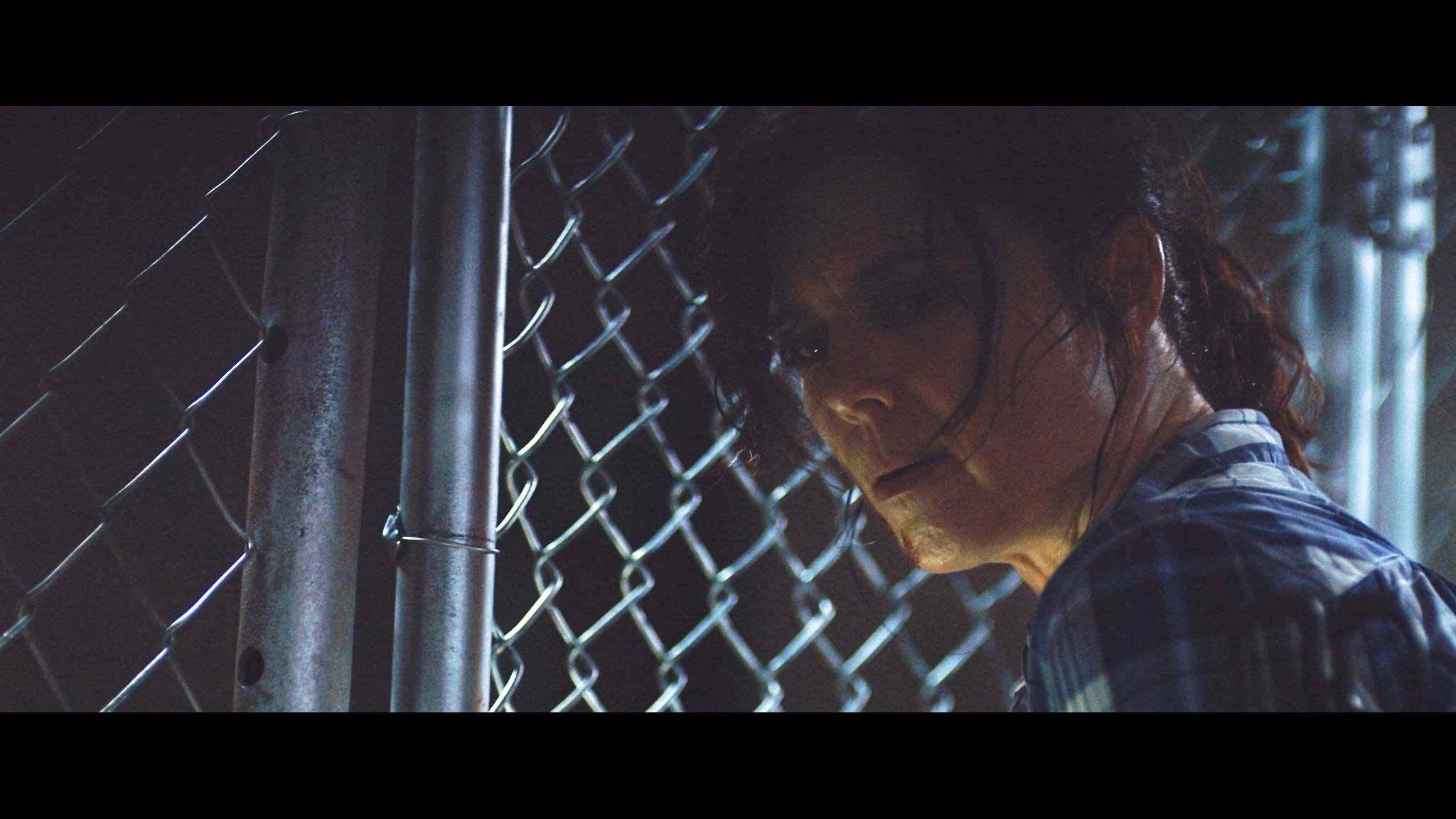
I feel like I’m saying it with every new actor that I’m introduced to, but Jesus everyone looks like someone else these days (haha). Deanna Russo is a beautiful young woman, a cross between actresses Olivia Wilde and Summer Glau. Her performance is probably the best of the bunch, and those who’ve ever had an identity crisis or felt lost, wondering where they fit in, should be able to relate to Mary (at least on some level). I was interested to see how Jeff Daniel Phillips fit into the film, and although he’s not given much screen time, he was aptly cast as an intimidating delivery man and did it well. The trio of mature ladies (played by Barraford, Lisa Ann Walter and LaTeace Towns-Cuellar) that live in the street embody that Stepford Wives element I spoke of earlier. They’re a little to eager to engage with Mary, but at the same time quietly compete against and judge her. Christina’s (Walter) eighteen year old son, Max, takes an interest in Mary after sensing her reservations to engage with the nosy neighbors. Mary may be well into her 30’s but she’s young at heart and that acts as the catalyst for her internal conflict and moral dilemma as the film wears on. Redlinger, who looks like Dominic Monahan crossed with my buddy Gabriel Lee, turns in a serviceable performance, albeit a little inconsistent at times. I liked the fresh casting of Norwegian born, Emil Johnson as the Ice Cream Man. He doesn’t look like your obvious villain, and while not necessarily scary, for all intents and purposes it works in the confines of the films aesthetics. Given the amount of time Johnson spent in different countries around the world, I think his American accent was spot on. There’s not a big body count on display in The Ice Cream Truck but the practical blood looks good and there’s a couple of thrilling kills involving a scooper and a knife.

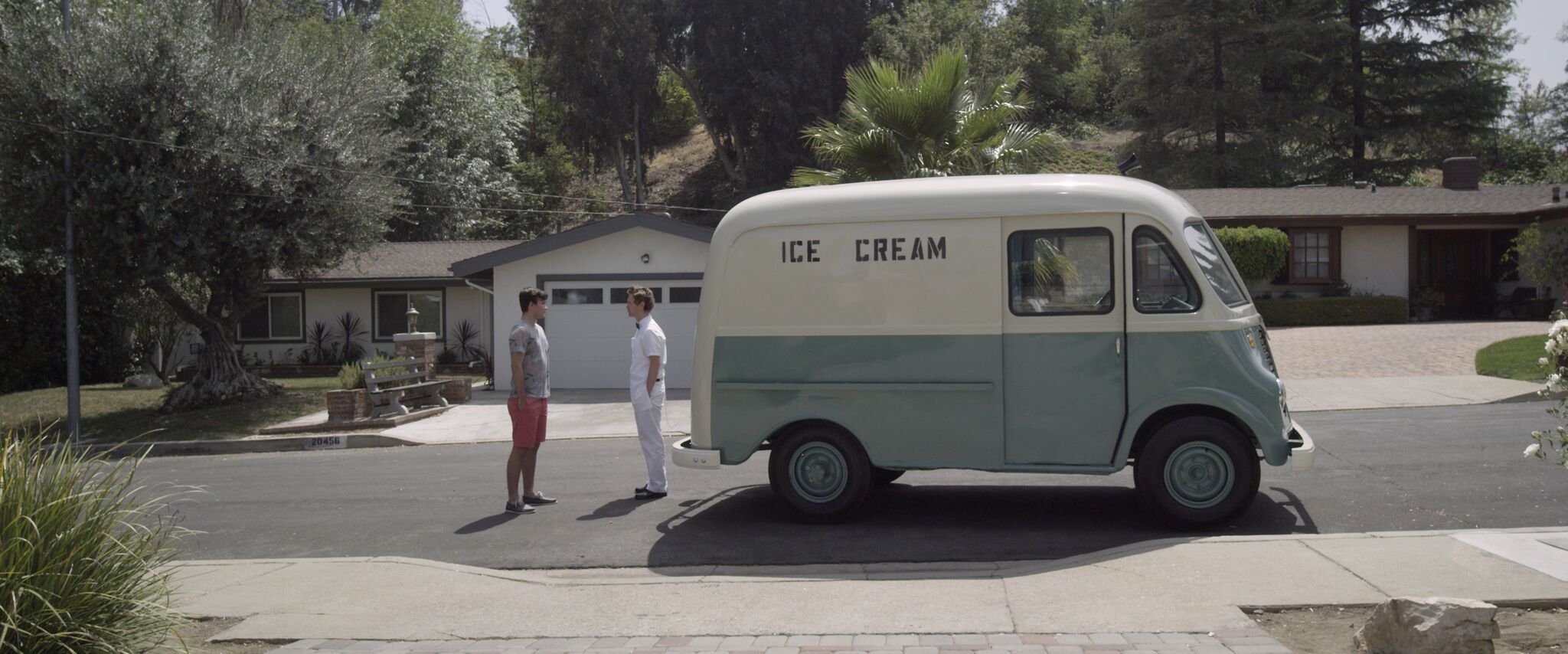
Can I interest you in a cone, a cup or a shake?

THE BAD

As I said, The Ice Cream Truck is a slick and polished looking independent film, but unfortunately it ends up becoming more of an attempt at an emotionally weighty expression on ideals rather than staying the course of a conventional slasher film. Hardcore fans of the genre will probably be caught off guard, but for those who like a more well-rounded dramatic arc, you’ll probably end up appreciating Johnston’s writing. The hardest pill for me to swallow here is John Redlinger attempting to pass for an eighteen year old. Now I’ll admit, I don’t know how old John is, and sure, the guys a bit of a baby face but if Mary supposed to be in her 30’s (which Russo is) then surely Max has to be pushing thirty as well. It’s revealed in the first act that he’s just graduated and is getting ready to head off to college but I just couldn’t look past that detail once the interactions developed between him and Mary. The companionship between the two just feels like a juvenile stretch and it’s only further highlighted by some of Mary’s reactions to his advances. It just feels awkward when it shouldn’t, especially when it wasn’t a necessity to have Redlinger playing a character that age. The film is not without the odd continuity glitch, most notably when Max’s friend Nick (Schweikert), visits Brie (Dana Gaier) and brings her an ice cream. Before she can even open the door to see what it is she joyfully says “Oh for me!”, like she knows what it’s going to be, making me think that take was done numerous times.

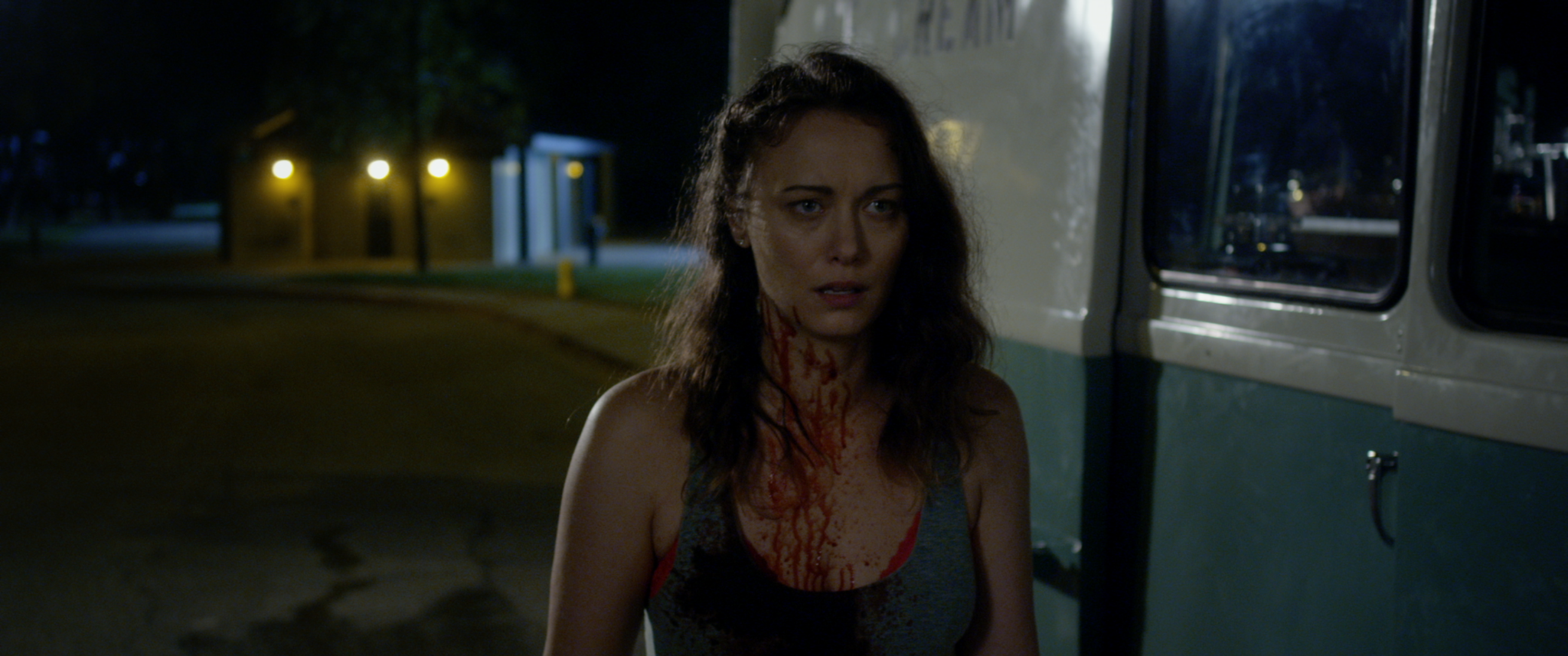
Mary gets more than she bargained for.

It would have been an interesting creation to see The Ice Cream Truck set in the 50’s instead of modern-day. The man, himself, seems about as far removed from modern times as you can get, plus the husband and wife and suburbia dynamics were totally different in that era and it might have made for some interesting humor as well, just a thought. The film only runs 87 minutes but still feels a little sluggish, a number of shots linger longer than they need to. There was a missed opportunity to get up close and personal with the ice cream man, which I think would’ve been a good addition. He uses a victims bathroom at one point, presumably to clean up, but the camera is pulled back at a distance in the hallway. Up until then he hadn’t had time to revel in his mayhem, probably due to location or his surroundings, but I think that moment would have been beneficial for an insight into his mindset. A tight shot in on his face comes to mind in order to see his eyes and the facial expression (or lack there of), Does he have a dialogue with himself? How does he wash his hands? something, anything to give us so he’s not just a carbon copy killer. While the first kill is an on-screen and practical death, it doesn’t come until 25 minutes into the film. When you’re working in the horror genre (or more appropriately the slasher sub-genre) you’re wise to follow the fundamentals, the primary of which is to have a death inside that first 10-15 minute window to get viewers locked in. Johnston had a chance in the remainder of the film to make up for that missing element, but sadly I don’t think there was enough action or adequate variation in the kills and the effects.

Megan Johnston’s second feature film, The Ice Cream Truck isn’t quite what I expected. It feels like a blend of the 90’s Slasher/Comedy “Ice Scream” and the aforementioned “The Stepford Wives” by way of TV’s “Desperate Housewives”. I love the cinematography and the brightness of the image, along with the idyllic suburb setting that takes me back to the slashers of the 80’s. With so many filmmakers traits thrown into the mix, Boateng’s pulsating synth score ends up being one of the best this year and the lighting is another wonderful aspect too. Russo is lovely and delivers a really solid performance, as to, do most of the supporting players. Some of the kills are good fun and there’s practical blood on display. I’ll be the first to admit that I thought I was in for something a little more violent and run of the mill than what I got though. I couldn’t look past the casting of Redlinger, or more accurately, the age he was supposed to be playing. Either Johnston’s writing needed to change or that casting decision, one of the two in order for the Mary/Max development to be even remotely believed. The film does have a few continuity problems and it lags in places. I can’t help but think some opportunities were missed when it came to the ice cream man himself, not to mention the body count could have been larger and the deaths more dynamic. In the end it seemed more about Mary’s cross-road in life and her identity crisis rather than the slashing most fans will be asking for. The Ice Cream Truck is still a reasonably fun time and I can say it’s worth a watch if you’re a fan of these types of films. Keep an eye out for the film on VOD, August 18th and check out the trailer below.

My rating for “The Ice Cream Truck” is 5.5/10
https://www.youtube.com/watch?v=cakTOMEPr74

Cage Dive (Review)

CAGE DIVE


THE SETUP

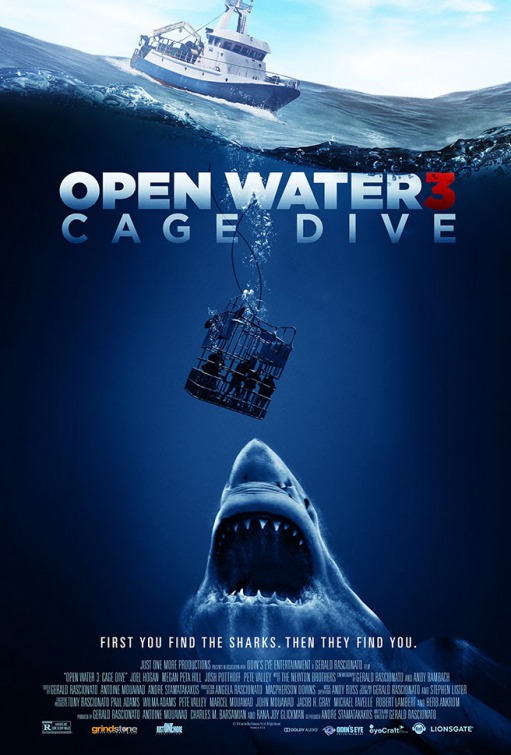
Last weekend I attended the Adelaide leg of the Monster Fest Travelling Sideshow, a film festival dedicated to screening independent films in theaters that you may otherwise never see them in. I booked two screenings, one was to 78/52, an informative and entertaining documentary on the infamous shower scene from Alfred Hitchcock’s masterpiece “Psycho”, the other was to Gerald Rascionato’s debut feature-length Drama/Thriller, “Cage Dive” (not sure where the Open Water title comes from, probably a distributor request). Cage Dive is a South Australian made shark film about three Americans on vacation, who are looking to put together a crazy audition tape for an extreme reality TV show. Brothers, Jeff and Josh Miller (played by Joel Hogan and Josh Potthoff) along with Jeff’s girlfriend, Megan (Megan Peta Hill), decide to take part in a cage dive at Port Lincoln, only to find themselves stranded in the shark infested waters. The film also stars Pete Valley, Mark Fell and Christopher Callen.

THE GOOD

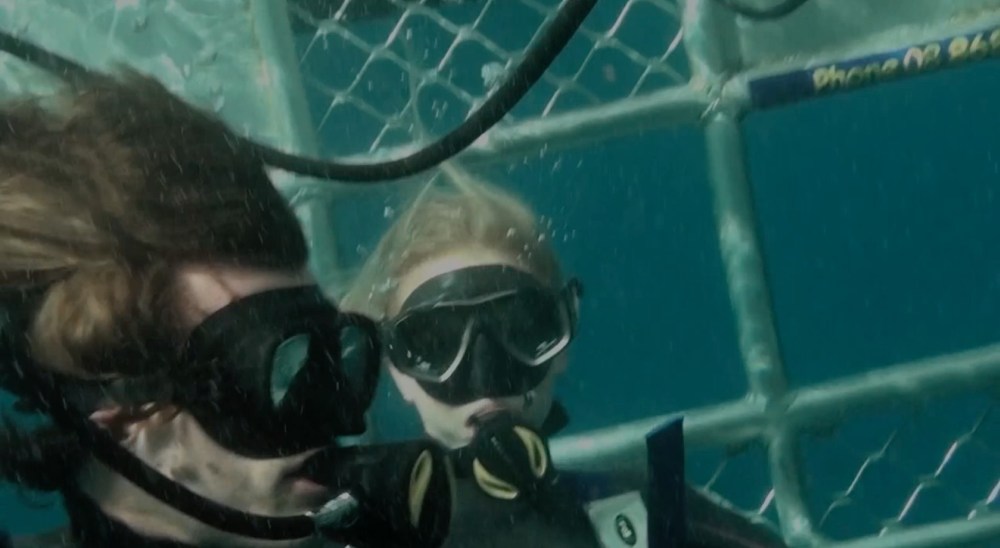
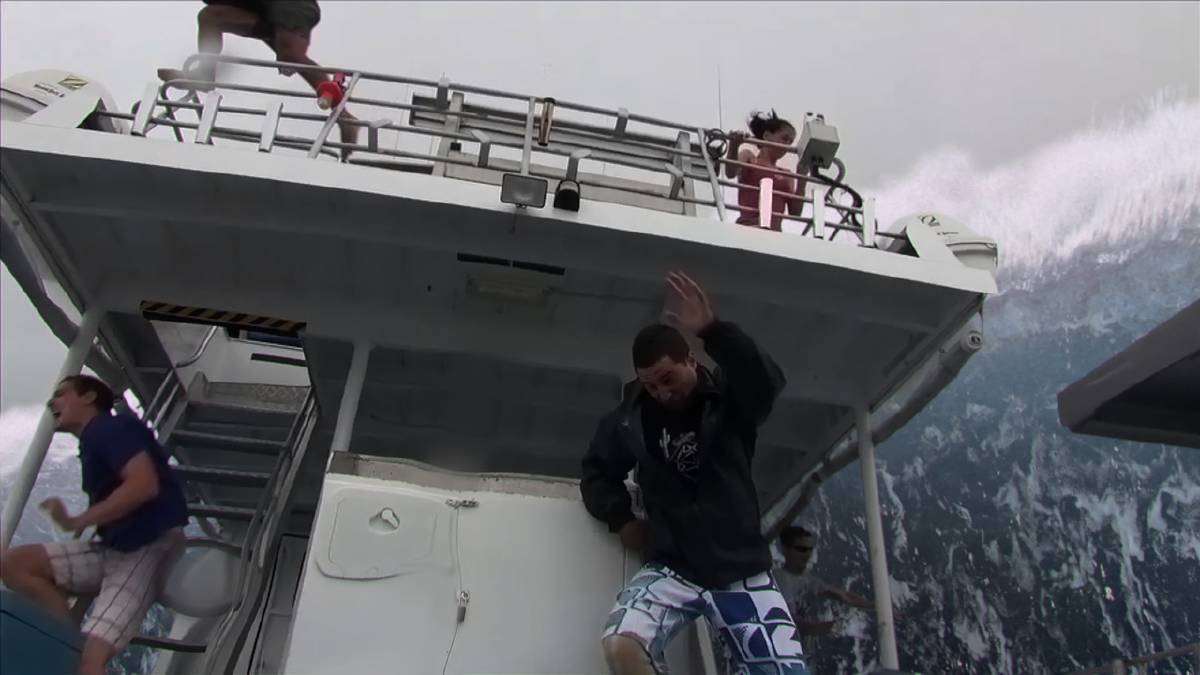
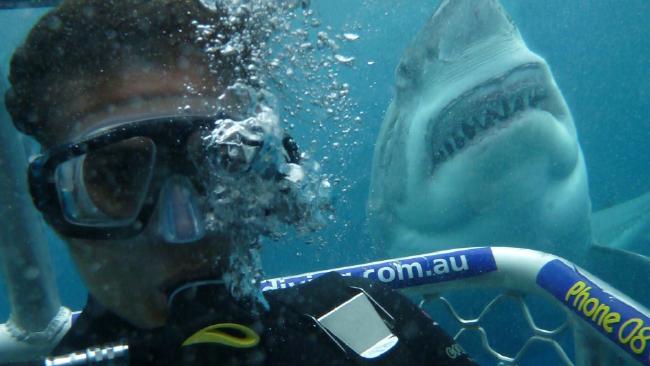
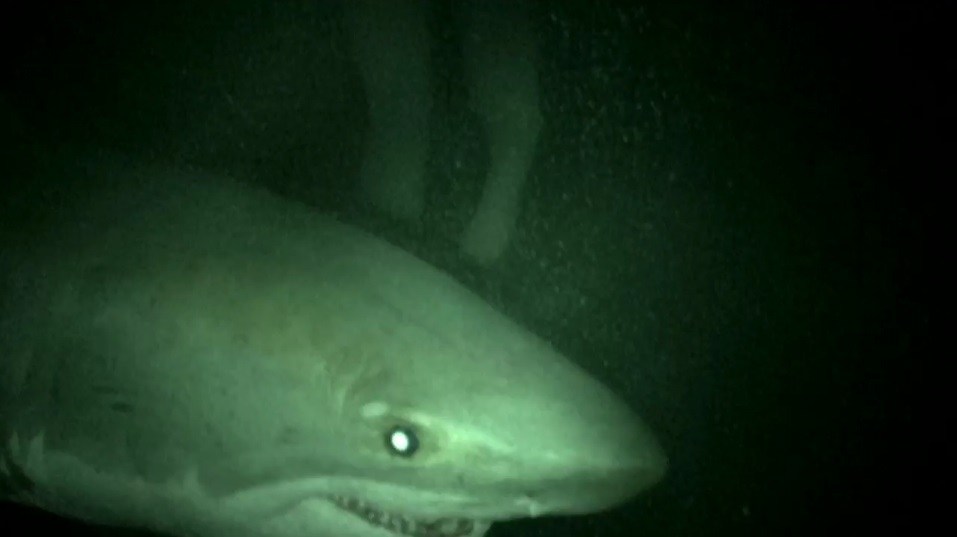
Lately there’s been a real resurgence in the shark sub-genre, with impressive entries like Johannes Roberts “47 Metres Down” and the wider identified “The Shallows”. I’ve always been a pretty big fan of the genre, everything from the cheesy SyFy channel B movies like “Sharknado” and “Sand Sharks” (just to name a couple) all the way through to the bigger budget films previously mentioned. I think “Bait” is the latest Aussie shark film and that came out back in 2012. While not the greatest film in the genre, it did have a well established story and colorful characters, not to mention, it delivered on the kills and the gore which is what fans want. Rascionato’s script plays things surprisingly straight, there’s not a lot more to it than the survival aspect and I think that’s perhaps why it’s garnering more attention from fans and critics than most of these films do. Think of “127 Hours” or the far lesser known “Scenic Route”, only it’s set in water. I would have said 2010’s “Buried” but man… that’d be an insult given how mind numbingly boring that film was. Cage Dive manages to tap into that base line fear we all have (or at least I do) about being in a life or death situation. The film is nicely paced, and both the sharks and the stock footage are well-edited and far better than most films in the genre. The image below is of a superb visual fx sequence in what is ultimately a low-budget film. Color me impressed.

The cinematography in Cage Dive is surprisingly good given the audience is meant to be watching found footage from the trios trip. There’s only a small dose of shaky cam and even when things do go south during the dive, nothing feels harsh. I think this is the first time in the shark sub-genre that I’ve seen a first person approach used instead of the conventional method, it no doubt helps put you in these guys shoes. Budget may have been the sole reason for shooting it like that, but either way, it works. Most of the movie takes place during the day but I was interested to see how Gerald would go transitioning with the situation once nightfall came. Utilizing minimal night vision, he’s able to show us enough of what’s going on in order to help maintain tension in the group. There’s not a lot of action in Cage Dive, but when it does rear its fin (see what I did there) the attacks are swift and violent and might just have you questioning how they pulled this all off practically. Our three leads, none of whom have a lot of experience, end up turning in pretty solid performances. Each are perhaps a little reserved at times throughout the film, but personally I’d rather see that than clear over acting. I think Pete Valley, who plays cousin Greg, probably has the most raw ability of anyone in the film and makes his limited screen time really count.

THE BAD

The Newton Brothers score is probably the one creative aspect of Cage Dive that slightly underwhelmed, which is a surprise to me because they’ve scored a lot of really good films such as, Mike Flanagan’s “Hush” *see review* https://adamthemoviegod.com/hush-review/ and Wayne Kramer’s, “Pawn Shop Chronicles” *see review* https://adamthemoviegod.com/pawn-shop-chronicles-review/. The score is okay but it doesn’t necessarily further the viewing experience like some of their other arrangements have. Overall I was pleased with the quality of the audio track, considering ninety percent of the film takes place outside or in water. My only complaint is that on occasion the dialogue is muffled while the characters are in the water. I figure it’s because microphones and equipment are being protected and were covered in plastic. There are a few flat spots in the acting, and if you’ve got a good ear you’ll be able to pick the irregularities in their American accents. Writing the core characters as American was probably smart though on Rascionato’s part, especially from a marketing point of view, but in hindsight, it wasn’t an essential detail. I enjoyed most of the films specifics, right up until the flare incident. I understand that tensions run high, personalities clash, but it really wasn’t necessary and I think you’d be a lot more diligent about your resources and how you use them in that situation. In addition, there’s some offbeat dark comedy between the brothers shortly after that transpires and it took me out of the film momentarily.

I first heard about Cage Dive almost a year ago, and after discovering it was locally made, I wanted to check it out. Rascionato’s debut feature-length film combines the survival element of fellow Aussie thriller, “The Reef” with the dramatic undertones of the aforementioned “Bait”, resulting in a realistic and terrifying setting to a shark film. It’s well shot, nicely paced and the shark footage looks superb, as do the touches of vfx work. Even though I didn’t warm to the characters all that much, I still enjoyed the performances and most of the stories developments. The soundtrack isn’t anything to write home about and the attempted humor sort of comes out of left field. There’s a few disparities with the accents and certain decision-making, but the latter probably partly due to the heightened situation the trio find themselves in. Cage Dive is a better paced and more entertaining film than “The Reef” and it’s another positive entry into the shark sub-genre of Horror/Thriller. Keep an eye out soon for an official release date from Lionsgate and check out the trailer below!

My rating for “Cage Dive” is 7/10
Cat’s Cradle (Review)

CAT’S CRADLE


THE SETUP

Firstly, I’d just like to say thank you to Actor/Writer, Tawny Sorensen for allowing me early access to an online screener of her 15 minute, Drama short “Cat’s Cradle”, Directed by David Spaltro. Cat’s Cradle focuses on young adult couple, Amy and Jim (played by Sorensen and Nabil Vinas) who’ve been luckless so far in their attempt to conceive. With Jim’s regimented nights for the two always pre planned, a crisis of self-identification arises along with certain truths that threaten the couple’s core foundation. It doesn’t happen all that often, but every now and again I open my email to find random screeners that have been sent in for review, as was the case with Tawny’s debut short.

THE GOOD

The plot synopsis for Cat”s Cradle is fairly thin and in this case that’s not necessarily a bad thing. I had no idea what to expect and was pleasantly surprised with some of the topics and themes on display in Tawny’s writing. The film looks to open a line of communication on that exact thing, communication, particularly between couples and partners. The dynamics of the man woman relationship in modern society have changed significantly over the years, so much so that many things go unsaid during the development of relationships, crucial things that end up being a problem later in life. Sorensen analyses sex, and where it fits into married life once children enter the fold, as well as looking at the severity in the responsibility required when you bring a child into the world. These are all relevant topics for discussion and make for an interesting narrative (even if you’re like me, single with no kids). The film is nicely framed and well shot, the audio levels are crisp too. The soundtrack is lively, utilizing some really smooth reggae guitar at the beginning and sweet blues notes later in proceedings. Both, Sorenson and Vinas (who I must say closely resembles fellow actor Jeremy Piven) have solid chemistry together and their dialogue flows organically.

THE BAD

There’s not a lot to pick at in the short 15 minute running time, but there were a couple of momentary focus issues during the back and forth between Amy and Jim. Some of the background music (which is low in the mix anyway) didn’t really seem to fit, tonally speaking, especially as the argument escalated. Tawny’s commentary on the state of the world right now and what it means to bring someone into it, is a good thing. It only further highlights the issues we have with population and our ever dwindling resources, but it is perhaps a little heavy-handed during the monologue.

Cat’s Cradle is an engaging, thought-provoking and important Drama from first-timer, Tawny Sorensen. It’s well shot, most of the soundtrack shines through brightly and each of the performances command your attention. It has a couple of minor issues but you’ve got to look hard at them and ideally you’ll be drawn into the discussion, making your own judgements of the situation and where you’d stand if put in a similar position. In a perfect world this film is shown to new couples and people thinking about starting a family. As a whole, people don’t truly have a grasp of the seriousness of it all and this film could help with that. At the very least, this should open the discussion for us all.

My rating for “Cat’s Cradle” is 8.5/10


Leaf Blower Massacre (Review)

LEAF BLOWER MASSACRE


THE SETUP

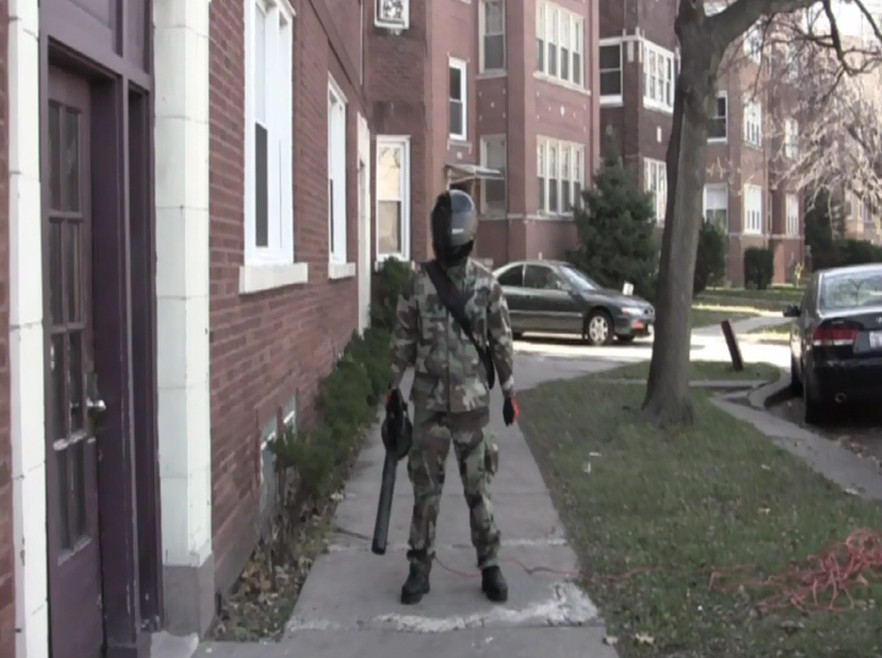
Firstly, I ‘d just like to say thank you to Writer/Director, Anthony Cooney for allowing me access to a screener of the 80’s inspired, 12 minute Horror/Comedy short “Leaf Blower Massacre”. Leaf Blower Massacre sees a mysterious killer wielding a leaf blower, target hapless victims on the streets of a small town in Illinois. Theater goers and poker playing buddies are among the casualties of this madman. The film stars Anita Nicole Brown (from TV’S Boss and Chicago Fire), Shavar D. Clark, Anthony Cooney, Martin Sean Cooney and Karla Shaw. I’ve been tracking the movements of Leaf Blower Massacre since it wrapped way back in 2013, and it was strange because it seemed like it was going to be one of those films that just never came out. It’s taken me until mid 2017 to finally get the chance to check it out, So was it worth the wait?

THE GOOD

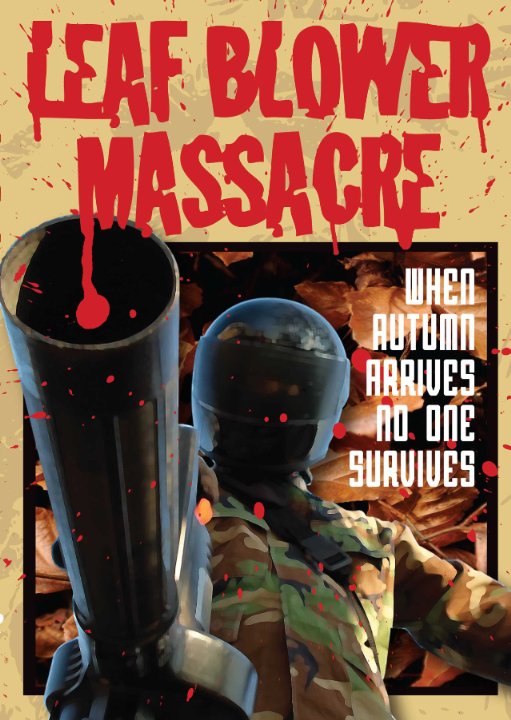
Do I even need to state the obvious? Clearly it’s the memorable B movie title  “Leaf Blower Massacre” that tells you everything you need to know about Cooney’s debut short. The 80’s SOV (shot on video) inspired poster art, with its complementary pun-filled tagline is certainly eye-catching to a fan of the genre. I was pleasantly surprised with the high standard of cinematography from first-time DP, Josh Stephenson (who also wrote the screenplay). There’s a number of good establishing shots as well as a range of different setups and angles to keep things looking professional. Given this is a micro-budget short, the audio is quite good when natural. However, Cooney does rely heavily on obvious ADR (additional dialogue recording), probably due to a chunk of the film taking place outside, where you can get a lot of background noise. The standard of performance ranges somewhat but everyone is serviceable in their specific roles. The villain lays down a couple of fun and cheesy one liners and the weapon of choice is nothing short of hilarious (although the comedy isn’t so overt). There’s a humorous nod to the original Texas Chainsaw Massacre in here as well, good stuff.

THE BAD

My issues with Leaf Blower Massacre are equal parts technical related and creative choice based. The aforementioned re-recorded audio is the most discernible one, but there’s an oddly framed sequence where a couple walk the streets and talk about the movie they’ve just seen. It’s a relatively short scene and you’d usually just see a common two shot as they walk, or even a wider shot, but Stephenson opts to frame the individual who isn’t talking at the time of the shot and alternates, it’s a little distracting. Sections of the dialogue are a bit too “gangster” for me, considering most of the characters are white. The music is definitely the weakest aspect in Leaf Blower Massacre. I was hoping for some old school synth to accompany the 80’s themed plot line, instead, we get a piano ballad during the intro and a lot of scratchy background strain during other times. To make matters worse, there’s a boring and repetitive jazz theme with bass and guitar that plays almost the entire length of the poker sequence.

I’ve been highly anticipating Leaf Blower Massacre, and while not necessarily offering up anything special, it still provided solid entertainment value on its very small budget. I love the cheesy puns and the killers look, clearly an homage to 80’s B movies like “Nail Gun Massacre” and Umberto Lenzi’s “Nightmare Beach”. The camera work and audio are much better then in some of its counterparts and the performances are fun. Not so good are certain chunks of the dialogue and most of the music choices. The one thing largely absent from Cooney’s short is the blood and gore, though that can somewhat be excused due to the small budget. He’s currently in post production on the sequel, which is going to be a feature-length. I, for one, look forward to what will hopefully be a more violent and bloody entry. Though it does beg the question, How does one go about massacring with a leaf blower? On that note, I’ll leave you to ponder. Keep an eye out for a review of Cooney’s second short film “The Dirty Sanchez” which will be coming soon!

My rating for “Leaf Blower Massacre” is 6/10

Blood Hunters (Review)

BLOOD HUNTERS


THE SETUP

Firstly, I’d just like to say thank you to Elder Martinez over at Elderfanfilms Blogspot for gaining me access to an online screener of the Horror/Thriller “Blood Hunters”, Written by Corey Brown, Directed by Tricia Lee. Blood Hunters follows single mother, Ellie Barnes (Lara Gilchrist of Battlestar Galactica) who wakes up in a medical facility, pregnant, with no memory of how she got there. With the entire staff killed during testing gone wrong, Ellie finds herself reliant on Henry (Benjamin Arthur), another patient in the facility and Marion (played by Torri Higginson of Stargate: Atlantis), a security and data expert. The film also stars Julian Richings (Wrong Turn), Mark Taylor (TV’s Flashpoint), Peter Blankenstein and Samuel Faraci. Elder is a Colombian born, film aficionado who promotes a lot of independent horror content via his own blogging website. His site is centered primarily around news on the latest releases and details on distribution and such. I’ve been fortunate enough to do a handful of reviews for the site, Lee’s film being the latest.

THE GOOD

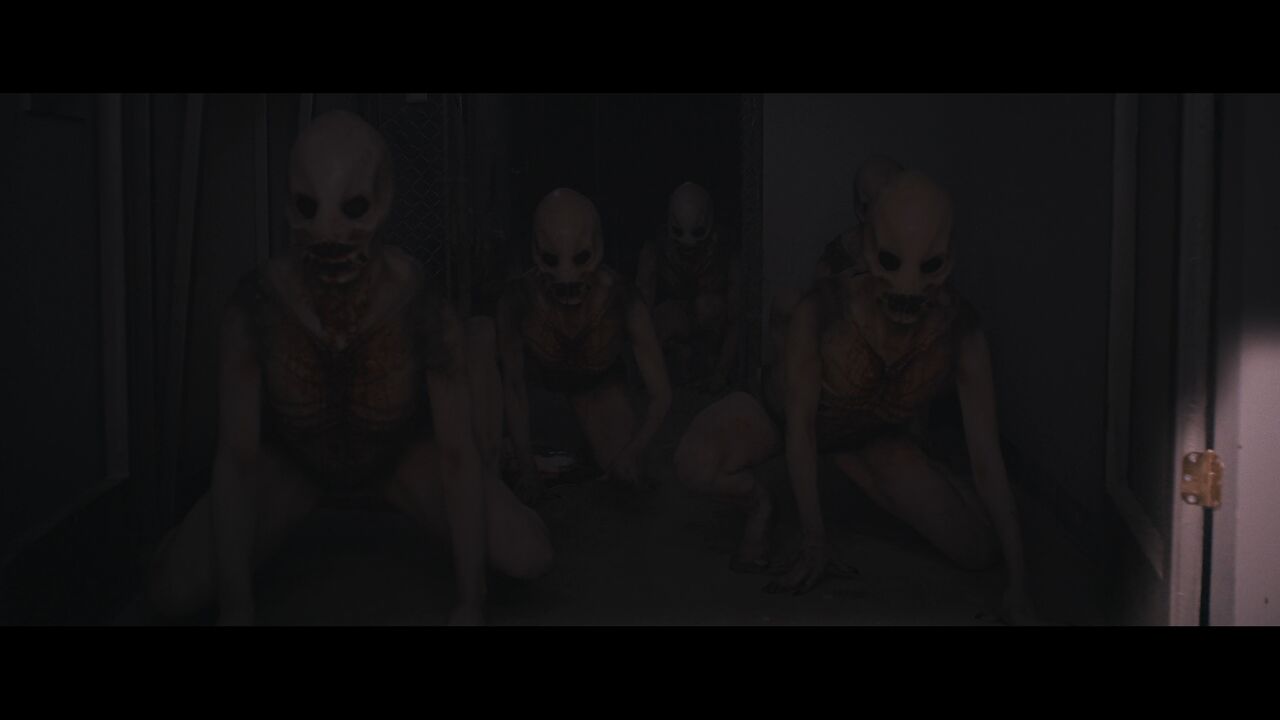
I remember seeing the initial fund-raising campaign for Blood Hunters way back when, but with funds all dried up at the time, I couldn’t back the film. I did, however, track its progress for a while and not long ago an email with the press kit attached was sent to me. The poster art was the first thing that caught my eye, the creatures having an interesting mix of vampire and alien about them, as well as human characteristics. Ryan Knight’s cinematography is the driving factor behind the high production value aesthetics of what is ultimately a low-budget feature. Knight’s extensive work in the short film medium no doubt helped equip him with the knowledge required for undertaking something bigger. The framing looks great and a series of early focus pulls aided in conveying Ellie’s unfamiliarity with her surroundings and the situation at hand. One of my favourite shots is the aerial view over the top of the operating table. Aaron Gilhuis has scored all three of Lee’s feature films and in Blood Hunters he introduces a moody, bass filled score really early on that helps build the suspense. Gentle piano themes slowly work their way into some of the flashback sequences and more dramatic moments. The audio is clean, and given the films setting, it’s effectively lit. In particular the flickering technique used to represent the dwindling power supply.

It was great to see some familiar faces in Blood Hunters, I had no idea who had been cast (if anyone) back when I first heard about the film. Overall, the performances are pretty solid. Gilchrist has been acting for over a decade now and she holds things together nicely. Ellie is certainly the most fleshed out character in the film and you should be able to relate to her struggles (at least on some level). Higginson made a name for herself as Dr Elizabeth Weir, a part of the Atlantis crew on TV’s Stargate. There may have been a propensity to cast Torri as a Doctor in Blood Hunters and I’m pleased that they went a different route. Her character of Marion occupied the grey area while serving as somewhat of a mother figure to the rest of the group. I thought Benjamin Arthur, who I must say looks a hell of a lot like Jason Sudeikis, had lapses with staying in the moment and did take a while to even out his performance and I think that was the reason I didn’t care about his character as much. To those who watch a lot of horror, Julian Richings has long been seen as a genre talent. Unfortunately he just doesn’t get the same exposure and accolades as heavyweights like Robert England, Kane Hodder, and the like, tend to get. I, for one, would love to see Julian as a Freddy Kruger type somewhere down the line. The remainder of the supporting cast are serviceable too. There wasn’t a great deal of action in Blood Hunters but practical effects are a plus and the gore toward the end looks good.

THE BAD

Writer, Corey Brown is another member of the crew who’ve worked with Lee on all of her films thus far. It’s nice to see core groups working together on multiple projects, I think it’s potentially a great formula for making consistent films. That said, not all of Brown’s dialogue is great. Some of the interactions aren’t always smooth and the few lines tossed in for comedic relief, clash, tonally speaking. I was hoping that Brown would write Ellie having the mandatory “freak out” moment in correlation with awakening to find that sizeable baby bump. Being pregnant is one thing, but then there’s finding out the specifics of the conception weren’t exactly conventional, to which Ellie still doesn’t react in a way you’d expect from a woman in that type of scenario. Some of those specifics weren’t as well refined as they could’ve been. Like most films set in a facility, you’re probably going to see the direction it’s all heading shortly into the proceedings. Experiments are bound to have taken place and all that’s left are the ramifications, that and of course plenty of questions surrounding the details of the testing. Maybe it’s because I knew what I was in for (more or less), that I found considerable chunks of the 90 minute running time lagged. Downtime definitely has its place, but it’s usually best after you’ve been hit with intense imagery or suspense, something Blood Hunters severely lacks. I suppose you could chalk that up to how the creatures look, at least in part. They’re most threatening when lurking about in the shadows, but the uncertainty in who or what they are remains, and is highlighted when they step out into the light (they don’t because they can’t but figuratively speaking). A lot of the patchy digital effects work doesn’t help the cause.

Blood Hunters feels a little bit like 2005’s “The Descent” meets the far less remarkable “The Hospital”. I was really impressed with the cinematography, the lighting, and the sound design which includes an atmospheric score. There’s adequate exposition throughout the film although it comes on in fits and starts, and the performances are generally pretty good. This one does contain some practical effects and the blood and gore is serviceable taking into account the style of film. Some of the dialogue’s a miss and our key characters responsive manner doesn’t always pass for plausible. Brown needed to include that reaction based conduct in order for Ellie to be fully believed. The downside here is that almost everything in Blood Hunters is predictable, and when you don’t have more prominent action, and or a greater memorable creature/hybrid/person (whatever you choose to call them) there’s always going to be lulls throughout the run time. If you enjoy films set in facilities then I think you’ll have fun with Blood Hunters. Though not the best of its kind, it’s a polished product that will surely entertain fans. I’ve had Tricia Lee’s, “Silent Retreat” for a while now and I’m looking forward to checking it out, as well as any future films of hers. Check out the trailer and if you want to purchase the film it’s now available from the link below!

My rating for “Blood Hunters” is 5.5/10

One Night Of Fear (Review)

ONE NIGHT OF FEAR


THE SETUP

Firstly I’d just like to say thank you to the people at  Four J’s Production, Caisson Films and 316 Productions for sending me an online screener of “One Night Of Fear”, Co-Written and Directed by Brian Troxell. One Night Of Fear is a Florida made Horror/Thriller about a trio of campers in the Ocala National Forest who are hunted by a deranged psychopath (played by Jason Sutton). Katie (played by Jessica Sonneborn of Bloody Bloody Bible Camp) and her boyfriend, Rob (Jimmy Dempster) have planned to meet up for a day of hiking with another couple and friend, Jaclyn (played by Suzi Lorraine from Pinup Dolls On Ice) *see review* https://adamthemoviegod.com/pinup-dolls-on-ice-review/. After Jaclyn escapes the madman and warns the couple, the trio take refuge in an abandoned cabin, but it’s not long before he tracks them down to finish what he started. The film also stars Russ Forga, Megan Sweet, Joel D. Wynkoop and Mel Heflin.

THE GOOD

There’s no second guessing the intent behind One Night Of Fear, and that was simply to make a slasher film for fans and the like to revel in. I hadn’t heard of Troxell, despite him having worked as a film maker since 2008, nor was I familiar with Dempster. None the less, I’m always open to the slasher sub-genre of horror and I enjoy supporting the little guy as much as I can. Troxell’s backwoods slasher (although this is not your garden variety hillbilly romp) is certainly a paint by numbers entry, which is not necessarily a bad thing, it’s just that a dash of ingenuity often goes a long way when you’re building on a formulaic foundation. The Florida swampland and the cozy cabin in which the film are set, make for great locations and give off a higher production value then the films price tag would suggest. Paul Steward’s cinematography is generally pretty clean, with neat framing and gentle pans and raises via a glide cam. Some of the tracking shots looked impressive and there’s a few gorgeous shots at dusk which are probably the technical highlight. Most of the lighting looks good and the score is strongest when the main piano theme is present during the more dramatic scenes. There’s some cool 80s inspired synth thrown in here but I think it suffers due to some of its sequencing.

There’s not a lot here in the way of substance, particularly regarding our three key protagonists. Over the course of the short 72 minute running time we learn nothing of any real importance about them. We’re essentially just witness to a bunch of backhanded comments between Katie and Jaclyn, taking cheap shots at each other wherever possible between the killers repeated advances. I suppose it’s revealed quite early on that the couple don’t know Jaclyn that well, so Troxell does in a way cover his bases. The best piece of exposition comes in the form of two or three flashbacks depicting a young boy witnessing his grandfather (Joel D. Wynkoop) torturing and abusing his mother. It’s some rather cliché, albeit intense imagery that shows us that the now, killer, never really stood a chance. I think the two best performances in the film come from Russ Forga as Elmer, the park ranger (who closely resembles the late John Candy) and Jimmy Dempster as the leading male (who reminds me a hell of a lot of fellow actor, Jason Isaacs). I found their characters quite likeable, that and they were the only ones who made any sound decisions (relatively speaking). I enjoyed some of the action on display in One Night Of Fear and I give credit to Brian for throwing in some early nudity and a good kill, both within the opening five to ten minutes. There’s lack of logic in a lead up to one particular kill in the barn, but it can be forgiven somewhat considering they save face with practical effects during the kills. The highlight of which involves a decapitation and a bloody aftermath, good stuff!

THE BAD

One Night Of Fear has its fair share of technical inconsistencies, and some of the creative license taken wasn’t necessarily to my liking. The general dialogue audio levels are quite low (though keep in mind it’s just a screener and will differ depending on the quality of your speakers), but it’s the louder and more shrill screams from female characters that will have you reaching for the volume dial on more than one occasion. Most of the cinematography is solid but some of the macro shots are blurry, most notably when there’s action in the scene. Focus pulling can work wonders when implemented in beneficial places, unfortunately they don’t have much effect here. The practical effects were serviceable but the makeup depicting the battered and bruised protagonists wasn’t (namely Jaclyn). I think it’s the music that stood out as being the most poorly established aspect. Off kilter tones transition abruptly a number of times throughout the film. The beginning employ’s a rhythmic guitar with a western vibe, and then out of nowhere switches to synth. Suspenseful score cues when there’s nothing suspenseful happening, and at one stage the music drops out completely before the scene has even cut. Moreover, bizarre choices are made, like total room tone silence, backed with the sounds of middle eastern flute as Rob and the girls navigate the cabin upon their arrival. Overall the soundtrack and its mix are both a complete mess.

Sadly, it was the editing that I found most frustrating about One Night Of Fear. The final cut is jarring and sporadic in a number of places and I’m most disappointed that Troxell and Steward couldn’t see that. Maybe it’s just me but I’ve always believed that for the most part you stick with a scene for its full duration, particularly in low-budget film making. Just about every time One Night Of Fear gets something solid building (suspense wise), there’s a cut to something unrelated or something lacking activity. I understand it’s a technique that can sometimes be effective in creating relevant drama, but this isn’t the setting for it and it doesn’t make any sense to constantly quash any tension you’ve built, especially not in a Horror film. Little continuity inconsistencies are usually par for the course in the genre and One Night Of Fear is no exception. The ranger refers to the trio as “kids” when it’s obvious they’re adults, Jaclyn’s top gets covered in blood and in the scene that follows she’s got a clean shirt on, yet it’s been revealed that the cabin is completely void of amenities (as it’s a guest house). The opening scene intercuts between the killer whose killing at night, and the park ranger whose wandering the grounds during the day. That’s a sizeable continuity flaw unless they were supposed to have occurred on separate days, though why you’d join the two together I don’t know. I’ve seen both Jessica and Suzi in other independent films where I think they delivered stronger performances. I thought Sonneborn and Dempster lacked chemistry and therefore her line delivery suffered. A big part of their inconsistencies lie with some of the writing, but it’s Lorraine’s first scene that required an emotionally charged response and it just wasn’t at the level it needed to be in order to be believed.

One Night Of Fear is a little known independent slasher film comparable to the likes of 2013’s, “Axeman” aka (Axeman At Cutter’s Creek) and Drew Barnhardt’s, “Blood Cabin”. As a huge fan of the genre I can always get behind a slasher that decides to play it straight. I dug the Florida location, the set design and the crisp lighting. Most of the cinematography looks really good, most notably those couple of scenes at dusk. The 80’s esq synth works in certain places and the two male performances are decent. Troxell gives us a peek at the origin of the dirty, overall clad killer but it doesn’t make him any less nondescript. The best part of the film is the practical effects and a couple of the stand out kills, special mention to actress, Lowrie Fawley for her cameo and willingness to show off some nudity, I was impressed. The audio levels were up and down, so much so that some of the dialogue I couldn’t hear properly, certain shots lost their bearing and the music was poorly sequenced and badly mixed. Sizeable chunks of random editing killed any real shot at suspense and only further highlighted continuity issues for mine. I thought two of the three lead performances were below par, and in the end I think there’s a struggle to find enough material here to warrant a feature-length film and that’s perhaps why it only clocks in at 70 minutes (not including credits). I’m sure the cast and crew learnt a lot from the film and even though it’s not a slasher I’d really recommend, I applaud Brian and Co for getting this off the ground on such a small budget. If you enjoyed the aforementioned films or you’re a hardcore fan of the sub-genre, feel free to check out the trailer in the link below!

My rating for “One Night Of Fear” is 4/10

https://www.youtube.com/watch?v=ppeTdnZnyRM

Jasmine (Review)

JASMINE


THE SETUP

Firstly, I’d just like to say thank you to Writer/Director, Dax Phelan for allowing me early access to an online screener of his debut feature film, “Jasmine” from 2015. Jasmine is a Mystery/Thriller set in Hong Kong, about once-successful business man, Leonard To (played by Jason Tobin of “The Fast and Furious:Tokyo Drift”) who is still dealing with the stresses of an ongoing investigation into his wife’s murder. After seeing a mysterious stranger (Byron Mann of TV’S “Hell On Wheels”) at her grave, Leonard becomes obsessed with proving that the man is guilty of the crime. The film also stars Sarah Lian, Eugenia Yuan and Grace Huang. I didn’t know a lot about Jasmine prior to contacting Dax, I’d only seen a brief part of the trailer but it looked interesting. I was surprised to find that it was made back in 2015, but due to personal reasons the release was delayed. The post production phase saw it go through several transformations to end up with what you see here in 2017.

THE GOOD

Let’s get straight into it. Phelan himself, said that he constructed Jasmine with two sets of ideals in mind and that multiple viewings were paramount in order for one to fully appreciate this world he created. I’m a huge fan of bold films and confident film makers with a willingness to openly disclose their intent. At the end of the day it’s all subjective, but as a critic who looks at all facets of the film before critiquing it, I feel like your average movie-goer doesn’t really comprehend intent. Jasmine is almost entirely shot handheld and that makes the high production value cinematography all the more impressive. The framing is consistent and Phelan employs an effective close shooting style for the full duration. Constant shots looking over Leonard’s shoulder and through his eyes and face help to put the audience in his shoes as he deals with the frustrations of being stifled at every turn. Shie Rozow’s dramatic and ambient score feels perfect for the films mostly somber tone, but there’s definite echoes of Polanski (A Knife In The Water) and Hitchcock (Vertigo) in there too. Jasmine is the type of independent film that’s all too rare and sneaks up on you in a wonderful way.

The key to the film rests on Jason Tobin’s performance, and he handles it very well. Leonard is present in basically every frame of the film and there’s not that much dialogue in the 75 minute run time considering, therefore Tobin has to constantly toe the line of perception and reality through mostly his facial expressions as he wanders the streets of Hong Kong. Both actresses, in Lian and Yuan, do a nice job of grounding the film given they have limited screen time. In regards to the script, Phelan has layered Jasmine with such subtle nuances you won’t even realize the proverbial wool being pulled over your eyes until it’s far too late, and much like me, you’ll be left wondering how the hell it happened (in the best possible way). Leonard’s depression and frustrations mount as the film progresses. Old wrist wounds illustrate past self harm, his wife’s fading voice often creeping into his thoughts, though his affinity for cocaine may just play a part in that. He shows no signs of making headway with the authorities who won’t even return his calls, and even when he tries to join in on a random conversation at a bar, he’s barely acknowledged. What does it all mean? If anything.

THE BAD

I don’t like to complain about copyright watermarks that come imprinted on screeners because I understand they won’t be there when the film is officially released, but it’s a nuisance particularly if they don’t disappear for at least a period of time. The audio levels were a little low in places but I was watching the film through standard Logitech speakers that aren’t that great (so I’m sure the hard copy will be fine). I enjoyed nearly all the music but there’s a section of drum orientated score toward the end that becomes somewhat repetitive after a short time. The inconsistency of the accents was the biggest thing that threw me off in the film. Leonard often sounded Australian but I don’t think he was supposed to be. On occasion he comes across more American than anything else, and on that note, at one point Anna (Sarah Lian) actually says to Leonard that she’s not from the states but it’s evident her accent is as American as they come, so I’m not sure about all of that. I’m looking forward to watching the film again with the hopes of getting a little more clarity on Leonard’s contact, Grace (Yuan). Now, I say contact because their connection was never really clear. I don’t know if that’s pertinent but I’m still curious if she was she an old friend/flame? Co-worker? Sister-in-law? I’m not sure.

A cross between Bong Joon Ho’s, “Mother” and Nolan’s masterpiece “Memento”, Dax Phelan’s debut feature film is a modern masterclass in slow burn, tension based film making. Jasmine is guaranteed to sneak up on viewers, it’s a film that seemingly just rolls along and then out of nowhere, stuns you with the one two before you even know what’s hit you. With shades of Denis Villeneuve’s “Enemy” about it, Phelan wraps you up in Leonard’s web of fixation and forces you to follow him down the darkest of rabbit holes. The production value is impressive, the score fittingly moody and the performances are as even as I’ve seen in a low-budget film. The screener audio was a little low, some of that music in the final act gets a bit tedious and the accents are slightly uneven in places. The gripes I have with it are very minor and I can only see this getting better upon multiple viewings. I love that clues aren’t clues until you know there’s a puzzle, and the fact that Dax could pull the rug out from under my feet without me knowing it, given all that I’ve seen, surely makes this the best independent film of the year so far. Brilliant Stuff! The film hits VOD and DVD in July.

My rating for “Jasmine” is 8/10

Karate Kill (Review)

KARATE KILL

THE SETUP

Firstly, I’d just like to say thank you to Judrina Kymantas and Petri Entertainment for allowing me early access to an online screener of the Japanese Action/Exploitation film “Karate Kill”, Written and Directed by Kurando Mitsutake (Gun Woman). Karate Kill is about loner and kung fu master, Kenji (played by Hayate) who after discovering that his little sister Mayumi (Mana Sakura) has disappeared in the US, heads to Los Angeles where he’s confronted with a corrupt restaurant owner (Gun Woman’s, Noriaki Kamata) and a mysterious cult called Capital Messiah, led by Vendenski (played by Kirk Geiger). The film also stars former adult star, Asami (Rape Zombie Series and Dead Sushi),  Katarina Leigh Waters (of the WWE), Tomm Voss and Toshiya Agata.

THE GOOD

I’ll be the first to admit that I’ve never really been all that interested in the martial arts sub-genre of Action films. It’s not that I can’t appreciate the stunt work or the careful construction of the choreography, it’s just that in what I have seen, the story telling aspect has been well off the mark. Some would argue that’s trivial because the selling point is purely the fighting and perhaps those writers aren’t necessarily out to tell a great story. Call me old-fashioned but I need the narrative, hence why the closest thing to a successful kung fu movie in my opinion is Brett Ratner’s, “Rush Hour” (I know, I know, not a kung fu movie). I’ll assume we’re not counting the cheesy but fun, “3 Ninjas” franchise that I used to watch when I was a kid or even the classic “Karate Kid” films. With all that said, I’m fairly open-minded and with Mitsutake behind it, I was happy to give this one a go. The cinematography is surprisingly good for a film of this nature (given I didn’t know what to expect). There’s plenty of establishing shots that help transition scenes, along with tight framing and an unusual rotating camera shot during one of the fight sequences in the restaurant, that was cool. The soundtrack was another aspect that caught me off guard. There’s a neat keyboard theme at the start that reminded me of some of the music from 2008’s, “Never Back Down”. All of the synth music gives off that intentional mid 80s vibe and there’s even a unique homage to the Western genre, in particular Takashi Miike’s “Sukiyaki Western Django”. The performances from the key cast are mostly pretty good. I liked Asami and Sakura but most notably, Hayate, the lead. This is his first time behind the camera and you wouldn’t know it, so kudos to him.

Kurando’s script has sufficient back story for each of its characters and that’s something you don’t see a lot of in Kung fu films (at least the ones I’ve seen). The bond shared between Kenji and Mayumi, like any brother and sister, is a special one. The film was definitely aided by the inclusion of a few flashback shots to when the siblings were younger, allowing the audience to feel that natural protection from Kenji and chemistry with his sister. The villain of the piece, Vendenski is one of the few Americans in the film (speaking in English) along with his henchmen/women. He, too, is fairly fleshed out in terms of showcasing a supreme mindset over the Capital Messiah and its hapless victims. I wasn’t sure if he was supposed to be an ex-Vietnam vet or not, but there was enough there to see where he was at mentally. He certainly looked the part with the whole DeNiro “Deer Hunter” wardrobe, but the timeline doesn’t add up for any war to come into play. I don’t have much of a body of work to make comparisons but the fight choreography and stunt work in Karate Kill was impressive. What boosts the enjoyment of those action sequences further is the well-timed foley effects, every sound matches the corresponding hit and that’s a rare feat. Karate Kill’s revenge aspect could be akin to what you’d see in the Exploitation genre. Fans of said genre will be pleased to know that there’s adequate nudity in here and some good practical blood and gore. The film has a few darkly comedic moments that are fun but the highlights are a couple of gruesome gags involving a hand smash and an ear rip. There’s also a couple of sword deaths that utilize practical effects too.

THE BAD

Karate Kill contains English subtitles as the primary language spoken is Japanese. The subtitles aren’t always perfect, and in turn, the phrasing can appear a little disjointed. The language barrier sees certain chunks of dialogue feeling as though they’ve been too Westernized. Mitsutake implements the use of some POV cameras (point of view), and surveillance like shots during Capital Messiah’s advance on the restaurant and its employees. The technique is fine and adds another element to the film, but the placement of a number of shots from the staff point of view don’t actually make any sense because they aren’t shown to be wearing cameras. Some of the secondary cast members aren’t quite as consistent in their performances as the leads are, at times even Geiger (as Vendenski) becomes rather cartoonish. The film only runs about 85 minutes (minus credits) but the second half does lose a bit of steam and that’s underlined in the disappointing final showdown between Kenji and Vendenski. The effects quickly turn cheap, due to the excessive amounts of on-screen CG blood spray. On the upside, the body count is plentiful (mostly via gun) and some of the after effect prosthetic work was a welcomed addition, but sadly it doesn’t quite revive that final act. Ever since the likes of extreme filmmakers in Yoshihiro Nishimura (Tokyo Gore Police) and Takashi Miike (Audition and Ichi The Killer) among others, Asian cinema has become somewhat of a benchmark for ambitious practical effects, so it’s a little disappointing to see Karate Kill not live up to its full potential in that area.

Karate Kill isn’t the type of film I’d actively seek out but Mitsutake’s exploitative throwback to kung fu films of the early to mid 80’s turned out to be an entertaining experience. This could be likened to 1983’s “Revenge Of The Ninja”, with a trace of Kurando’s last film “Gun Woman” about it as well. The camera work is pretty solid, the foley crisp and the soundtrack quintessentially 80’s with its driving synth and bass. There’s the odd tip of the hat to the Western genre and its revenge facet, and each of the key characters have enough of an arc to get by. Most of the performances are good, the fight choreography surpassed my expectations and when the practical effects are present, they look pretty impressive. Some of the dialogue is a little clunky and several of the secondary players go in an out of character in places. I think the climax of the film ends on a down note, it’s just too CG heavy given what comes before it. Historically, Asian cinema has set the bar high when it comes to blood flow and this gore hound wasn’t fully satisfied with the result here. All that said, Karate Kill is more than serviceable and fans of the sub-genre will surely enjoy it, especially those fight sequences. I look forward to more extreme film making from our friends in Asia! Keep an eye out for the July, Blu ray release of Karate Kill and feel free to check out the trailer below!

My rating for “Karate Kill” is 6/10


Pickup (Review)

PICKUP

THE SETUP

Firstly, I’d just like to say thank you to Director, Jeremiah Kipp for allowing me early access to an online screener of his 15 minute, Drama short “Pickup”, Written by Jessica Blank. Pickup shows a day in the life of bored mother and housewife, Megan (played by Mandy Evans). Her constant desire for some form of tangibility has led her astray on more than one occasion in her marriage to husband, Ben (played by “The Wire’s” Jim True-Frost), a driven business man. With young son Liam to take care of (Griffin Robert Faulkner) and a need to feel something, anything at all, her carefully constructed web might just come unstuck. The film also stars Elena McGhee and Christopher Piccione. I initially reviewed a few of Kipp’s short films back in 2014, but haven’t heard about much from him since. “Painkiller”, “The Minions” and “Berenice” aka “Creepers” were the three that I was sent *see reviews* https://adamthemoviegod.com/painkiller-the-minions-berenice-review/. As a whole, I thought each were pretty well made and now that Jeremiah’s had plenty more experience (something like 35 credits), I was interested to see what his latest had to offer.

THE GOOD

At its core, Blank’s script is a psychological drama about a mother and wife whose grown tired of the daily grind. Megan lives quite a comfortable life financially speaking, but it’s anything but comfortable when it comes to her emotional state. I really like that Blank is willing to stop dead in its tracks that whole misconception of money equates to happiness. How many times do we hear about personal struggles with actors, musicians, athletes? The list goes on and it’s far too frequent to be passed of as just an anomaly. Megan resorts to adultery in an attempt to fill the void in her life but I don’t think it’s out of spite, it comes from a place of loneliness and that will be relatable for some. Blank ties it all in with Megan’s ever-growing but spontaneous addiction, as well as delicately shining a light on the ease with which we can satisfy our urges thanks to technological advancements like social media. I’ll be the first to admit that those developments aren’t all good. Technology is often a distraction from one being present and in the moment, and we’re all guilty of failing that at least to some degree. Kipp’s DP (director of photography), Eric Giovon does a good job with the cinematography. There’s some gentle zooming in certain shots and everything is nicely framed. The highlight for me is where the camera moves with the shopping cart, that was effective. The audio levels are consistent and the score is made up of some smooth piano and bass. For a drama short there’s not a great deal of dialogue but the performances are all still quite good.

THE BAD

On the technical front there was only the one minor complaint I had. In one scene with Megan and Ben in the bedroom, there’s a couple of blurred lights that hit the frame momentarily and it’s a little distracting (probably happened due to the lighting position). In hindsight, the brief sequence in the local bar was somewhat inconsequential, given Megan’s waiting for someone and her addictive personality has already been made quite clear from the outset. I know that it probably acts as a lead in to the final scene of the film but I think it slows the pacing down just a fraction. Ben annoyed me simply because he was so oblivious toward picking up on any of Megan’s signs. Men as a whole are not very good at the attention to detail part, but he in particular failed to read any of her body language, so is often the way, but that was frustrating as a viewer (though not technically a flaw with the film).

Pickup sees Jeremiah foray into something completely drama based, which I haven’t seen him do before. Jessica Blank’s script has shades of Steve McQueen’s “Shame” about it, with its neat handling of addiction and depression. I particularly enjoyed the inclusion of the technology theme and how that figures into modern-day life. It’s a well shot, well acted film with a nice moody score. I think perhaps one or two moments could have been cut to shorten the run time (the bar scene comes to mind) and Ben made for a frustrating character, though one true to life. I’m not sure if there’s value to be gained in multiple viewings but this is an important one watch for a multitude of people, especially those detached from their own lives and those around them as well as anyone that’s having a hard time coping.

My rating for “Pickup” is 7.5/10

Rubber (Review)

RUBBER

THE SETUP

This is a review of the 2010 made, Horror/Comedy film “Rubber”, Written and Directed by Quentin Dupieux. Rubber tells the story of Robert, a tire that wakes in the desert and discovers he has telekinetic powers. From there, film spectators on location watch as the inanimate object goes on a homicidal killing spree somehow linked to a local cop, Lieutenant Chad (played by Stephen Spinella). The film also stars Roxane Mesquida, Wings Hauser, Jack Plotnick and Devin Brochu.

THE GOOD

Well…. just when you think you’ve seen it all, and trust me I have (well there abouts), a film like Rubber comes along to once more reinforce that we haven’t quite seen it all just yet. I’ve seen flying sharks, greasy stranglers, wereskunks (yes that is a thing), killer donuts, killer backpacks, killer tomatoes…. well you get the point, things that kill. However, deadly rubber is a new thing altogether so I give credit where credits due (haha). Rubber was shot in the Californian desert and it makes for a great setting. The vast landscape is established through some really nice still shots. The approach to the cinematography is really clever, because while it’s completely nonsensical and implausible to cast a tire in the lead role of your film (did I really just write that), in the end it’s still a slasher film and so it’s shot accordingly and really professionally. Anytime the tire is on the move the shot setups are often almost POV (point of view), and or shot from a slight angle which helps to give off a voyeuristic look. I’m sure Quentin purposely replicated that look because it’s what you often see when you watch conventional killers in horror films. The score is another interesting facet of Rubber. It’s fun and different, utilizing flute and recorder, as well as a couple of conventional songs to highlight the irony of it all.

I love the concept behind Quentin’s film and although it looks completely preposterous on the surface, make no mistake about it, there’s more here than meets the eye. Dupieux never once deceives the audience, instead opts to tell them exactly what they’re in for from the get go. Doing so through an entertaining breaking of the fourth wall by Lieutenant Chad in the opening minutes of the film (seen in the picture above). The opening monologue is perfectly delivered by Spinella as he greets the audience. It shows that Dupieux, like most of us, is first and foremost a film fan. Referencing the likes of “E.T”, “The Texas Chainsaw Massacre” and “The Piano” and expressing the lack of reasoning behind the things we see in any given film. There’s a ridiculous self-aware nature to the films “no reason” mantra, and somehow it works (for the most part). In fact, it’s so mindful of its own absurdity that Sheila (Mesquida) even says at one point “Who wrote this garbage”, in reference to some of the lines of dialogue she’s given to read by the Lieutenant. Amidst everything, there’s a sort of movie within a movie playing out as an audience of strangers look on from a distance as the tire wreaks havoc on the small town. The infusion of this performance art (for lack of a better term) only further highlights the oddness of it all.

I think all the actors in Rubber know the intended tone of the film and how they’re supposed to play their respective characters, and in turn, everyone gives a solid performance. The films running time is a brisk 73 minutes and most of the focus is on Roberts journey and those unfortunate souls who rub him the wrong way (pun intended). Robert spends his time doing the same things we all do, eating, drinking, watching TV and he even takes a dip at one point (yes you heard me, swimming)…. well okay, it’s not so much swimming as it is sinking to the bottom of the pool, but still. We all know an object can’t do any of those things, but that doesn’t mean it’s not well conveyed and funny as hell. Clever compression and decompression of the tire, with the help of some light sounds, represent his eating and drinking. In another instance, he’s interestingly propped up on the motel bed, watching Nascar of all things (yet some more irony for you). The big thing here is that he has telekinetic abilities and is able to make those around him rupture at any moment, and he does. There’s more than a handful of effective kills in here and they’re all conceived using practical blood and gore effects.

THE BAD

Most of the footage is well shot but on occasion the camera gets a little close and you can lose some perspective. With that said, I’d love to know how the tire movements were done. I’m assuming it was with CG, but if that’s the case you definitely can’t tell because the tire looks like a real one. Even though Rubber is quite short, a few of the scenes feel a touch long and perhaps it may have been slightly better if ten or twelve minutes were trimmed off. There’s a plot point half way into the film that involves a series of deaths that didn’t make a lot of sense to me. It may have been Quentin displaying his abstract thoughts on our reaction to horror films in general, I’m not too sure. If not, what was the motive behind those deaths? That and the one character (played by Plotnick) really exaggerated his acting when his character’s time came, though that may have been intentional. I didn’t fully comprehend the point of the audience portion of the film either, although maybe that was the point.

Rubber ey? Do I dare say that I’ve seen it all now? Surely? One reviewer aptly named this “The best killer tire movie you’re likely to see” and I too would wager that it’d be the only one you’ll see, I just wish I had of thought of that! Rubber is like a cross between “Attack Of The Killer Backpacks” and Cronenberg’s “Scanners”, with a touch of “The Truman Show” thrown in for good measure. I had no idea what to expect going into it and I’d seen a lot of horrible reviews, but after now having watched it, I’d say a few people missed the point. It’s a well shot, professionally handled film with familiar tropes and a completely original villain… or is he/it, the protagonist? You chose. I liked the score and the performances but it’s Quentin’s fresh, bat shit crazy plot, with its self-aware nature, that separates this from just about everything else resembling a B movie. The comedy is there, the blood and gore delivers and there’s even a bit of nudity thrown in. The only downsides were a couple of creative decisions that weren’t necessarily to my liking and the seemingly pointless deaths that occurred half way in. I do feel that if multiple viewings were taken into account, perhaps the short format may have been a better way to go. As it stands, Rubber is a must see for fans of original Horror/Comedies and B movies alike. One of those films you have to see just to say you’ve seen it!

My rating for “Rubber” is 7/10

https://www.youtube.com/watch?v=jH9uDuu0Qu4

Besetment (review)

BESETMENT

THE SETUP

Firstly, I’d just like to say thank you to Uncork’d Entertainment for sending me a press release screener of the new Horror/Thriller film “Besetment”, Written and Directed by Brad Douglas. Besetment follows unemployed and down on her luck, Amanda Millard (played by Abby Wathen). Struggling with home life and her detached, alcoholic mother (Lindsae Klein), Amanda jumps at an offer of a hotel job in a small town in Oregon. The soft, kind owner, Mildred Colvin (played by Marlyn Mason) welcomes her with open arms, but all is not quite as it seems in the town of Mitchell. The film also stars Michael Meyer, Max Gutfreund, Douglas Rowe, Greg James, Hannah Barefoot and Sonya Davis. It’s always a nice surprise when I open my email to find a screener link that’s been sent to me for review, most of the time I’m doing the chasing so this was a nice change of pace. I hadn’t heard of Douglas prior to this film, or for that matter anything about Besetment (despite him having made a couple of other things). I’ve got a lot of Uncork’d film content, some of which has been quite impressive, So where does Besetment fit in that mix?

THE GOOD

The first thing that stuck out to me was the quaint little town that Brad chose to be the primary location of the film. I’ve never been to Oregon but ever since Twin Peak’s (and more accurately), David Lynch’s humorous citing of Bend, I’ve had an interest in the place. Now I’ll assume “Mitchell” is a fictional name, but any who, the timber exteriors of the towns various establishments, the old signage and the dirt roads are just a few things that help illustrate the place being somewhat frozen in time. There were shades of Andy Palmer’s “Badlands of Kain” about Besetment and it’s town of Mitchell and I enjoyed that *see review* https://adamthemoviegod.com/badlands-of-kain-review/. Presented in a stylized neon light format, the films credits and understated forewarning of events is something rarely seen in a low-budget independent horror feature and I dug it. There’s a sentimental, 80’s inspired synth theme that complements the introduction and reminded me of several pieces of music in Adam Wingard’s “The Guest”. Although the film is quite synth heavy, there’s a couple of raw acoustic guitar pieces to accompany the more dramatic moments. Brad’s DP (director of photography), Chuck Greenwood handles the cinematography nicely. Everything is framed neatly and he opts for simple establishing shots to set the tone early, from there, gentle panning and wide shots are among the highlights. A couple of slick aerial shots of the town and its surroundings, along with Amanda driving in her car, help raise the overall production value. The audio levels are smooth and the soft lighting a clear contrast to an ever-growing instability. At just 76 minutes, Besetment never has a chance to wear out its welcome and that’s a wonderful thing. I can only hope that if nothing else, Douglas’s film becomes a cornerstone for fellow film makers to gauge their run time and pacing from because it often suffers in their work. You want to keep the viewer interested and if you try to stall, the more likely they’ll be to look for imperfections, lapses in continuity and other similar things to take issue with.

Brad’s cast were certainly a breath of fresh air and I quickly realized that none of the names were familiar to me (an indie horror aficionado), so I’m always interested to watch new actors/actresses. Abby’s a big part of the reason the film works. Amanda is a likeable young woman, but more importantly than that she’s a relatable one (we all know what it’s like to lack direction in life). Her performance was even and she delivered what was emotionally required for the role. The surprise packet here is definitely Marlyn Mason though. Dare I say it, but it’s rare to find an older actress in the genre these days who actually has the ability to sell you on a character. A big part of why Mason steals the show  is due to Douglas’s clever writing and if I’m honest she puts Betsy Palmer (of Friday The 13th) to absolute shame. Outwardly, Mildred is the nice old lady next door. She brings you cool lemonade when you’re playing in the street, feeds you if you’re hungry, hell, she probably even attends bingo night (although I’m not sure that exists in this town). There’s nothing off kilter about her and that usually makes for a tricky balancing act for a writer, how much to give up and when to give it up. Ti West’s “The House Of The Devil” *see review* https://adamthemoviegod.com/the-house-of-the-devil-review/ is as superb as it is because of how well he handled the family and their emergence. Same goes for Douglas with the Colvins. Meyer plays Billy, Mildred’s adult son who still lives with her. I think Meyer plays it fairly safe, though the character is a little cliché and he probably didn’t want to risk over doing it. The police (James and Barefoot) and fellow townspeople (Gutfreund and Rowe) are mostly secondary characters with limited screen time but each are believable enough in their respective roles. Besetment has some brief action sequences with practical effects but the bulk of it plays as more of a thriller than a slasher. With that said, there’s some nice plot twists thrown in for good measure.

THE BAD

From a technical point of view Besetment is extremely well presented. Aside from a couple of minor lapses in camera focus and a rather visible prosthetic piece that can be seen during the climax, there’s not too much to complain about. Most of the dialogue and interactions feel authentic but there’s a couple of bungled lines where the phrasing isn’t quite right. Mildred says to Amanda at one point, “Come and sign the paper forms” which just doesn’t sound right, obviously it should be “paperwork” instead. In the same vein, Amanda’s friend Brittany (Davis) says to her, “That will go down like a shit balloon” (or something to that effect). I’ve heard the saying “go down like a lead balloon” but the phrasing here just sounds wrong. The premise sets itself in motion pretty organically but I couldn’t help thinking surely Amanda would ask about some of the specifics of the job before just accepting it. In the beginning it’s revealed that she’s not really qualified for much, so I suppose there’s that argument. Though when you’re in a small town a ways from home, you’d think you’d want to know what’s really involved, so I found that a little convenient. There’s a few other details in the writing that I didn’t really care for, such as the structure of Amanda’s communication with Brad, the local cafe chef. Following the twosome’s first stiff encounter, which sees Amanda less than impressed with his advances, they’ve all of a sudden got a little thing developing. It felt as if no time had passed and a scene was missing in order to segue into that connection in a smoother way. The inner workings of the relationship between Mildred and Billy went further than I’d expected as well and it was perhaps a little heavy-handed (one scene comes to mind, no pun intended haha). I predicted some of Billy’s decision-making early on in regard to the situation and the final sequence of the film just felt shoehorned in to satisfy slasher fans, particularly those of sequels.

I went into Besetment knowing very little about it and in the end was pleasantly surprised with the result. It feels like a combination of Stephen King’s film adaption of “Misery” and Jim Lane’s independent film “Betrothed” with a touch of “Psycho” about it. I love the small town vibe and the pacing in regard to its character development and reveals. It’s well shot, sounds great and the score is a good mix of synth and acoustic ballads. The performances are solid and Douglas keeps his footing in a number of different genres as the film plays out. There’s a couple of minor technical issues, some patchy dialogue and a number of specifics I could take or leave, most notably the ending. Those things aside, Besetment is a thoroughly enjoyable and fast paced film that I can definitely recommend to fans of a good quick Horror/Thriller. It’s due to be released on VOD on June 6th and DVD in September. Check out the trailer below!

My rating for “Besetment” is 6.5/10

Zombie Pirates (Review)

ZOMBIE PIRATES

THE SETUP

This is a review of the Region 1 (U.S Import) DVD of “Zombie Pirates”, Written and Directed by Steve Sessions (Dead Clowns and Shriek Of The Sasquatch!). Zombie Pirates is a micro-budget horror film about Linda (played by the lovely Sarah French), a dangerous young woman whose got herself in hot water over a crime. Soon after, a mysterious older gentleman named Grant (J.C Pennylegion) arrives at her doorstep to inform her he has proof of her wrong doing. The two strike a deal regarding ancient fortunes of a once infamous local buccaneer, Captain Lassard (Eric Spudic). Linda must deliver five human sacrifices to a neighboring ghost ship in order to gain the coveted treasure or face the wrath of the zombie pirates. The film also stars Denman Powers, Dawn DuVurger and Lucien Eisenach. Zombie Pirates isn’t my first foray into the works of DIY (do it yourself) micro-budget film maker, Steve Sessions. I remember seeing his film “Sinister” four or five years ago and I’ll be honest, it was a downright mess. It didn’t help that I had little interest in its witchcraft themes, but even still, from a film making point of view it was a tough watch. A few years have gone by since then, so let’s see how far Sessions has come in that time.

THE GOOD

Let’s throw it out there straight away save any confusion, Zombie Pirates is certainly a micro-budget film (if you didn’t already know that). In fact, I don’t think funding has increased at all over the years for “This Is Not A Dream Productions” (Steve’s company), as is often the case in the world of independent film making. Still, you’re either one of those types that makes it happen with what you’ve got or you forego it altogether with fears of delivering an inferior product. I don’t know who was responsible for the artwork on Zombie Pirates but it looks great, the hand drawn design of lead actress Sarah French is representational. One of the strongest aspects here is Steve’s script, and probably because it deviates from the familiar trend of a cliché zombie outbreak. This particular setup injects a welcomed element of crime, something that’s never really been explored in any of the zombie content that’s out there. Most of the technical positions don’t have crew members credited on the official IMDB page, so I’ll assume Sessions did most of it himself. The camera work is okay considering the equipment probably wasn’t of the highest quality, but the framing needed a bit of work. There’s plenty of decent establishing shots that help sell the seaside locale and some solid POV shots (point of view) that lead into a death sequence. The audio levels were surprisingly good and that’s a tricky thing to get right on such a low-budget. Sessions scores all his own films and did a nice job of this one. The opening theme utilizes sounds of a whaling synth, and later there’s a unique piece of flute music which brings to mind a similar tune in 1997’s, “Anaconda”. Extra bass is applied in the mix when the ghost ship appears, that was a nice touch.

Steve’s script definitely isn’t lacking exposition regarding the origins of Captain Lassard. Early in the film Grant gives Linda what can only be described as a sermon, going into all sorts of specifics about how and why the ancient treasure exists etc. I think with a title such as this one, more people than not aren’t going to place much importance on how and why the films scenario came to be. I’m usually a stickler for details and looking to see if things are explained properly, but even I found it difficult to care much about the semantics and was much more about the conflict. The performances are about what you’d expect in a micro-budget film, some passable, and some not as much. J.C’s historian like approach fits his mysterious character, not to mention he looks the part as well. Powers as the Detective, gets his fair share of dialogue but his interactions with French often feel rigid. French is left to carry the film and although she’s serviceable, I’ve seen her do better work. On the effects front, there’s a few cuts to shots of a practical pirate ship and I’m stumped as to how they were done. One would have to assume it was with miniatures, either way it’s a real highlight. Say what you want about cheap costumes, but in the case of Zombie Pirates they actually look alright with a careful course of lighting. On a down note, it’s almost a 35 minute wait before we get to see them. I have to commend Sessions for getting a limb or two made for the film, as well as a practically fashioned head. He even threw a few maggots in with the blood, it’s not much in the way of gore but it counts for something (or should).

THE BAD

I’ll start with the biggest issue and it’s the 91 minute running time. An hour and a half is your average film length, which is fine, but your average film is made with some actual funding behind it. Unfortunately when you make a low-budget film, that’s rarely the case and it’s where you can get yourself into trouble. The counter can often be the enemy, and in the case of Zombie Pirates this is true. There’s so much excessive fat that could’ve been trimmed off or tightened up to make this a far better film than it is. Several dialogue free scenes are simply repeated for the sake of it, with a few new shots thrown in but nothing to drive the plot forward. The ideal running time for a film of this nature should be 60 to 65 minutes, no more. Like any micro budget film, there’s plenty of issues with this one. The worst attribute is probably the harsh lighting in a number of the internal shots at Linda’s house. Sessions needed to pull back the brightness levels, there’s glaring white light in both shots of Linda in the bathroom and lounge, even the scene in Grant’s motel room looks rather rough. Several transitions aren’t that smooth and some shots are just unnecessary. For some reason blurry water and the ocean are continually shown, so to is a repetitive sequence of Linda driving the boat out to the ghost ship. The sound clips on occasion and the foley isn’t the best, most notably during Karen’s (DuVurger) second phone conversation with Linda. It sounds like she’s talking through a two-way radio (haha). Other sounds of impact hits and body thuds don’t match, and in one scene sounds cuts off prematurely with three or four seconds of footage still remaining. During the last act there’s a constant droning sound in the background, one that I’m guessing represents a ship coming into port, either way it’s grating. Steve’s score is almost continuous from start to finish and it does get a little tedious, but on the other hand, the rare times the score is absent, it’s all too bland. I enjoyed the brief practical effects shown but the handful of CG blood spurts look amateur.

So many of the continuity related issues in Zombie Pirates were avoidable with a little more time and attention to detail spent in the edit. Most of the time it’s as simple as a tweak here or there, the aftermath of the first death is confirmation of that. One of Linda’s unlucky male victims is supposed to have been beaten to death, only problem is that we see a close up of him and there’s no visible marks to help sell that to the audience. It’ll be hard enough for the viewer to buy that he was killed from just a few hits, so at least get some makeup out and bruise the face up a little, throw in some blood and just make an effort. Don’t have your characters reference things with physical means if you can’t or don’t intend on showing them. I understand that budgetary constraints can come into play, but there’s a scene where the Detective shows Linda photos proving he knows more about her case than first thought. That writing choice doesn’t hold any weight because the image is only fleetingly shown and it’s so fuzzy you can’t make out what it is anyway. In another scene there’s a death via knife. Now it’s clearly a plastic knife, no real qualms with that. I figure there was no money for molds and prosthetics and such, but give the fans more blood, blood is cheap and it raises the overall production value. Toward the end of the film there’s a piece of dialogue that makes next to no sense, but made me laugh all the same. The Detective says to Linda “There might be a back way out”. I’d say that considering the house is Linda’s she would know that. I’d be lying if I said that Powers performance didn’t bug me, it was more that there was just no sense of urgency about the situation. Even when he becomes aware of the true motive behind Linda’s killings, see’s it up close and personal (yes the pirates), he still doesn’t have that human reaction, that moment of bemusement.

I think I’ve had Zombie Pirates sitting in my collection since 2014, so it was nice to finally get around to watching it. Sessions hadn’t set the bar real high for me but I was pleasantly surprised with what I saw, though the result could’ve easily been a lot better. It feels like a cross between “Zombie Lake” and “The Blind Dead”, only made on even less of a budget than those B movies. I dug the artwork, along with Steve’s script that welcomes a new setup I haven’t seen in the zombie sub-genre thus far. Some of the camera work is alright, the audio surprisingly clean and the score much better than you’d think. There’s plenty of dialogue laying out the origin of the pirates (if that floats your boat) and Sarah French does a decent job of carrying the film. The best aspects are those gorgeous shots of the ghost ship and the zombie pirates themselves. There’s a couple of prosthetics and a bit of the red stuff, but don’t expect much considering this was probably only made for $2,000- $3,000 (at a guess). The biggest hindrance to the re-watch ability factor of Zombie Pirates is the overly long running time. This thing needed to be cut by 25 to 30 minutes in order to tidy the dispensable up. There’s sub-par lighting, editing and foley at different points throughout the film and sometimes they all converge in the one spot. A few things were required to make this more professional. A once over the script to fix some of the dialogue, attention to detail in giving the most in regard to makeup, and just more blood in general. My advice here would be for Steve to do a re-cut, trim the fat and add some more Zombie action and you’d have a very watchable product. As it stands, Zombie Pirates is probably one for the hardcore fans but most others are going to struggle to see it through.

My rating of “Zombie Pirates” is 3.5/10

https://www.youtube.com/watch?v=ErIRQDDpn-4

The Twisted Doll (Review)

THE TWISTED DOLL

THE SETUP

Firstly, I’d just like to say thank you to Writer/Director, Andrew de Burgh for allowing me early access to an online screener of his 8 minute, Horror/Mystery short “The Twisted Doll”. Through a mutual friend, Pooja (played by lovely Bollywood actress, Elisha Kriis) and Jack (Isaac Anderson) are paired, but all is not as convenient as it seems when hidden agendas come to the surface. The film also stars Raksha Colaco. It wasn’t all that long ago that I inquired about Burgh’s previous short film “Just One Drink”, but I wasn’t able to watch it at the time as it was busy doing the festival rounds. So with that in mind, I was surprised to get an email from Andrew about his self-described, Christopher Nolan (The Prestige) meets George Melies (A Trip To The Moon) inspired short, The Twisted Doll.

THE GOOD

I believe The Twisted Doll is Burgh’s fourth short film, but this is of course my first venture into his work. I was intrigued when he mentioned Nolan and Melies as influences for the film. I can only imagine he was talking about Nolan’s early Mystery/Thriller, “Following”. Which if memory serves me correct, he shot back in his days of university. The obviously matching black and white presentation is only part of it, I can see an air about the aforementioned film in terms of the way Pooja develops that relationship with her mark. George Melies was perhaps the first notable film maker of the 20th century, with some of his early silent films recognized as where the birth of cinema truly began. In a round about way Bluebeard came to mind while watching this one, though it may have just been the fact that both are silent films, I’m not sure. Being a silent film, the music and score are usually paramount. I was pleased to hear some heavy synth pumping through those opening minutes, very 70’s/80’s in style. I’ll be the first to admit that I’m a sucker for the black and white format (when it’s done right and justified) and combining that with the element of silence is daring to say the least, especially in this day and age. Elisha has that seductive appeal about her, she’s an incredibly beautiful women. I like the subtleties in her facial expressions which timely suggest the things to come.

THE BAD

Initially the black and white production was enough to get me in but I wasn’t a huge fan of the cinematography style. There’s a number of shots that weren’t framed as well as they could have been (just a personal preference) and a more cinematic approach probably would have raised the production value. I noticed a line of dialogue between Pooja and Jack that didn’t make a lot of sense. She mentions something about a form of yoga and a Hindi god (I think it was?), to which he’s confused on the meaning of and replies with “I was up really early for work” or something along those lines, it was clunky. The climax of the short isn’t all that unexpected, and due to the absent dialogue audio (intended) I’m not sure it carries the desired weight.

The Twisted Doll definitely has an experimental appeal about it and that makes for a solid introduction to Andrew de Burgh as another up and coming filmmaker. I respect his boldness to name those artists that inspired the film (too many are worried about public perception) and I do like the additions of the black and white and silence. The music drove it and Pooja makes for a captivating protagonist. From a technical stand point I can’t fault the way the film was shot, but I’d have preferred some more diverse shot choices and omitting those odd angles. Andrew’s script is fairly straight forward, so without an audio track I don’t think it quite hits home as hard come the resolution. All that said, cinephiles will find plenty to like here and if you enjoy your mystery’s short and snappy, keep an eye out for this one soon! Check out the trailer below!

My rating for “The Twisted Doll” is 6.5/10

Pool Party Massacre (Review)

POOL PARTY MASSACRE

THE SETUP

Firstly, I’d just like to say thank you to Floating Eye Films and Writer/Director, Drew Marvick for allowing me early access to an online screener of his Horror/Slasher film “Pool Party Massacre”. Blair Winthorpe (played by first timer Kristin Noel McKusick) and her friend, Nancy (played by the lovely Margaux Neme) are planning a pool party at her house while her parents are away for the weekend. She also invites fellow young socialites, Tiffany (the gorgeous Alexis Adams), Jasmine (Destiny Faith Nelson), Brittany (Crystal Stoney) and Kelly (played by Jenifer Marvick). A relaxing summer day by the pool quickly takes a nasty turn when a mysterious killer starts murdering the group one by one. The film also stars Nick Byer, Mark Justice, LeeAnna Vamp and Drew Marvick. I first heard about Pool Party Massacre around six months ago and ever since then I’ve been anticipating the release date. It’s almost here (I believe it’s close to shipping), but I’ve been fortunate enough to network a little bit with Drew and got a screener of the film a little earlier than expected. All I knew about it was that it had a rad poster and people were going to get massacred during a pool party! What more do I need to know? It’s a slasher….

THE GOOD

I quite liked the original poster art for Pool Party Massacre but the latest version looks really cool too. Extremely vibrant colors and eye-catching lettering are bound to assist in the marketing of this micro-budget slasher flick. It’s evident in almost every facet of the film that Marvick’s long been a fan of the genre and its subsequent sub genres. This isn’t a guy that thought “Hey, I’ll just try to cash in with an homage to slashers of the 80’s”, he’s  put a lot of time and effort into this debut feature-length film and it shows. Drew’s a student of what I call “Horror 101” and that usually means a film of this nature should consist of the three key aspects, Nudity, Sex and Violence (the first two normally follow each other but the third isn’t always done to great effect). Within 5 minutes of the opening frame, there’s a death alluded to followed by an on-screen kill. The intro credits are great, they’re presented like an old-school Sega video game with complementary synth sounds. According to the post credits the film was shot in Marvick’s house, and if that is the case I’m extremely jealous. What a gorgeous house. I think the location is a huge part of what kept me involved with the film, something rarely said by anyone about a slasher film (haha). I believe Pool Party Massacre was made for just an estimated $7,000, but you wouldn’t know it because the production value is perhaps the best I’ve ever seen, taking into account the budget. The film opens with some really nice still shots during a scene between Mrs Stevens (played by Vamp) and the pool boy (Cameron Lee Vamp). With seemingly very little experience, DP Brian Mills shot the sharpest looking film a first time director could hope for. All the shot choices are wonderful and the framing looks crisp. We get the obligatory slow motion shot of the “girls squad” walking in full, which is played for laughs. Early on Marvick sets the bar high from a visual standpoint, utilizing nice focus pulls, some tracking of the unseen killer and then tops it all off with a tight overhead shot of a victim and a close look at the implement used for the kill. There’s also enough POV (point of view) camera work in here for fans of that particular stalking device from the 80’s.

While I’m still on the technical aspects, I thought the audio track and foley were both good. The sounds matched all the impact hits and that’s a tricky thing to get right in low-budget film making. Rob Sholty’s color grading is bright and dynamic and among the best I’ve seen in any slasher film. Scenes internally look just as good as the externals and the crew battled the natural light very well. The score was somewhat of a mixed bag but I’ve always been a bit of a sucker for the 8-bit synth stuff. The music doesn’t ever become overpowering which is good, and I did like the casual quirky synth and bass notes when the killer was due to appear. Let’s get to the meat and bones of it all shall we? (pardon the pun) You want to know about the horror and the comedy. There’s no doubting that the eye candy is on display in Pool Party Massacre. All of the girls have their own style and they’re a good-looking group of women. Vamp is the first one on-screen and she looks as sexy as ever, but my personal favorites were Alexis Adams and Margaux Neme. My intrigue with Adams actually has nothing to do with her previous adult film career (of which I honestly didn’t even know about prior to seeing the film), it’s more about her confidence with acting and how she carries herself. It obviously helps that she’s got a lovely face and a nice body too. As for Neme, whose of an Hispanic background, she’s just delightful and really one of the only mature characters in Marvick’s film. She’s absolutely gorgeous and I liked her character from the moment I saw her. Kristin reminded me a lot of fellow actress, Brittany Snow and I think she gave the best performance in the film (even more important considering she’s the main character). Her comedic timing was spot on and the facial expressions were priceless. It was a stereotypical character she played but she did a rare thing and carried it well and made it work. Nelson and Stoney play two more of Blair’s snobby and dimwitted “friends”, they were decent as well. Stoney’s got a great figure and looks the best in a bikini and Nelson was tested with a shower scene involving some nudity. She’s the only other actress to take her clothes off aside from Adams, her curves are very nice and kudos to Destiny for putting herself out there.

It’s the women that dominate the screen time and that’s a good thing to see. Most of the male characters here are secondary ones (a rarity) and I like that Drew was willing to employ that into his writing. Each of the performances are pretty good if you take into account the limited experience of the cast. Some of the comedic scenes were a lot of fun, the humor in the opening scene comes to mind. It was carried out mostly due to a contrast between metal music and porn music (for lack of a better word) and some clever edits. A clearly clueless pool boy has his headphones in, blasting out metal as the sexy neighbor attempts to entice him by rubbing ice on her body and hinting at him in a suggestive way. Scenes like that are funnier to me than any of the low-brow toilet humor gags that followed. Clay (Byer) was a character I initially thought was a crack up. He arrives at the party with his brother Troy (played by Justice), looking like Larry Wilson from Weekend At Bernies and trying to hit on each of the girls. He looks a lot older than them so Drew threw in a few age related gags that were also pretty funny. Okay, so onto the good stuff. I mean it’s called Pool Party Massacre so I’ll get to the killing hey? The elaborate set pieces you might be used to seeing in bigger budget slasher films aren’t really on display in this indie. Now that’s not to say there isn’t on-screen carnage, it’s just that you can only do so much with limited funding. The most positive thing Marvick did was introduce a killer that uses an array of weapons, because after all, variety is the spice of life. The blood flow is strong and all done practically, also, the body count is sizeable and several of the kills are pretty inventive. I particularly enjoyed the two involving a hammer and the other with what looked like a hedge trimmer. Some prosthetic pieces would have only further added to the entertainment, but I know sometimes there are limitations.

THE BAD

Like all low-budget undertakings, there’s a learning curve and not everything goes swimmingly. Marvick’s film has some patches of obvious ADR (additional dialogue recording) intertwined with the on set audio, which is sort of par for the course on a small independent shoot, but given this takes place in primarily one location with little noise from outside distractions, I wouldn’t have thought it was needed. The only time the score felt a little heavy-handed was during a spate of dialogue between Blair and Danny (I think it was?), I think it could have been pulled back in the mix. In hindsight, I would’ve loved to have seen Drew get “Pool Party” from The Aquabats into the film’s soundtrack as well. There’s a handful of small continuity issues scattered throughout the film, some standing out more than others. The color and consistency of the blood changes a few times, usually looking better in the aftermath and more pink and watery during the kills themselves. Blood is a tough one to get one hundred percent right and it needed some more work. The pool that’s being cleaned in the beginning probably could have had some more debris put in it to make the cleaning of it more believable. During the same scene there’s an establishing shot showing an empty backyard and a clean pool, yet seconds later Mrs Stevens is sunbathing poolside with no actual lead in. Drew could have had her exit a sliding glass door and walk over to the beach chair just to help keep the continuity in order. In a later scene, Nancy runs back into the same room she originally left after an altercation, you’d think she’d remember not to go back in there (although that could be an inside joke poking fun of the horror movie clichés, and there’s every chance it was). Neme can also be seen breaking character and almost laughing during the scene that precedes that one. I thought the dialogue in the second half was grounded more in comedy than horror and it didn’t really work for mine. The writing becomes a bit crude for my taste, going a little far sexually for the overall tone of the movie. The girls are guilty of some unnecessary excessive profanity, particularly Tiffany (although that falls on the writing). A couple of scenes start off funny but become tedious fast. Clay’s “Ferris Bueller” theory takes up what feels like five or six minutes of screen time and the masturbation scene was just awkward (probably the intention though). Clay became too much for me in the end and I wanted to see him swiftly dealt with.

I have no idea how many films I’ve watched or reviewed now with the word “massacre” in them, let’s just say it’s a lot. Drew Marvick’s, Pool Party Massacre was clearly made with a lot of love, and for the most part the appropriate amount of attention to detail. As much as I’m a sucker for the nostalgic aesthetics of the 80’s, I’m very pleased to see Drew release an extremely polished product that drives high production value and makes fellow genre filmmakers raise their game. It feels like a cross between 1982’s ” The Slumber Party Massacre” and Joe Hendrick’s more recent “Ditch Day Massacre”, only better. Marvick knows and understands the need for those three key components that make a successful slasher and he handles them each pretty well. The opening credits are fun, the synth is energetic and the color grading is expertly crafted. My favourite aspect has to be Brian Mills cinematography. I’m making an early call in saying this will be the best shot independent horror movie of 2017. Take note fellow filmmakers, this is how you frame shots properly, this is how you pull focus and transition between them smoothly. That being said, it helps that the house and yard look beautiful as well, location location people. The comedy works best when Kristin and Alexis are on-screen, but the remainder of the girls have their moments and so to does Nick Byer. In fact, the acting all around is fairly consistent. If it’s nudity and violence you’re after, Pool Party Massacre delivers in spades (side note, I think a spade is actually one of the only weapons that doesn’t get used!). The kills are mostly on-screen and the crimson gushes steadily, all while the film plays out on the smallest of budgets. Sure, there’s the odd continuity and technical related issue, as well as a sizeable chunk of dialogue that I didn’t care for. Certain jokes come off as plain awkward and not funny, but this is still a freaking stellar effort by Drew, his cast and crew. Pool Party Massacre has heart and if you enjoy low-budget affairs and you’re a slasher fan, look no further! Below is the official trailer and website where you can pre-order the film so do it and support the little guy!

http://poolpartymassacre.com/

My rating for “Pool Party Massacre” is 7/10

Tethered (Review)

TETHERED

THE SETUP

Firstly, I’d just like to say thank you to Co-Writer and Director, Daniel Robinette for allowing me early access to an online screener of his 12 minute, Horror/Drama short “Tethered”. Solomon (played by Jared Cook) is a young boy living a life in isolation after being abandoned by his mother. All he has guiding him is a daily routine centered around three specific rules, the most important of which is to never detach from the rope he’s tethered to. What happens when curiosity causes him to wander further than ever before? The film also stars Kayla Stuhr, with voice acting from Grace Mumm. Tethered is Daniel’s fourth short film but this is my first review of his work.

THE GOOD

Daniel and Co have written an interesting and engaging script that fittingly suits the short film medium. The rules of the world are divulged immediately, via a pre-recorded audio taping that Solomon listens to on a daily basis. I liked that aspect and that it was introduced right off the bat to help you understand the boys environment. Tethered taps into that element of curiosity we all have about the unknown (how we fear death for example). Not only does Robinette instill that in his protagonist, he takes the audience along for the ride and in turn makes the viewer curious about the direction the film is headed. This was shot in a glorious and beautiful heavily wooded area in North Carolina, which is one of my favourite parts about it. DP, Aaron Sorgius has worked on each of Daniel’s shorts and I can see why, the guy has a wonderful eye (two even). There’s really sharp close-ups, along with cinematic wide shots and fantastic aerial ones to boot. The high production value is clear from the outset, and only made clearer with a stunning jib-shot (crane) over a picturesque lake in the forest. Jeremy Tassone’s edit works superbly given the amount of quick cuts that were used, a technique I don’t normally love. The bass driven score is yet another facet that impresses. There’s also some really nice deep cello as the short heads towards its climax. Cook is the only person on the screen for a majority of the quick run time and he does well.

THE BAD

I went back and forth on whether Solomon was supposed to be visually impaired or not. I think he was but on a couple of occasions he appeared more aware than one would expect, especially once he really ventures out into the woods, that part was a little unclear at times. If I’m honest, I didn’t love the resolution. My preference would’ve been for the story to go another way, something a little more impactful.

Tethered made for a great introduction to Daniel’s work. It was quite reminiscent of M. Night Shyamalan’s underrated masterpiece, “The Village”. The script deals with emotions like loneliness, curiosity and fear and presents them in such a way that is completely relatable for an audience. The cinematography is perhaps the best I’ve seen thus far in 2017, the editing was sharp and Matt Vucic’s score really helped build an eerie atmosphere for the full duration. I wasn’t quite sold on a couple of the specifics and I would’ve liked to have seen it go in a different direction come the climax, but I’m not quite sure what that would be. In the end, Tethered is simply a must see and I rate it right up there with the best shorts of the year along with Alex Gibson’s, “Match” *see review* https://adamthemoviegod.com/match-review-2/.

My rating for “Tethered” is 8.5/10

Match (Review)

MATCH

THE SETUP

Firstly, I’d just like to say thank you to iByte Films and both Writer, RJ Ortiz and Director, Alex Gibson for allowing me early access to an online screener of their 9 minute Horror/Thriller short “Match”. A regular night at the bar for old buddies David and Gabe (played by Alex Zuko and J. Benedict Larmore), takes a more sinister turn when they realize Russia might not be the only country experiencing strange events. The film also stars Virginia Newcomb (Peacock) and Eric Michael White. Not too long ago I had the chance to watch Alex’s previous short films “Stranger In My Mirror” and “Holidaze” (the latter coincidentally directed by Ortiz), both of which were quite well made considering their micro-budgets. Gibson clearly has a keen interest in a number of genres, and that makes for a great foundation with which to work from.

THE GOOD

Writing a synopsis for a short film can be tricky, because on one hand you want to inform readers on what they’re in for, at least to a certain extent, but not so much so that you ruin any of the film’s key unknowns. Ortiz’s script is definitely an astute one, its focus seemingly on a singular insignificant match and how that fits into the world of the story. Is it simply that once it’s gone David will finally quit smoking? Or is this a cautionary tale of sorts, about being prepared for the unknown? For most of its quick running time you’re never fully aware of what you’re actually watching, and in this case that’s a good thing. I thought the framing was precise and all the cinematography clean. High production value on display despite just an estimated budget of $1,600. There’s nice tight cuts and edits, along with a crisp audio track making dialogue distinct. The score is used to good effect, with its rumbling low-end bass depicting a clear shift in tone. In addition, there’s a nice piano ballad that gently builds toward the end. From the outset, it’s obvious that Zuko and Newcomb have a real natural chemistry together. She plays Ashley, David’s partner, and together it’s the two who are trying to quit their ugly habit. Both Zuko and Larmore handle their scene well too.

THE BAD

There’s only one thing missing in Match and that’s Gabe having the opportunity to call David and let him in on whatever he’d just been privy to, instead, opting against it. To be fair, it seemed as if the phones had started having connection problems. That said, I still thought he might have tried.

It’s great to see Gibson continuing to make more shorts and it’s hard to believe that Match is RJ’s first writing credit. I had no idea what to expect and I was enthralled by the numerous avenues this could have potentially taken, yet pleased where it settled on. The technical aspects are all well conceived, the music fits and the performances set a high standard for other fellow independent actors. Match is Alex’s best work yet, and I look forward to seeing many more of these types of shorts!

My rating for “Match” is 9/10