Flora (Review)

FLORA


THE SETUP

I’d just like to say thank you to first time Writer/Director, Sasha Louis Vukovic for allowing me early access to a screener of his Adventure/Drama/Thriller film, “Flora”. The year is 1929. A group of university botanists, led by Basho (Dan Lin), head out on a research expedition to an uncharted forest. Upon arriving, they discover remnants and belongings of their Professor’s (played by Paul Turcot), but he’s missing. Basho’s analysis of the local plant life reveals an ancient and potentially fatal organism that ultimately begins threatening the safety of the entire group. The film also stars Teresa Marie Doran, Sari Mercer, Miles G. Jackson, Caleb Noel and William Aaron. I stumbled upon a brief article and trailer for Sasha’s debut feature-length film a couple of months back and I thought it sounded intriguing.

THE GOOD

No you didn’t misread “1929” in the above synopsis. Vukovic’s undertaking of a period piece is quite brazen and risky in this day and age. One often finds success on the film festival circuit with an idea as specific as this, but among the masses, can swing with a miss. As a fan of old-time period pieces I can applaud Sasha right off the bat for getting so many aspects right, but more on that later. Let’s get straight into it, shall we? Flora was shot in Canada for an estimated $100,000 (I believe over a two-year period). Eric Irvin, the cinematographer on the film (and first timer might I add) couldn’t have done much more with the presentation and the parameters of its budget. First and foremost, the location is lush and heavily wooded, and with the warm color grading, it gives off a higher production value. Irvin’s framing is mostly resourceful and he implements some really clever shots. Resting the camera over the wheel arch of a car while it’s in transit and using a reflection from the lake, are just a couple of examples. In addition, he generates some subtle jib shots that move through the grass and over the water. Drone operator, Alex Loft captures a great rock face and waterfall late in the film but his best work is certainly an aerial shot that slowly pans up looking over the students tents and campsite. The audio levels are really good even taking into account a few sections of ADR (additional dialogue recording)

The group heads off.

My favourite part of Flora is Nathan Prillaman’s dynamic larger than life score. This soundtrack is so unbelievably diverse, in both the way it’s structured as well as the constantly changing style and themes. Ora Blackwood (Doran), the talented artist in the group, brings a gramophone on the trip and the 1920’s, blues and jazz jingles that it puts out, act as part of the score. The first two acts build around a heavy use of violin, cello and piano and there’s a number of different compositions, all of which sound great. The adventure driven drumming comes on in the last part of the film when the situation worsens and the remaining members of the group start to head for the hills (or more accurately, safety). As the film progresses it turns the focus to Ora and Basho, but that doesn’t mean the entire group aren’t fair game for this mysterious bacteria. Haviland (Noel) reunites with his preppy brother, Rudyard (played by Jackson), then there’s Avis (Mercer), whose tasked with looking after everyone’s health, and lastly, Charles (Aaron), the navigator. Surprisingly, as a whole, this cast don’t have a lot of experience and that makes their consistent performances all the more impressive. The wardrobe and the actors dialogue delivery both feel authentic to the era. Flora focuses primarily on the paranoia of the situation, and while it’s very light on action, there are some practical blood effects at different stages throughout the film.

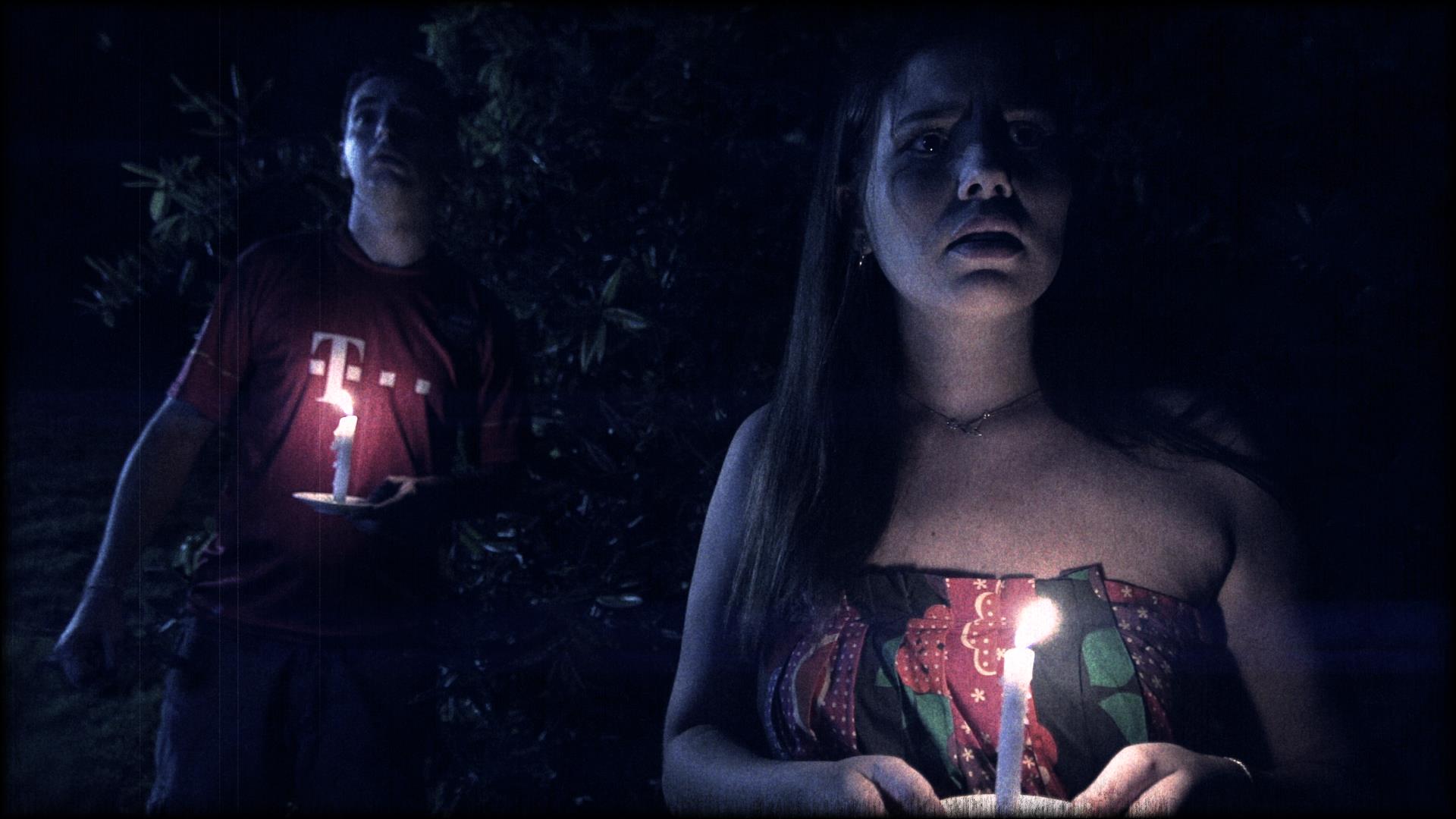
The group have a decision to make.

THE BAD

Considering Flora was conceived by a first time Writer/Director there’s not a great deal to complain about from a technical standpoint. The film is guilty of having the odd lapse in camera focus and a handful of shaky shots inside the car during the opening scene (though the rough terrain they’re driving on could explain that). I’m not a huge fan of the handheld guerilla style film making, especially when you’ve already got a solid production value in most of the other key areas. On occasion, Sasha, and in turn, DP, Eric, utilize a few tracking shots, though they don’t really highlight anything in the frame. It looks like they might have been filmed with the drone rather than a dolly, and hence don’t quite have the same feel. There’s a few redundant lines of dialogue in the script as well but that’s not unusual in a first screenplay. I think the most obvious shortcoming in Flora is surrounding the lack of character development, or even the interest levels in having those characters further explored. I wasn’t able to get to know anyone well enough to care about what fate might have befallen them. I was only behind Ora for the duration because it was obvious that was Vukovic’s intention (as other characters often talk about her). If I hadn’t of watched through the credits and cross referenced the cast on IMDB, I probably couldn’t have told you a single name of any of the characters (and that’s never something I’ve had a problem with). I really didn’t like the character of Rudyard at all. It wasn’t so much to do with Jackson’s performance, although there were the odd moments that didn’t help, it was more that the character was such a whiny know it all (with seemingly little knowledge to back it up). I think the Morse code heard in the beginning of the film is the same part that Ora decodes later (I think it was Ora?), but it would have benefited the viewer if they knew what the message was earlier, given not a lot else was happening at that stage. Unfortunately, the thing that’ll hurt the demand for multiple viewings of Flora is that it gets a little boring at times if I’m honest. Scenes such as the group sitting around the campfire, run longer than they needed to, and several of the conversations fail to drive the story in its projected direction. It runs just over 100 minutes and it certainly wouldn’t have lost anything if it’d been cut by 15 minutes just to help the overall pacing.
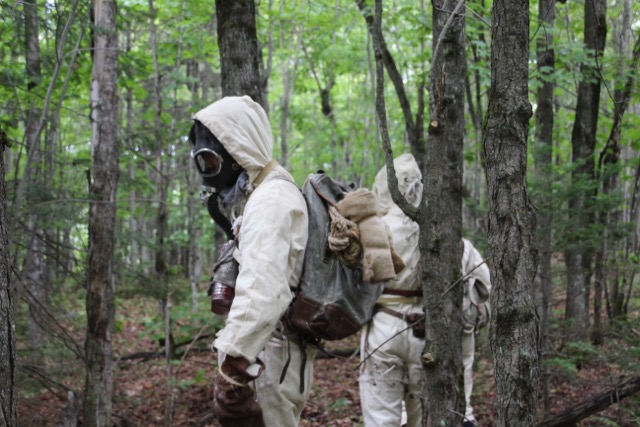
Perhaps a little homage to George A. Romero’s “The Crazies”

Flora is a period piece of nature horror that ends up mostly being grounded in drama. It’s a cross between the environmental cautionary of Australian film “The Long Weekend” and to a slightly lesser extent, Shyamalan’s universally panned “The Happening” (which I’ve always had a soft spot for despite its seesawing rules and logic, that and everyone’s hate). I’ve got to commend Sasha for his clever location scouting and re-creation of the time period, even more so because the film was made on such a small budget. Irvin and Loft’s combination of consistent camera work helps the aesthetic appeal of Flora and the audio is crisp and clean. The performances are on point and there is some brief practical blood on display. The score/soundtrack is ultimately what won me over and it was definitely my favourite aspect of the film. In fact, I think this is perhaps the best independent film score I’ve heard this year, kudos to you Nathan. There’s only a handful of technical inconsistencies but it was my indifference toward the characters that ultimately made it difficult to want to engage the film. Rudyard just annoyed me and I never learnt anything about the remaining botanists. There’s simply too much downtime here for my liking, and I think if it’d been cut by 15 minutes in order to curb some of the boring chunks, it would be a considerably tighter film. All that said, this is a nicely made product from a first time film maker but I won’t be revisiting it in a hurry because I was hoping for a little more life in it. I can, however, recommend this to those of you more inclined to go in for the drama and problem solving aspects of a horror themed plight, rather than just the action. I’m looking forward to seeing what Vukovic does next.

My rating for “Flora” is 6/10
Clowntergeist (Review)

CLOWNTERGEIST


THE SETUP

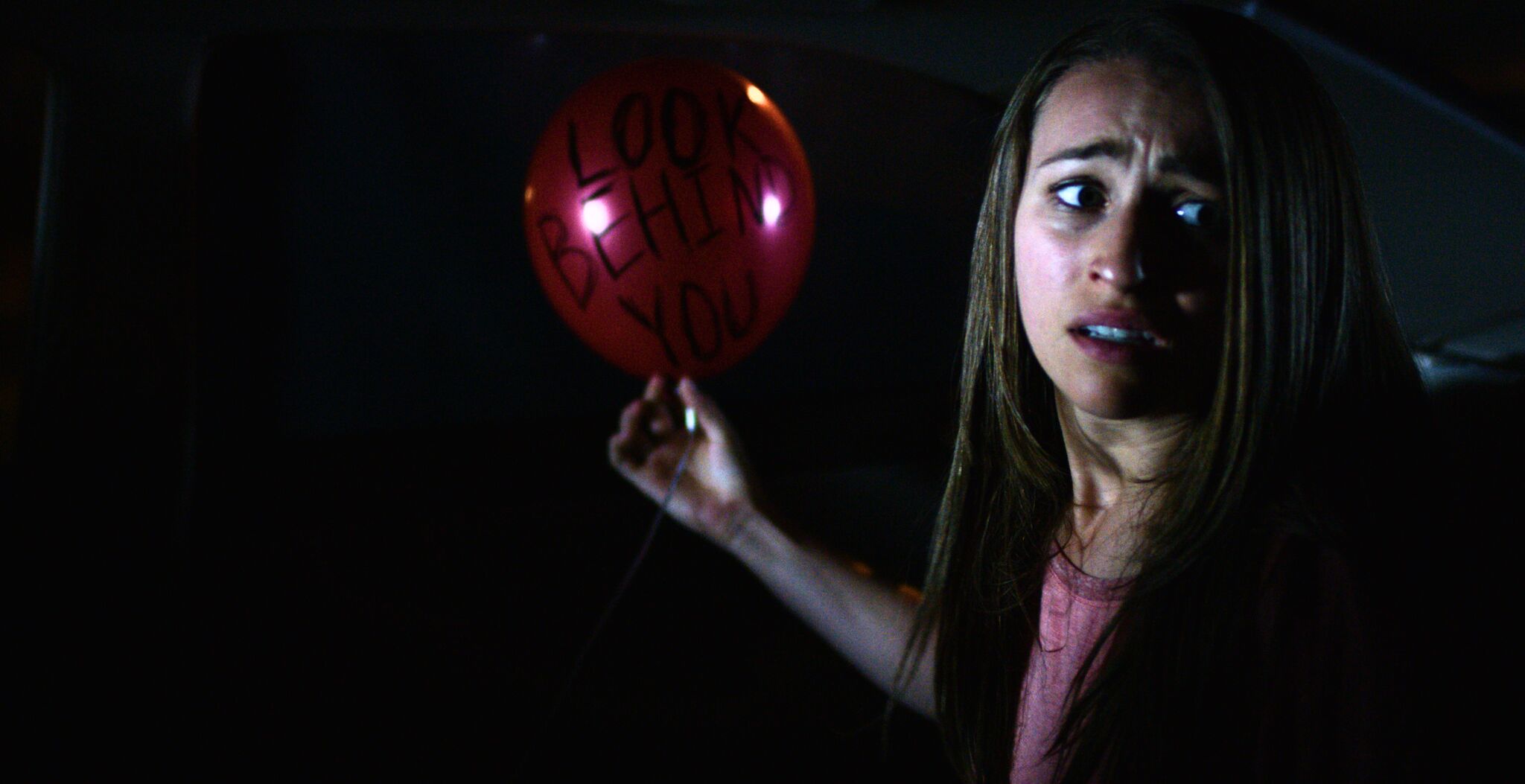
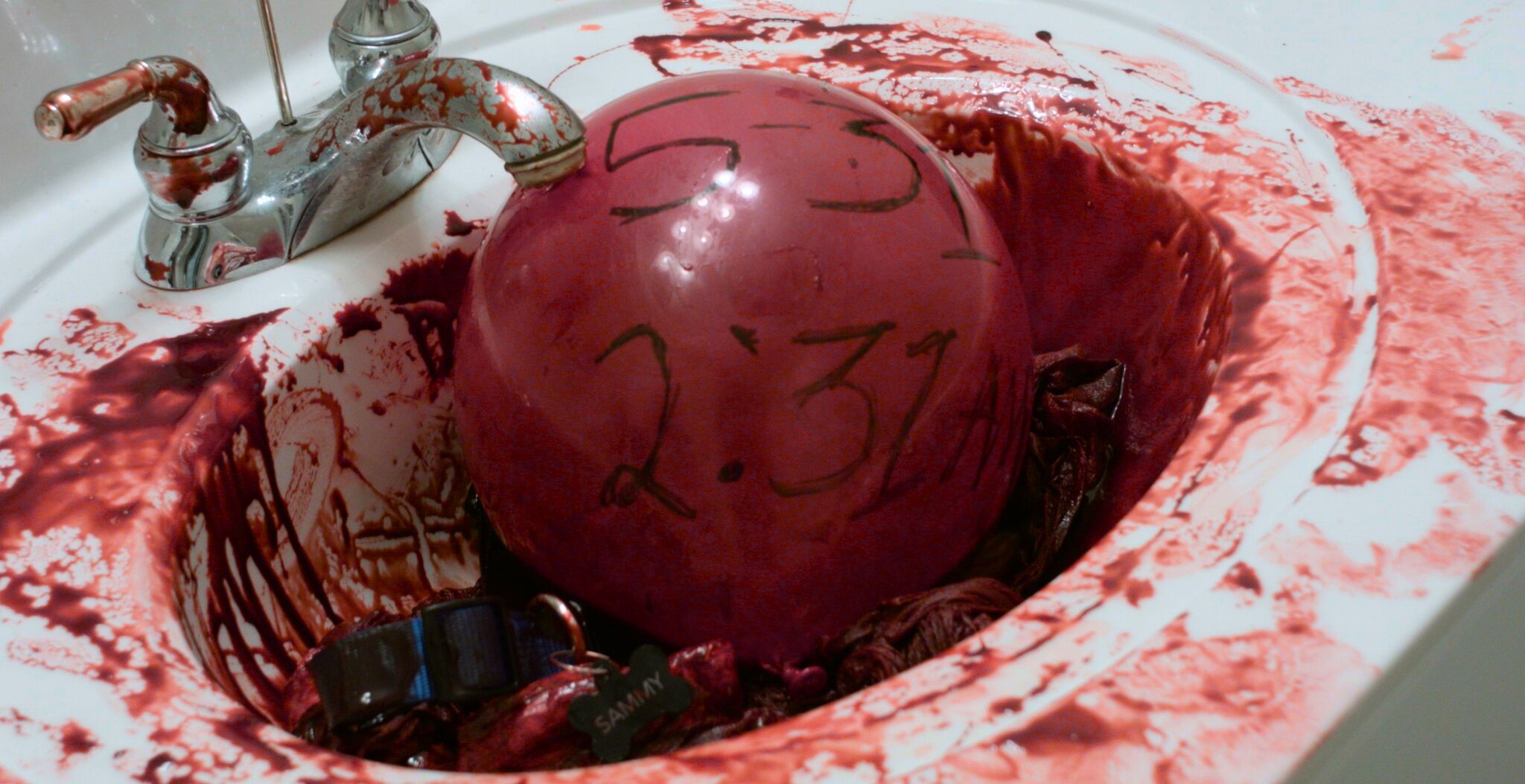
Firstly, I’d just like to say thank you to Judrina Kymantas and High Octane Pictures for sending me a screener of the Horror/Thriller film “Clowntergeist”, Written and Directed by Aaron Mirtes. Clowntergeist centers around Emma (played by Brittany Belland from The Sleeper), a college student with a major fear of clowns. It’s a fear that’s put to the ultimate test when an evil spirit latches onto a clown and begins terrorizing her home town, leaving red balloons with sinister messages on them everywhere he goes. The film also stars Monica Baker, Burt Culver, Sean Patrick Murray, Tom Seidman and Eric Corbin as “Ribcage The Clown”. I’ve long been a fan of the clown sub-genre, so much so that I even acted as an associate producer on Damien Leone’s upcoming clown film, “Terrifier”. There’s something about them that doesn’t quite sit right with people. The creepy face paint, oversized shoes, and of course that uncanny ability to turn a balloon into just about any member of the animal family. Judrina recently hooked me up with the martial arts film, “Karate Kill” from Petri Entertainment *see review* https://adamthemoviegod.com/karate-kill-review-2/. It was a lot of fun and a total throwback to the old school Asian martial arts films of the 80’s and 90’s. This time I thought I’d try my luck with an evil clown film. There’s been a real resurgence in the sub-genre lately. We’ve had everything, from the low-budget “Killjoy” franchise and Rob Zombie’s extremely disappointing “31”, which promised unrelenting mayhem and failed to even deliver on the most basic technical film making level, all the way through to the highly anticipated remake of Stephen King’s infamous, “IT”. Clowntergeist is clearly Mirtes weighing in with a low-budget entry, but he’s tried his best to fuse genuine paranormal built suspense with a basic fear one might have of clowns as performers.

Surprise surprise…

THE GOOD

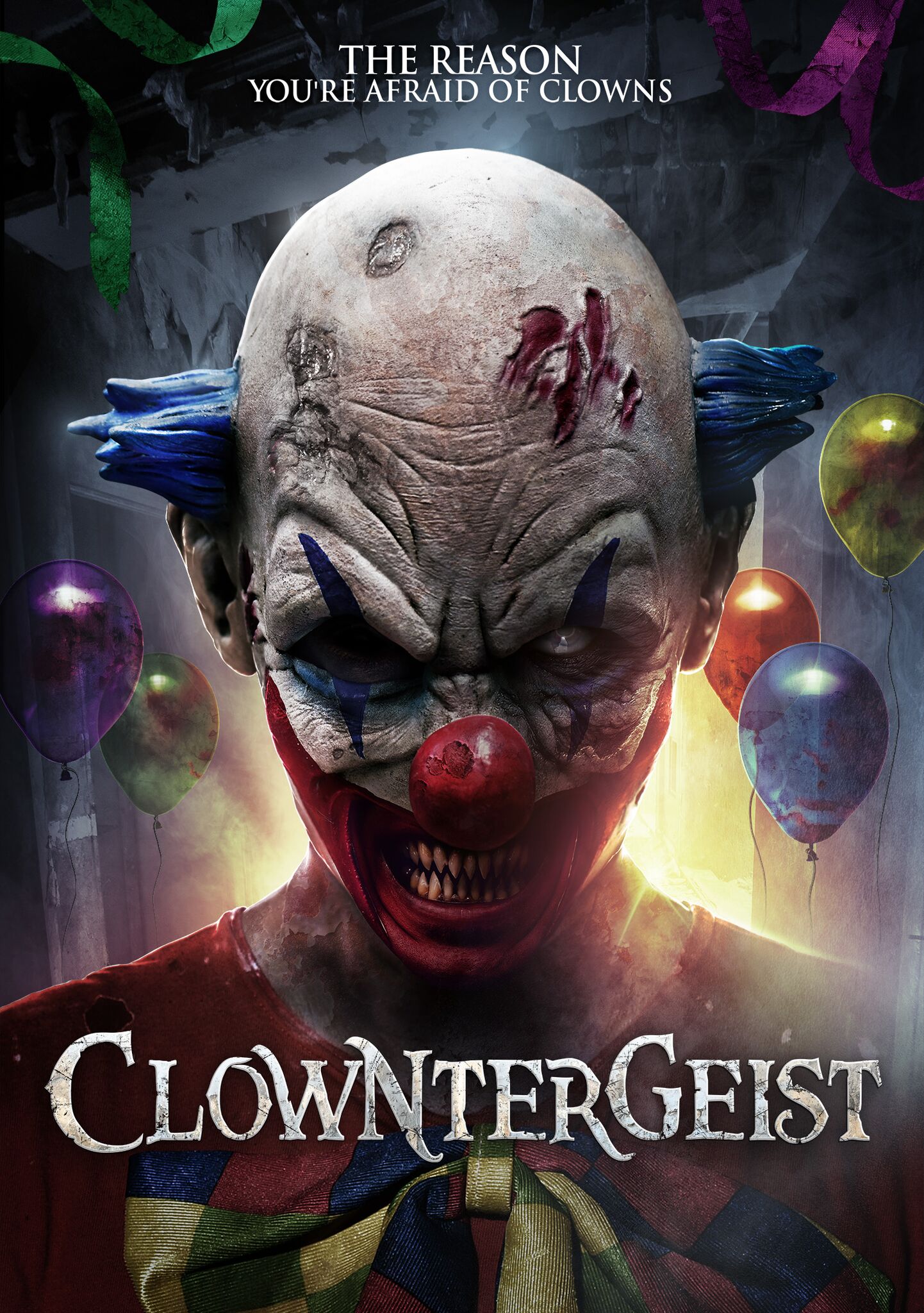
I’m digging the artwork despite the fact that the clown image doesn’t correspond with the look of our villain. It’s a simple but threatening figure at the forefront and an old style font used for the title, though I’m not sure why it is that indie films use misleading imagery (to be fair I think it’s the distributors who are at fault). Taking into account the film’s low-budget, Chaz Olivier’s cinematography is generally quite good and the audio track is clean. Most of his framing is neat and there’s a great jib shot (crane) across a driveway and onto the street as Ken’s daughter (played by Caitlin Rigney) drives away at the beginning of the film. I liked a lot of the establishing shots as well, particularly the externals of both Ken’s house and Emma/Heather’s. That said, almost the entire film feels like it’s been done handheld, via a Steadicam, and consequently it doesn’t feel as cinematic as it could have. The lighting was another characteristic that was really well conceived. Most notably during a sequence that sees Emma’s work colleague and friend, Jonah (Murray) navigating a hallway and its surrounding rooms. The scene is back-lit with reds, greens and blues and it looks gorgeous. Kris Bendrick composed a simple but effective bass orientated score, adding a nice mix of strident synth notes, to boot. Even some of the sound design worked well, like the scratching of balloons and carnival clatter.

Someone’s not happy…

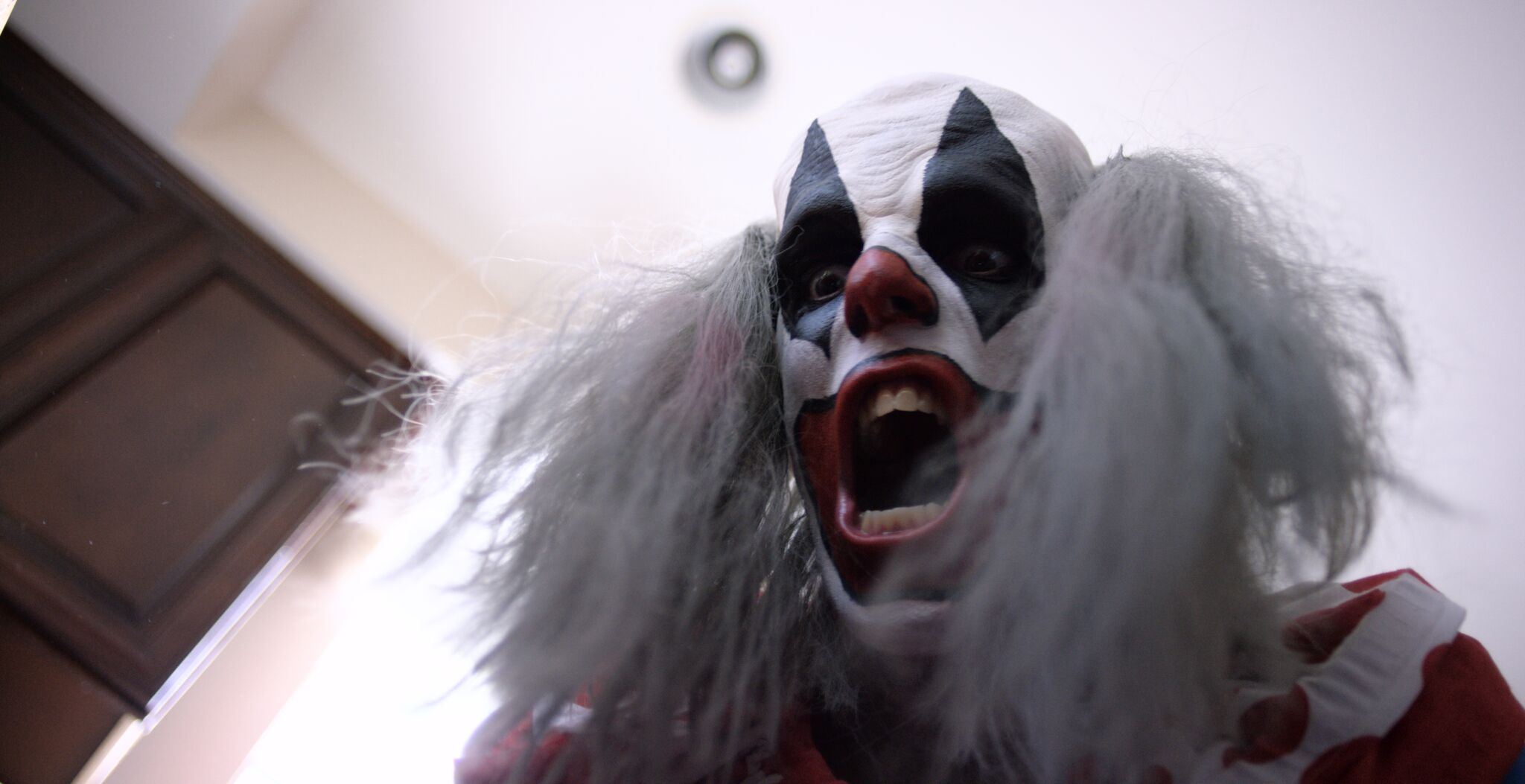
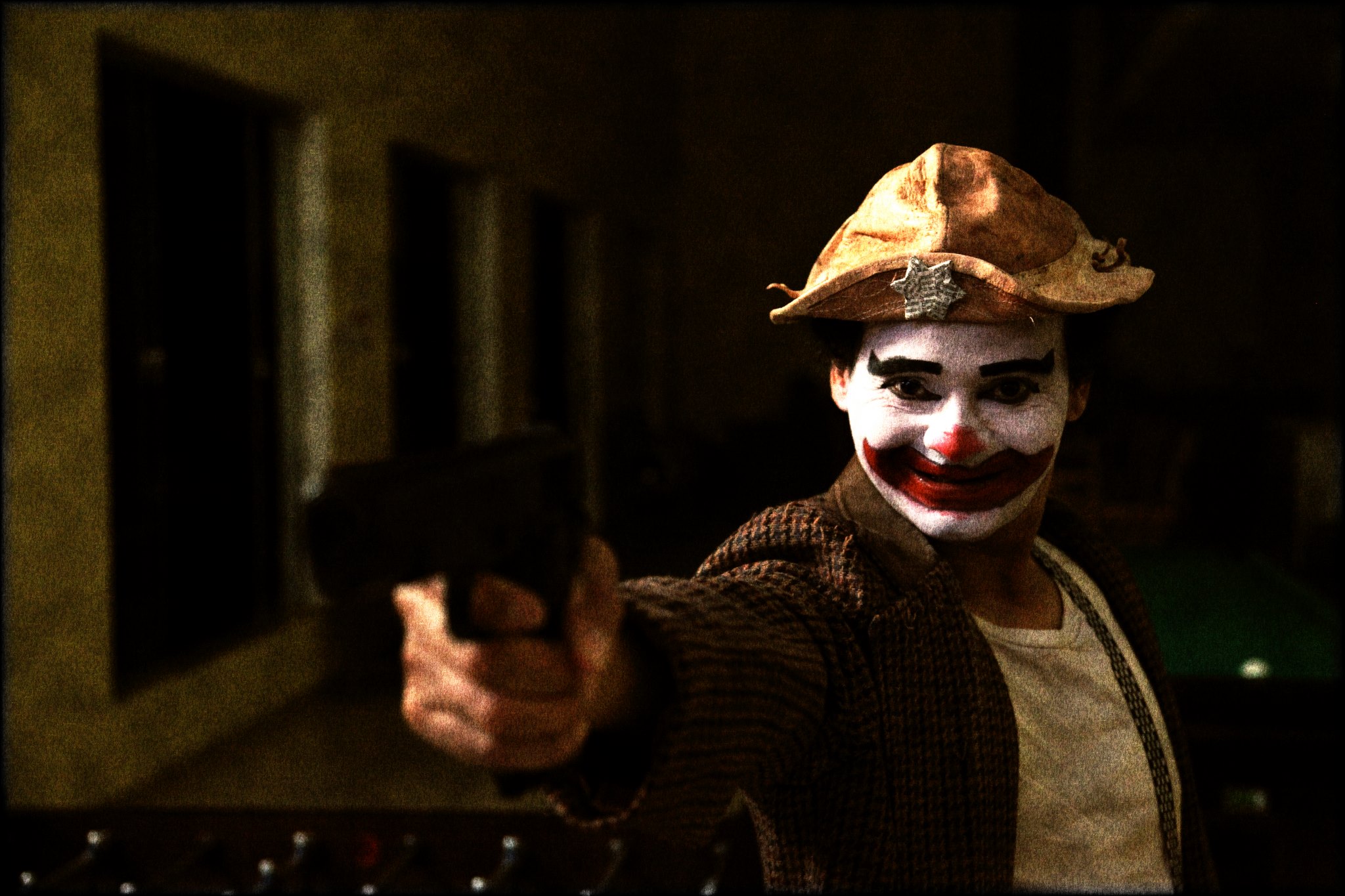
The opening scene of the film makes for a great introduction to “Ribcage” the clown and was reminiscent of a segment setup in the 08′ horror anthology, “Amusement”. Aaron deserves credit for his ability to generate this amount of tension, especially in an independent film where often that falls by the wayside. Here, its striking but subtle jump scares, usually coming in the form of a hand or a face popping into frame momentarily, it’s genuinely scary. There’s Jonah’s scene I mentioned earlier, the pinnacle of which resulted in me just about jumping off my chair. Other scenes include a girl navigating a house trying to get the power back on, a scene that’s simply lit by a lantern and you’re just waiting for that inevitable evil surge. Most of the performances are serviceable but there’s no doubt that the natural chemistry between friends Emma and Heather (and in turn actresses Belland and Baker) is what ultimately holds the film up. The dialogue flows organically between the two and therefore it seems as if they have a real friendship outside the parameters of a film. Aside from the odd weaker moment early on by Culver, as Ken, the remaining cast (mostly made up of men) are solid, particularly Pop (Seidman), the ice cream man, though none are really at the core of the story. There are a few scenes that showcase some practical blood and gore and it does look decent but Clowntergeist is much more about its demonic roots (encase the title didn’t inform you of that). The makeup job on Eric Corbin is worth mentioning because it looks great and the continuity of it can’t be questioned.

What happens at 2:31 am?

THE BAD

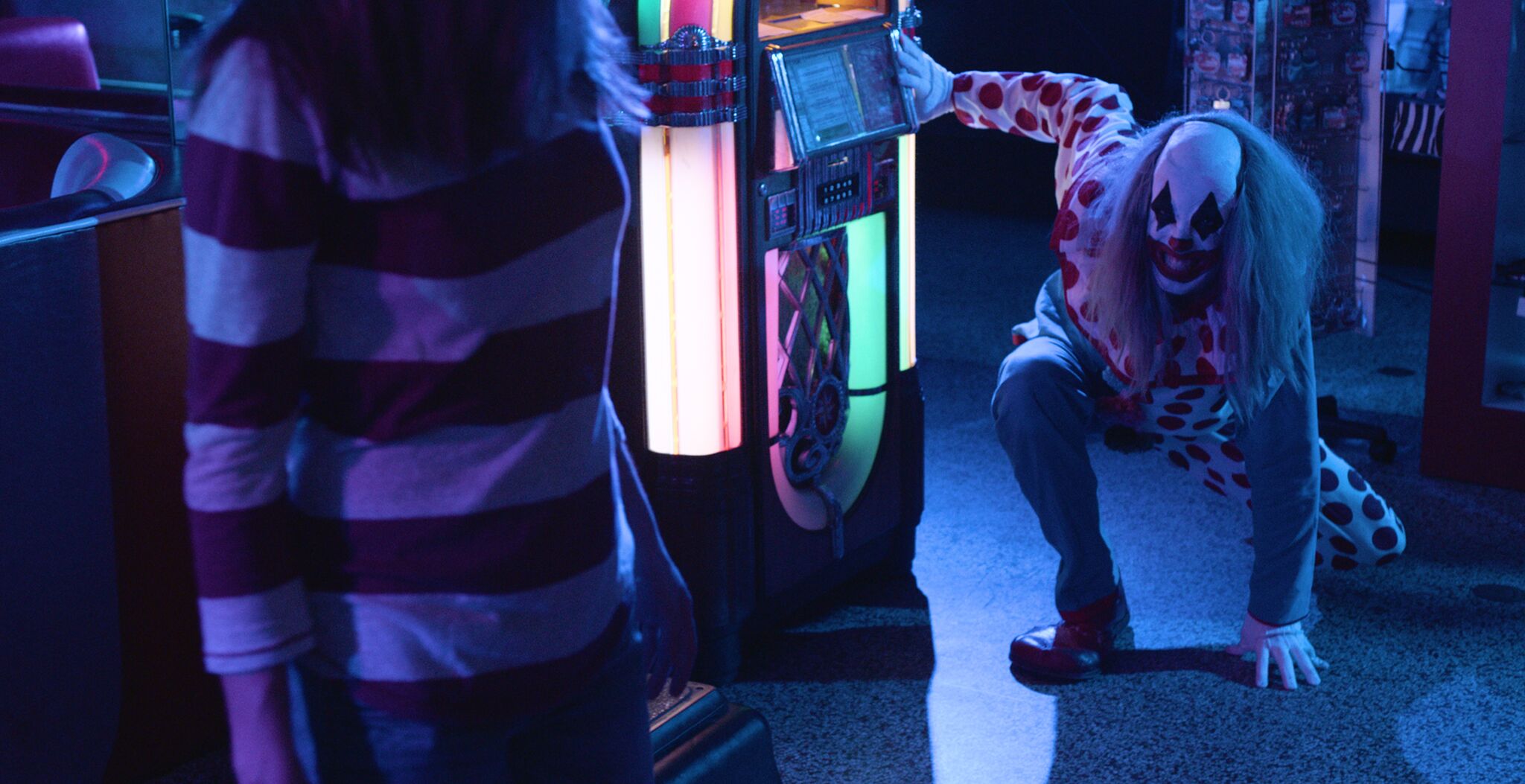
I’m going to kick this off with the title. Normally I’m all about the cheesy amalgamations, and let’s be honest, it’s almost a given these days with the amount of creature features being churned out at such a rapid rate. Clowntergeist just sounds lame though, and while it might be accurate given the plot synopsis, it comes off as pretty lazy. Ignoring a few abrupt cuts and the fairly basic approach to the films presentation (perhaps due to budgetary restraints) there’s not much to criticize on the technical front. There is, however, a lot of contradiction when it comes to the script, so much so that Mirtes, in part, undoes a lot of his good work. Some of the dialogue only serves to relay developments that are self-explanatory to the viewer. Lines like, “Is that the sheriff?” said by a character whose only standing a few meters away from a guy clearly wearing an officer’s uniform, badge in plain sight. Shortly after that you get, “Murders a freaky thing”, which is obviously not something anybody would say. Most of my issues with the film are surrounding personal preferences regarding Aaron’s script. Immediately I noticed that actress Caitlin Rigney appeared too old to be playing Ken’s daughter, I thought she was his wife. The demonic aspect of the film and commands and controlling of Ribcage didn’t feel like it was warranted. Mirtes does all the right things in building suspense through simplicity and minimal techniques, yet once we finally see and hear Ribcage in all of his glory (or as is the case is here, lack of) the better part of his efforts are instantly null and void because the clown is just not scary. Corbin moans and growls while crouching around, and motions in what can only be described as a dance. In hindsight, once all the strings are pulled and the film comes full circle I don’t think the blame could be solely placed on Eric. Add to that, a really weak motive behind this targeting and little to no back story given on the clown/demon’s origin, not to mention, not once does anyone try to kill the clown (well other than Ken’s half-baked effort), it sort of all falls into a screaming heap. As I said earlier, there were glimpses of blood and gore but most of it goes unseen due to the quick cuts in the edit.

Look who I found..

Aaron Mirtes’s, Clowntergeist was an interesting take on the clown sub-genre but ultimately I just don’t think it works in this particular setting. Most of the cinematography is pretty good and the audio track is a lot better than most independent films. Both the lighting and score were probably my two favourite aspects of the film and they definitely aid in raising the overall production value. The performances are pretty solid, the characters entertaining and I enjoyed watching Brittany in another lead role. There’s four or five really impressive fear inducing scenes in the first two-thirds of the film that are far superior to anything I’ve seen in independent cinema. There are a few scenes with practical blood and gore and the makeup looks professional. I’ll be honest and say I’m not a fan of the title at all and there are a handful of lines of dialogue that were redundant. One casting decision was somewhat questionable and the specifics of the character manipulation seemed unnecessary. The biggest disappointments are the paper-thin motive behind the attacks and a general lack of exposition on the clown himself. I could swallow all that to some degree if Ribcage was even remotely scary, but alas. The film works better during its lurking stages because Corbin’s performance and the theatrics of the character lost me and the film didn’t have enough memorable kills to keep me engaged. Still, if you’re a fan of clowns and paranormal horror you might get a little more out of Clowntergeist than I did. Mirtes does manage to do a lot right and I look forward to seeing what else he does in the genre. Clowntergeist hits VOD (video on demand) September 12th and you can check out the trailer below!

My rating for “Clowntergeist” is 5/10

Happy Hunting (Review)

HAPPY HUNTING


THE SETUP

Firstly, I’d just like to say thank you to Producer, Bryson Pintard for allowing me access to an online screener of the Horror/Thriller film “Happy Hunting”, Co-Written and Directed by Joe Dietsch and Louie Gibson. Happy Hunting follows Warren Novak (played by my fellow Aussie, Martin Dingle Wall), an alcoholic vagrant who while battling withdrawals, stumbles into the small town of Bedford Flats where he unknowingly becomes a target in the locals festive hunting event. The film also stars Ken Lally, Gary Sturm, Kenny Wormald, C.J Baker and Jeremy Lawson.

THE GOOD

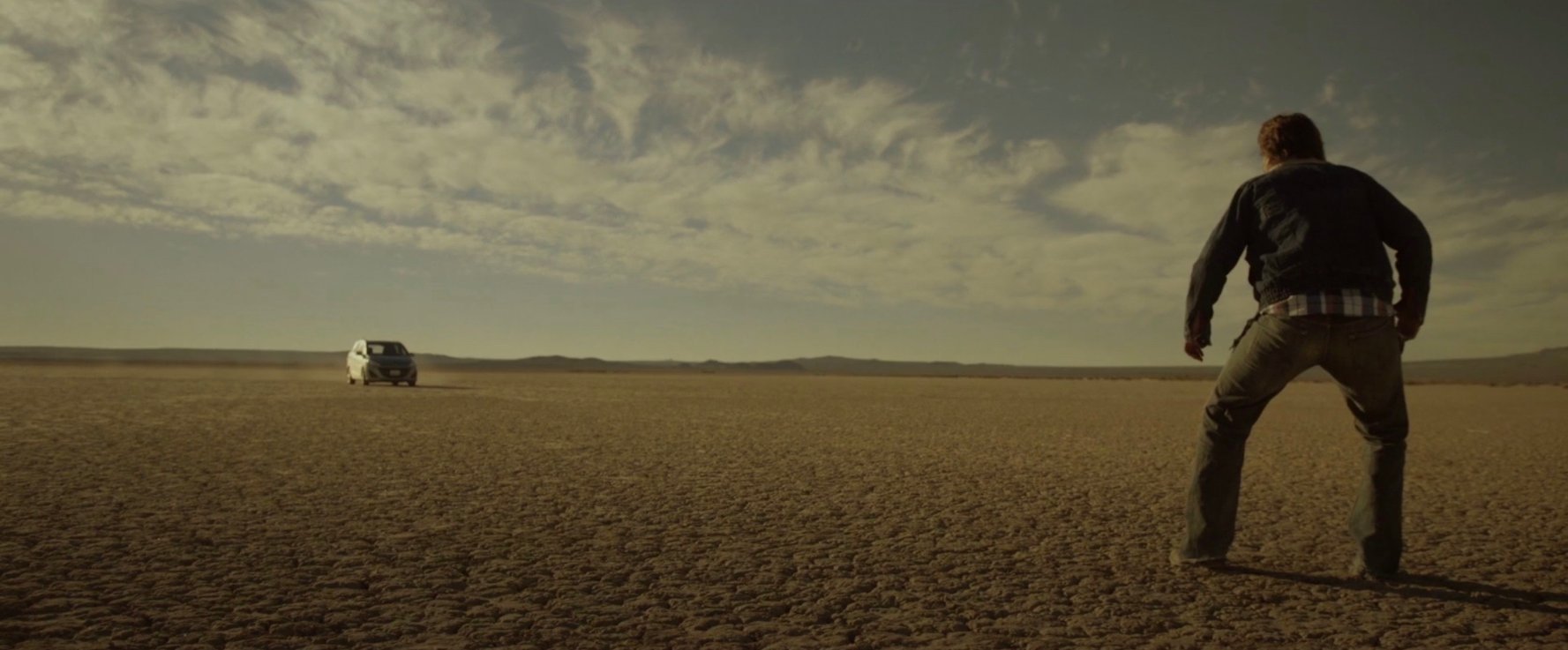
I don’t usually do much digging on a film prior to watching it, but I’d read some positive reviews for Happy Hunting fresh off the festival circuit. It sounded like a Peckinpah (The Getaway) style trip down nostalgia lane, which automatically peaked my curiosity. Dietsch and Gibson’s script centers around the gritty journey of downtrodden and hard-boozer, Warren, whose got very little left to live for other than his addictions, that is, until he gets a phone call from his past, resulting in an impromptu trip to Mexico. I’ll be the first to admit that I’m a sucker for the vast, arid landscape that Happy Hunting takes place in. The film opens with a fantastic aerial shot atop a figure trekking over endless barren lands, eventually transitioning into a nice tracking shot that reveals a disheveled man in a scuttle. Joe’s cinematography is first class and really raises the production value of Happy Hunting. From the outset, there’s grand establishing shots of the terrain and the township itself, as well as plenty of smart framing and slick macro shots. I think this is perhaps the first time I’ve seen a pair of filmmakers utilize focus pulls and slowed frame rates in a way that actually benefits the film. The points at which those techniques are applied certainly help to build or maintain the desired amount of tension. There’s some great shots in a sequence toward the climax of the film that takes place in a series of tunnels, it reminded me a lot of Mickey Keating’s superb “Carnage Park” *see review* https://adamthemoviegod.com/carnage-park-review/.

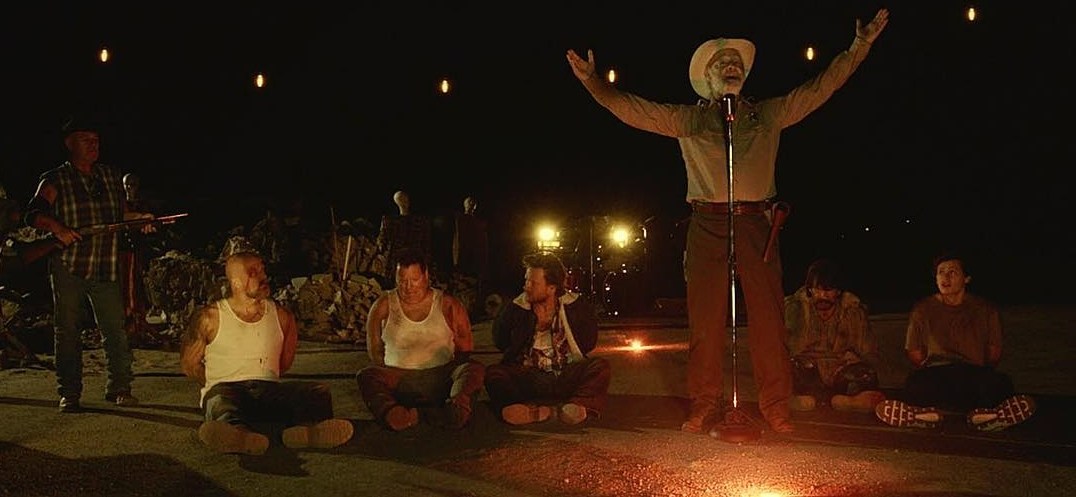
The classic yellow title credits are clearly inspired by the likes of Tarantino, and the quick time lapses in the edit are a welcomed and smooth addition. The audio track is clean and I enjoyed a sizable chunk of the score. There’s an emphasis on big drum and bass in the lead up to a lot of the action, it develops nicely. I’ve always liked the unnerving and clattering sounds created through violin, though it’s usually only heard in paranormal based horror so it was a pleasant surprise in this one. Wall’s performance is quite a good one, albeit restrained, mostly due to the fact that a lot of his scenes are spent alone, especially in the second half of the film. There’s this internal dialogue that manifests itself in the form of a spirit, which does give him a little face to face time but it’s not a lot. Martin reminded me of a much younger cross between Jeff Bridges and the late Sam Shepard (R.I.P). Gary Sturm is also impressive as Sheriff Burnside, whose like a character out of a Ti West film (House Of The Devil and The Sacrament). The combination of locals, Cheryl and Steve Patterson (Sherry Leigh and Ken Lally) help give the film some much-needed energy that’s certainly lacking from most of the remaining residents in the town. Lally’s grounded and less jovial, Steve Guttenberg (Police Academy) like nature, makes for a fun watch. There’s a steady flow of action throughout the entire film and the practical blood and gore is serviceable. Happy Hunting does play out slightly more like a thriller than a genuine horror film, but that being said, there are a few graphic prosthetic pieces in the latter part of the film.

THE BAD

With the exception of some average CG blood, in an attempt to enhance some of the on-screen kills, the technical aspects are all more than competent. The film does lag in a few places despite its 90 minute run time, and I hoped for a little more information on the situation that ultimately called for Warren’s attention in Mexico (at least I think it was Mexico). Devoid of a single flashback it’s hard not to have questions. Although I suppose that creates debate, which isn’t a bad thing but a couple of those one way interactions, particularly the first phone call at the start of the film, won’t necessarily help get the viewer on board with Warren and his plight. As the film progresses you’ll probably end up having more questions about the protagonist than you’d care to. It wasn’t hard to predict that a multitude of the visiting characters you see were going to end up as marks for the hunting festival (you’d likely see it even if you knew nothing about the film). I did like the Bedford Flats promotional video tape though, that was a good form of exposition. There’s a couple of specifics that bothered me too. The first being the older man and his complete lack of reaction to what was clearly a busted or broken leg/knee at the start. He moves relatively freely even with it making rough cracking sounds and such, I expected a much more painful reaction from the actor. On another occasion, Warren and Robbie (played by Connor Williams) find a phone while they’re hiding out. They attempt to get help but fail to even question who might be on the other end of the line. Okay, sure, the person could just lie, but surely you’d ask the question at the very least. The action that comes after said scene was entirely calculable as well. While I understand the need to depict Warren’s internal battle in some form, I didn’t like the use of Bo Dawg (Lawson) as his conscience and it took me out of a film that was otherwise grounded in reality. The ending is bound to divide audiences and personally, I would’ve liked to have seen it go another way.

Happy Hunting is the debut feature-length film from Dietsch and Gibson and it’s a great foot in the door for this film making duo. It’s an intense and isolated thriller in the same vein as the aforementioned “Carnage Park”, and to an even greater extent, Chris von Hoffman’s “Drifter” *see review* https://adamthemoviegod.com/drifter-review-3/. The character of Warren is most certainly inspired by John Grant, the key character of the 70’s Aussie thriller “Wake In Fright”. Joe’s cinematography is wonderful, the audio is neat and the discordant score really fits the tone of the film. The performances are all consistent and there’s some damn good scenes. When the violence unfolds its bold and swift and there’s practical effects on display for those more seasoned fans. The traces of digital blood detract somewhat from the overall quality of effects work and the film does lag on occasion. A few liberties are taken with the actions of certain characters and some more discourse on the specifics of Warren’s travel wouldn’t have hurt. A couple of finer points in the writing weren’t necessarily to my liking but nothing to really stop the entertainment value Happy Hunting serves up. Fans of gritty thrillers and independent films will definitely enjoy this ride and I look forward to seeing what else the team from Waterstone Entertainment does.

My rating for “Happy Hunting” is 6.5/10


Condado Macabro aka Massacre County (Review)

CONDADO MACABRO


THE SETUP

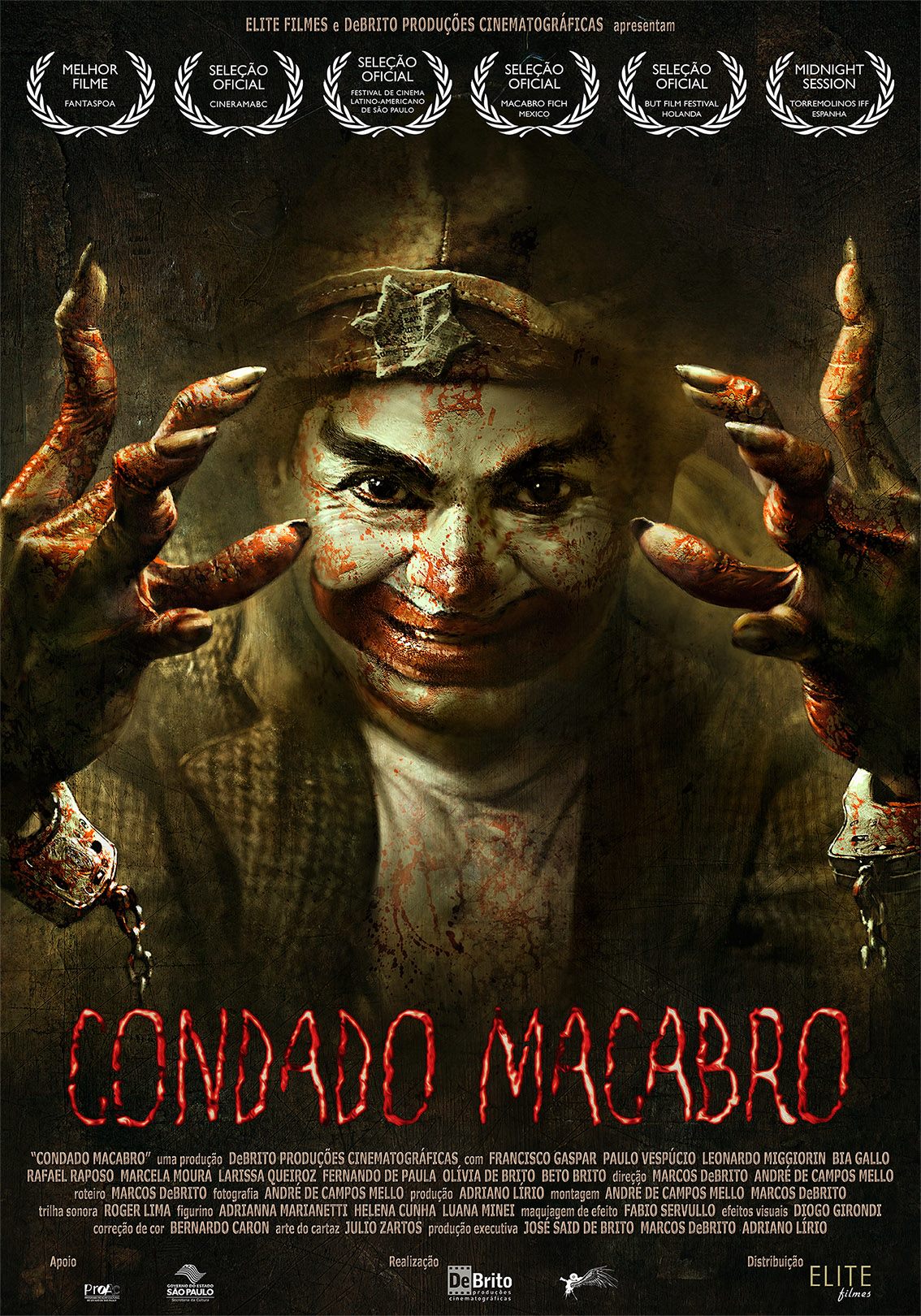
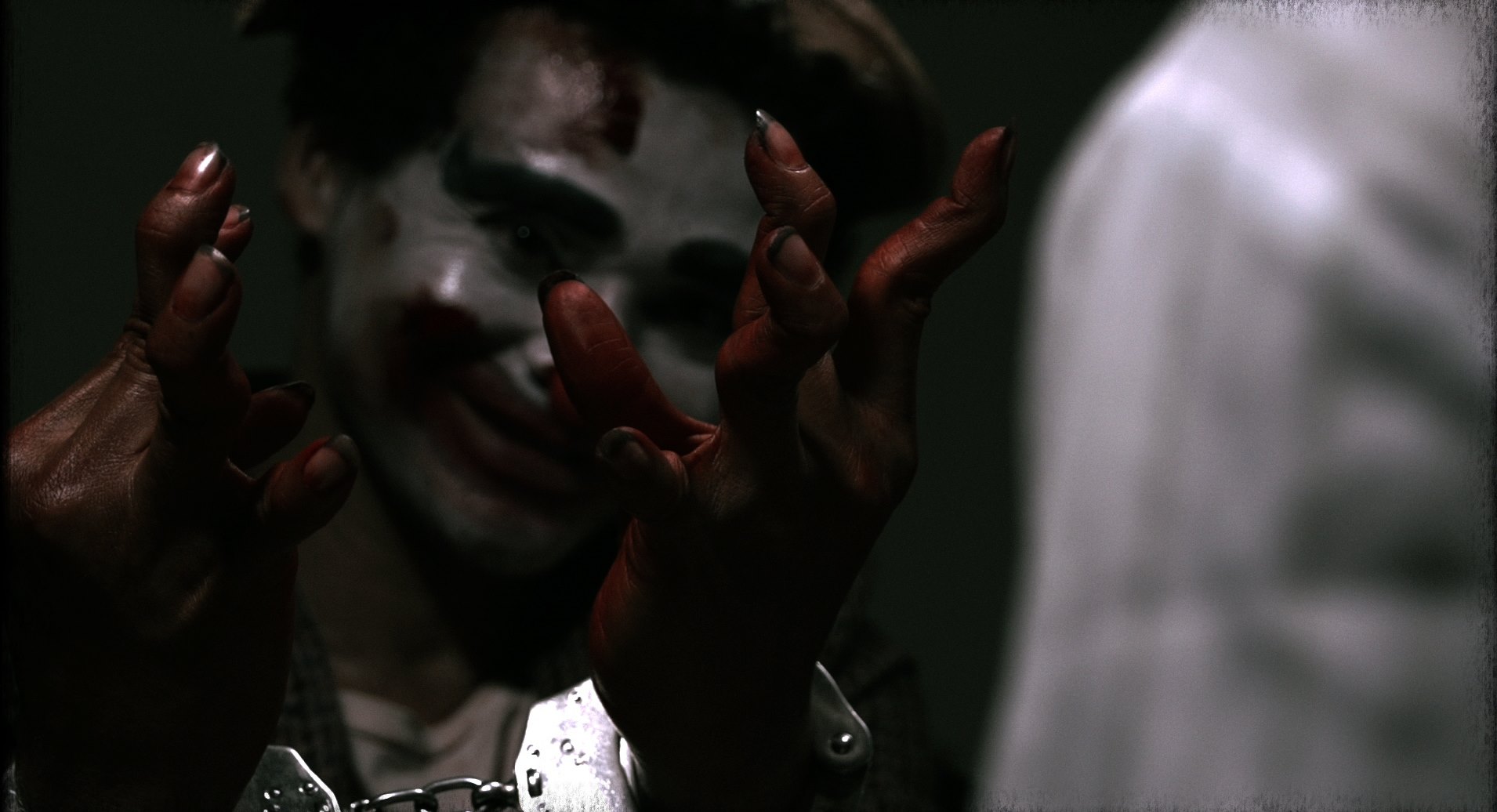
Firstly, I’d just like to say thank you to Co-Directors, Andre de Campos Mello and Marcos DeBrito (who also wrote the screenplay) for giving me access to an online screener of their 2015 Horror/Mystery film, “Condado Macabro” aka “Massacre County”. Massacre County is a Brazilian made horror film that follows the aftermath of a series of murders that recently occurred in a mansion by the forest. Inside an interrogation room, traveling street clown, Cangco (played by Francisco Gaspar) attempts to plead his innocence to key investigator, Moreira (Paulo Vespucio). With blood stained hands and a hazy memory, Cangco must convince the authorities that someone or something else was in the house that night. The film also stars Bia Gallo, Leonardo Miggiorin, Rafael Raposo, Larissa Queiroz, Fernando de Paula, Marcela Moura and Olivia de Brito. The language spoken in   the film is Portuguese but the screener contains hard-coded English subtitles.

THE GOOD

Right off the bat, Mello and DeBrito informed me that Condado Macabro was somewhat of a homegrown love letter to American horror films, that and they were attempting to fuse it with their own sense of humor. The film primarily centers on five young adults. Siblings, Theo and Mari (played by Miggiorin and Queiroz), their friends, Lena and Beto (Gallo and Raposo) and last but not least, fifth wheel, Vanessa (Brito). Naturally, being a horror film, these individuals make up the genre of stereotypes required for a weekend getaway to a private mansion. Theo is your shy, oblivious and less than protective brother. Mari is the level-headed, beautiful and confident one that keeps the group uniform. Lena, the promiscuous popular girl, and Beto, the not so smooth, douche bag jock. I suppose I shouldn’t forget Vanessa (even though the group always does). She’s a heavier girl with a questionable taste in music, and unfortunately precariously positioned in the middle of two potential pairings for most of the film. I know a lot of people are sick of seeing the same elements and sets of rules applied to the slasher genre, but there’s a reason they’re there. It’s a formula that’s worked for so long and it gives its hardcore fan base what they expect.

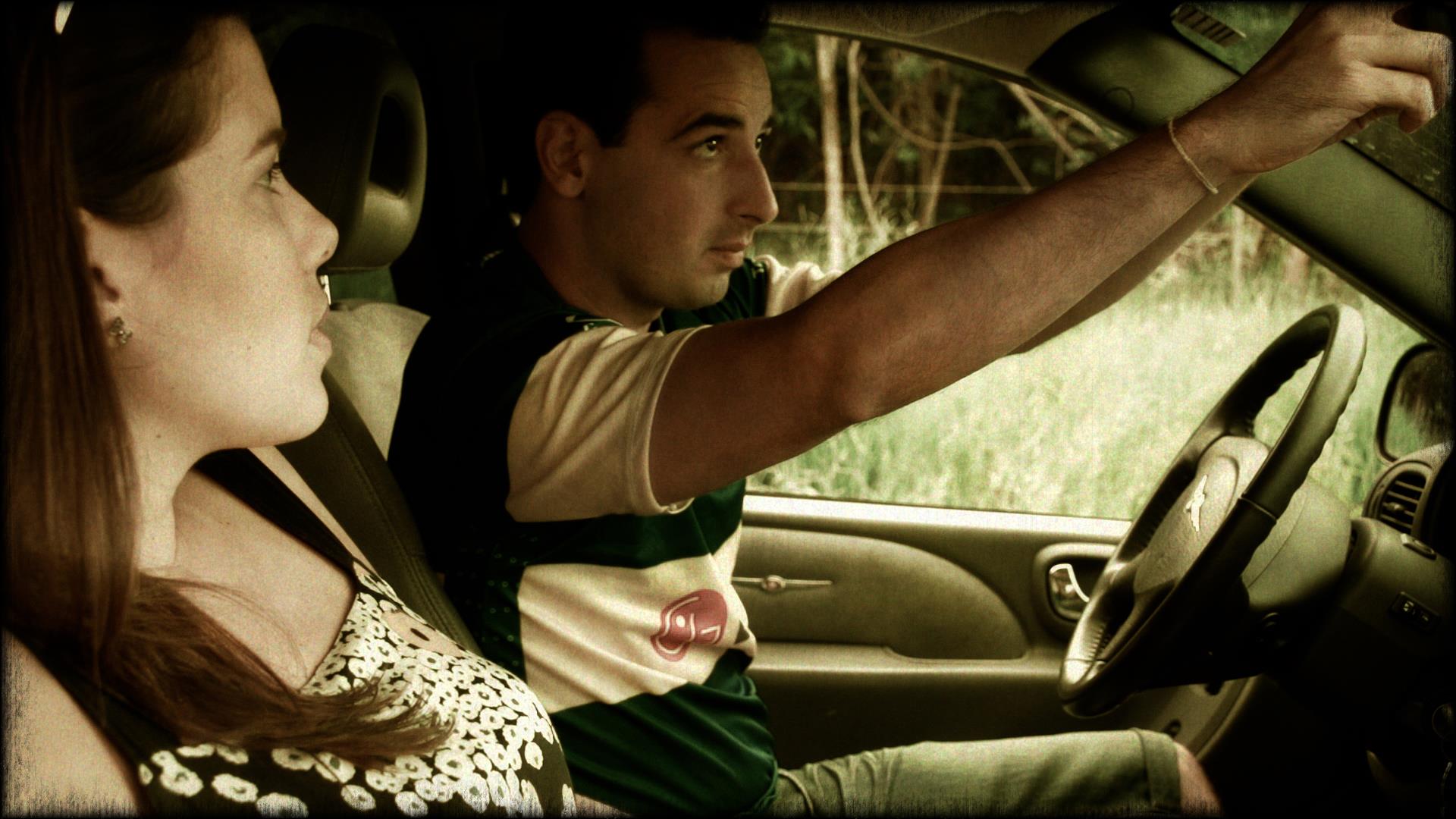
Mello’s camera work is fairly solid considering the films small budget. Most of the framing looks nice and there’s a couple of effective tracking shots throughout. My favourite sequence of shots are at the beginning of the film. There’s a great one of Lena in her underwear lying on the bed, followed by a series of sharp quick cuts as she grabs her belongings and leaves the house. The in-car shots were done quite well too. Roger Lima’s music structure doesn’t always work but it’s at its best when the carnival style music cues during scenes between Cangaco and his sidekick, 8-Ball (played by Paula). Some of the pop rock music the group plays on their IPod sounds alright as well. Overall, the acting is okay. About what you’d expect from a low-budget slasher film with non-English actors. I thought Bia and Francisco delivered two of the better performances in the film, though it helps that Gallo is easy on the eyes (especially that booty of hers). Mello and DeBrito have obviously seen their fair share of horror content, namely Tobe Hooper’s “The Texas Chainsaw Massacre” and don’t shy away from eluding (often through dialogue) to what keeps fans of the genre entertained. Beto even mentions “The Devils Rejects” and “Nekromantik” in relation to how graphic things have to be in order for him to really enjoy it. The first bit of gore comes just 20 minutes into the film and it involves a pig. It looks quite graphic and bloody (so here’s hoping it wasn’t a real pig). There’s a sizeable amount of practical blood spray during the climax of the film and a commendable decapitation a bit earlier.

THE BAD

Massacre County has quite a long running time for a movie of this nature, too long. It clocks in at just over 110 minutes and could have quite easily had 20 minutes trimmed off of it and not lost anything. Big chunks of the subtitles don’t translate as well as they could, a lot of the phrasing is out of sequence (probably to be expected from a foreign film). The attempted humor didn’t appeal to me at all, it mostly consists of immature sexual innuendo and these “kids” are clearly too old to be acting the way they do. In fairness to Mello and DeBrito, they did say that the comedy might not translate as well to English audiences. The washed out color grading looks to have been molded on that of the aforementioned Texas Chainsaw Massacre, to boot. Specifics such as that, on such a small budget, usually only hinder the quality of the overall product. Most of the internal scenes, particularly at night, look better than anything shot during the day time. The broken film reel filter and static marks that they use to transition in the edit don’t really fit the design of the film and just loom as convenient. Even with the film boasting a heap of practical effects in the latter part, the CG manufactured blood when present, looks really patchy. Picking up a hitch hiker (albeit a street clown this time), the sowing of dead skin, wielding of a chainsaw and a bloody girl on the street are just a few examples of things on display in Massacre County that come straight out of either the original TCM or the 03′ remake. I don’t mind a nod here and there but it’s got to be done right and in this case I don’t think it warranted it.

Some of the finer points of the script and continuity in regard to characters actions could have used some editing. Theo and Beto present as best friends, but personality wise they’re about as different as you can get. Theo’s more reserved, quieter and far more mature (reminds me of myself) and Beto acts like a 15-year-old trapped in an adult’s body. He’s constantly talking about sex, hitting on two out of three girls at every chance and basically making a complete fool of himself. Theo doesn’t seem at all phased by Beto’s sleazy advances on his sister, Mari. I didn’t really believe that they could actually be friends because they’re so different. There’s a couple of continuity issues both of which involve Lena in action scenes. At one stage she thwarts an assault from Cangaco and kicks him numerous times, unfortunately there’s no force in her movement and it comes off looking visibly staged. Toward the end of the film, one of the property owners (without spoilers) is shown sneaking up on Lena, whose facing side on in a small dwelling with no other doors. We see the owner approach her front on, yet when Lena looks up the owner’s not there, and then suddenly lunges at her from the side, it doesn’t make any sense logistically. In the second half of the film, DeBrito chose to revisit a handful of previous sequences from in an around the house, only now showing them from different characters points of view that we didn’t know existed. On one hand, I give him credit for trying to introduce something new to the narrative, but in this case the entire pacing ends up suffering because of it. The most disappointing thing about Massacre County is that fans have to wait over an hour to see their first kill (and it’s off-screen), and another fifteen minutes on top of that to finally see one shown in detail.

I believe that Condado Macabro, aka Massacre County is my first foray into South American horror. Andre and Marcos were upfront about their passion for the genre and the intent behind their film. The characters and location were intentionally established with the parameters of your conventional horror film in mind, and that’s bound to give viewers a clear picture of what they’re in for. The camera work, audio track and music were all serviceable given the crews limited amount of experience. The acting wasn’t bad, I certainly enjoyed watching Bia Gallo and Larissa Queiroz in all their glory, and the two sets of antagonists and different points of view were refreshing in a way, though they do drag the momentum down. There are a number of kills utilizing practical blood and gore but the drawback is that you’ve got to wade through a lot of fluff to get there. The subtitles are irregular, the comedy juvenile and the coloring and editing somewhat amateurish. There’s a handful of continuity issues, which isn’t uncommon, and the movie is a little too  influenced by The Texas Chainsaw Massacre. The overly long running time and stale progress of getting to the killing that most fans want from the outset, hurts the re-watch ability factor of Massacre County. I still think that hardcore fans of the genre might enjoy this one and let’s be honest, how often do you get to see a Brazilian horror film? Check out the trailer below!

My rating for “Condado Macabro” is 5/10

The Quacky Slasher (Review)

THE QUACKY SLASHER


THE SETUP

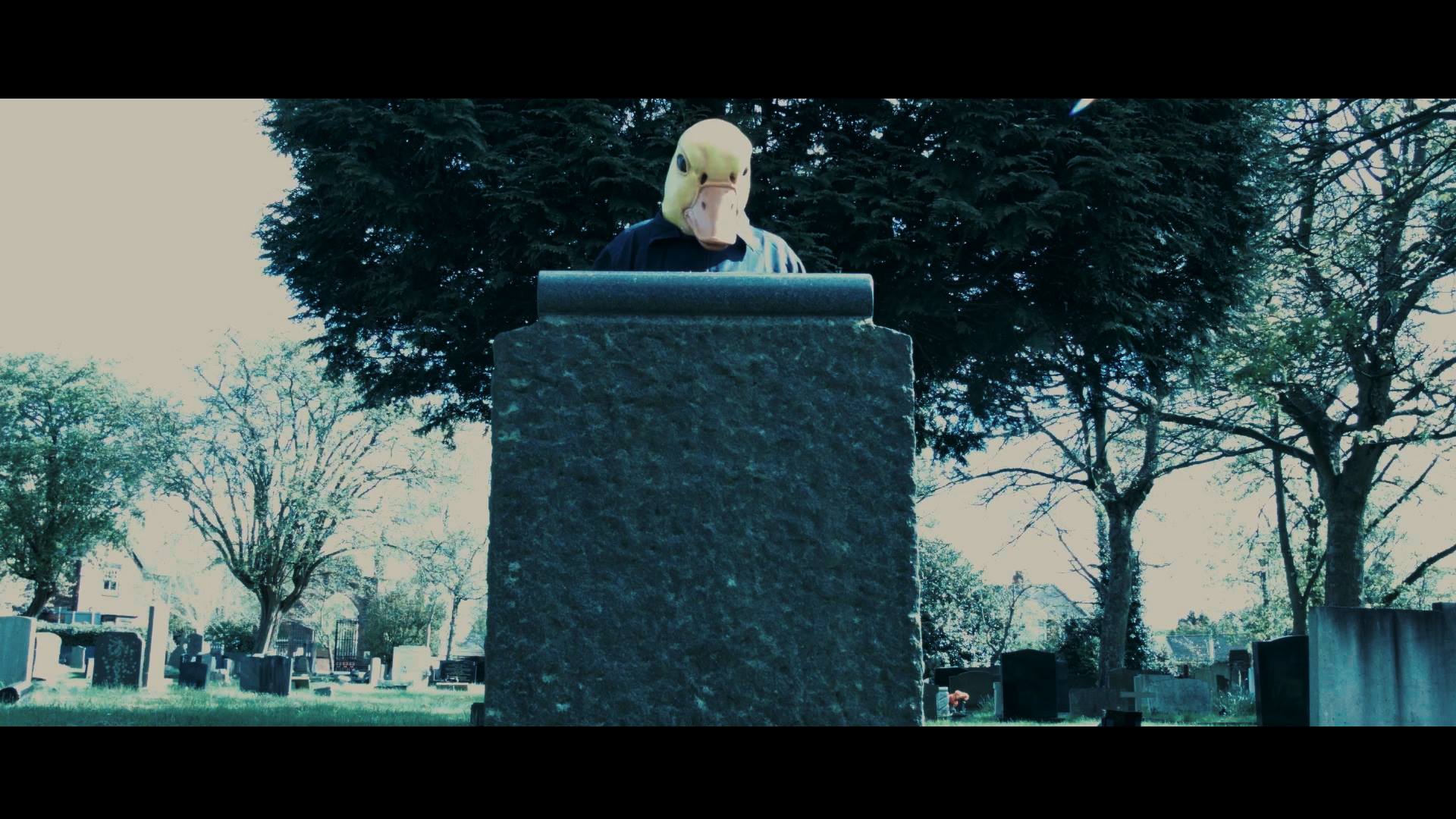
Firstly, I’d just like to say thank you to Writer/Director, Peter McKeirnon for allowing me access to an online screener of his 35 minute Horror/Comedy short, “The Quacky Slasher”. The Quacky Slasher tells the story of Michael Quackers (played by Andrew Butterworth), a patient whose spent the last 20 years in a psychiatric facility after having been traumatized as a child. He breaks out of the facility and decides that it’s time to rid the local town of its criminal underbelly, led by Mr Mozzarella (Neil Gallagher). Michael will have to deal with seedy store owners, a peculiar hitman and a pair of overly jovial detectives. The film also stars Michael Hagen, Jayne Kinsella, Jacqueline Mercer, Andy Coffey and Ian Finney.

THE GOOD

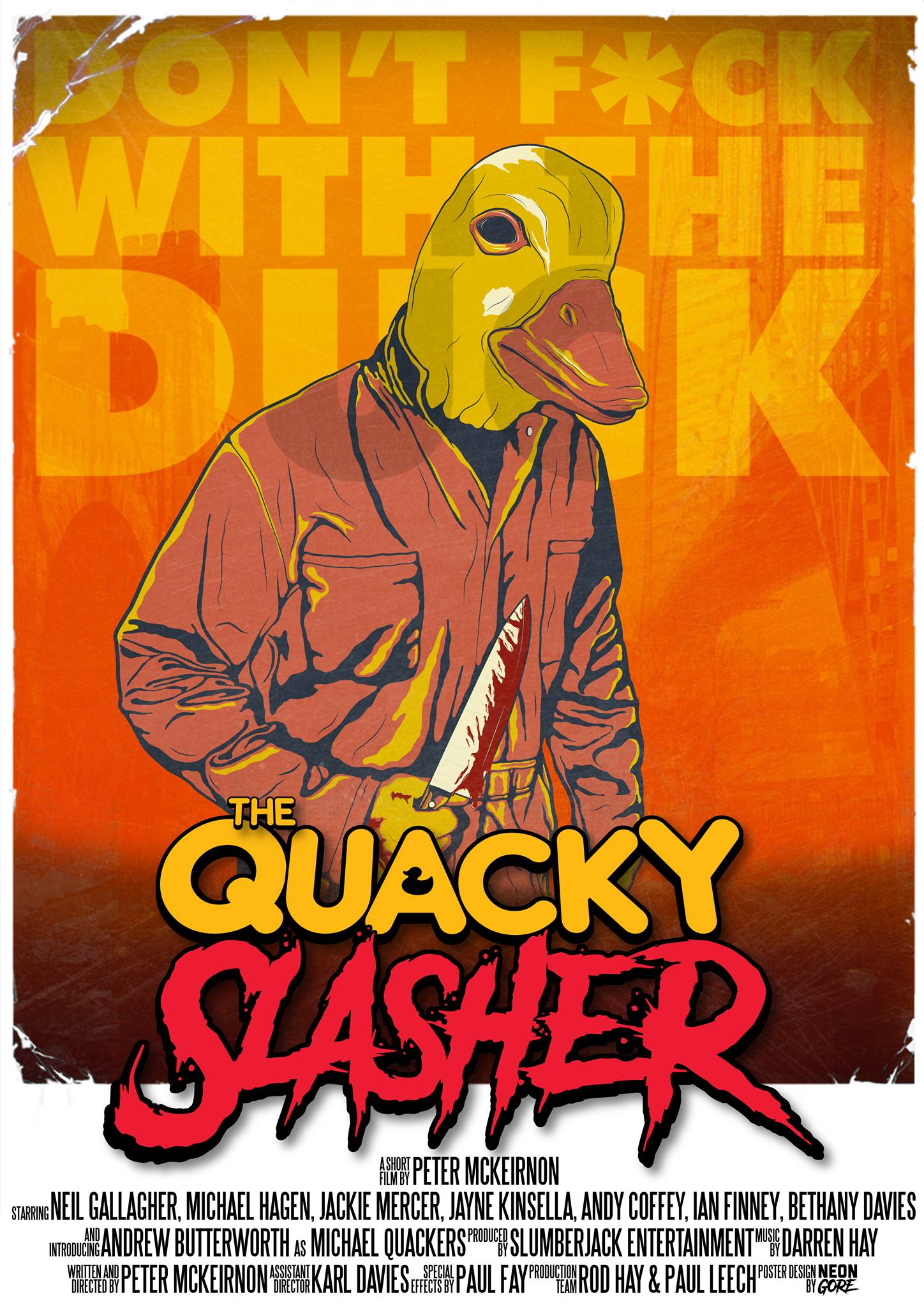
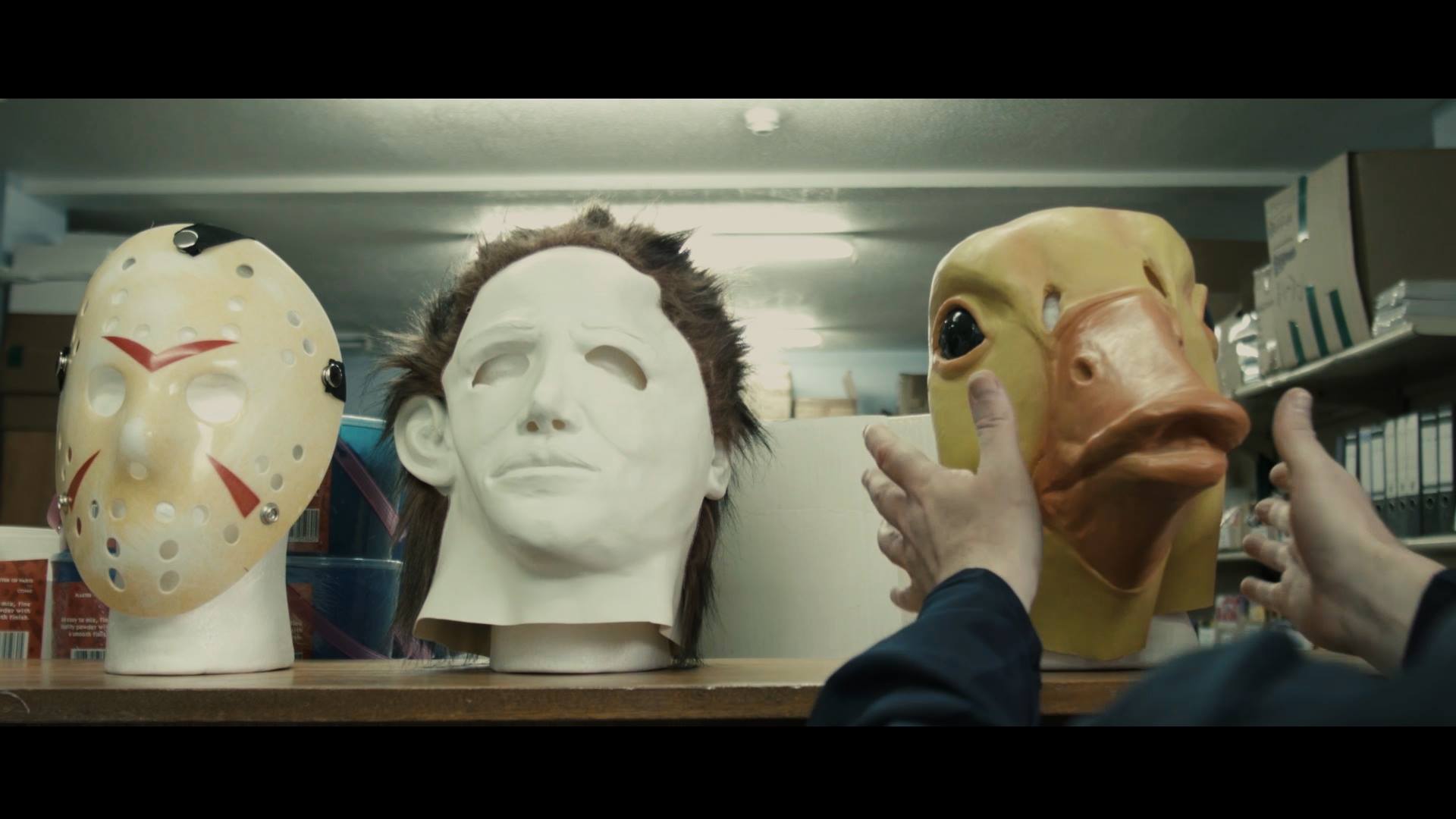
I only recently saw an article and trailer pop up on DreadCentral.com (my go to for most things horror related) for this zany Horror/Comedy coming to us from the UK. With its extremely eye-catching and colorful poster art, and the fun (albeit cliché) tagline, how could you not want to venture into this bizarre world of McKeirnon’s. The horror portion of the synopsis probably sounds familiar, and so it should. Everything from the name Michael, and the facility he inhabits, through to the jumpsuit and kitchen knife he wields, it’s all Carpenter’s iconic killer Michael Myers, only sporting a duck mask instead. Peter makes no apologies for paying homage to 1978’s “Halloween”, and he does so in such an obvious way (those details mentioned aside), e.g, the Myers mask on the shelf in the store. On a separate note, the comedic writing here relays a love of quintessential British comedy of years gone by. McKiernon’s cinematography is really clean and superbly framed, raising the production value of Quacky Slasher immensely. The film opens with a series of grand aerial shots, something unheard of in a film with a budget of under $1,500. Following those, there’s a nice tracking sequence as we see bodies strewn across the floors of a housing facility. The audio track is smooth and the 80’s inspired, synth and bass pumping score really gives the film extra life.

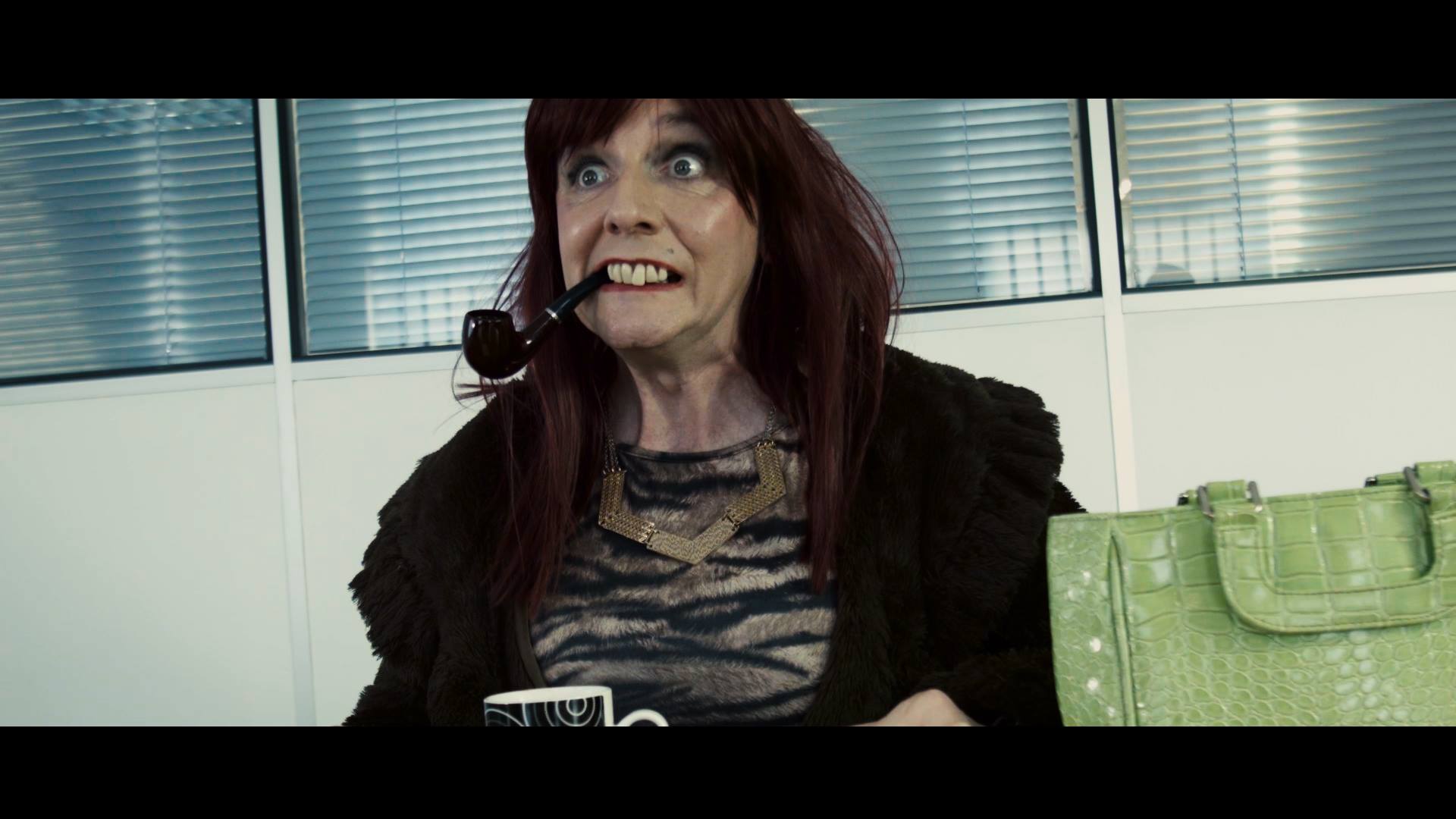
The Quacky Slasher presents with several different chapters, each introduced with a clever and entertaining anecdote in writing. My favourite is “Some time between 3:00 and 3:01” (haha) but the others are amusing too. Peter’s script plays far more as a comedy than a horror, and although I’d have preferred the latter, most of the humor does work. Think Edgar Wright’s, “Hot Fuzz” when it comes to our dogged detective pairing and then 90’s TV comedy, “Keeping Up Appearances” during the scenes where Michael’s mother (also played by Gallagher) answers questions from police. The delivery is contrasting, because while it’s quite over the top, the material is actually rather dry. Mrs Quackers (who can be seen in the image below), along with the two detectives, are definitely the funniest parts about The Quacky Slasher. Gallagher actually plays three roles in the film, the concerned “cockney” mother being the best of the bunch. He dons a long wig, a pipe and some extremely crooked teeth that see him talking like he’s got gigantic dentures in, it’s hilarious. There’s a straight forward but priceless line said to her son that goes something like “You’re just a mental in a duck mask”. The opening sequence with creepy store owner, Farraday (Finney) is good for a laugh and once the banter between Detectives, Dampsy and Mantelpiece (Kinsella and Mercer) begins, it gets even better. McKiernon utilizes some practical blood spray amidst a couple of the kills and even generates a decapitation, notwithstanding the lack of punch.

THE BAD

On the technical front there was really just the one inconsistency that I noticed. It’s evident in the first frame of the bar scene that when Johannson (played by Michael Hagen) is seated, there’s a really odd split screen type of shadow across part of his face (though it might have just been a glitch in the screener though). There’s a couple of sections of feeble and unnecessarily crass dialogue between Mr Mozzarella, Johansson and the somewhat simple man with Tourette’s Syndrome (again, played by Gallagher). If I’m honest, the trio of Johansson, The Wet Dream and the simple man, were characters that all partially spoilt this living up to its maximum potential. Peter wrote these three off-beat characters, none of which were really essential to the narrative and wore thin rather quickly. First you’ve got, Johansson, Mozzarella’s right hand man. Unfortunately Hagen delivers his lines like he’s doing a Russian impersonation of Sean Connery, and frankly it gets annoying. There’s a scene with him and Mozzarella standing by a river talking about the hatred/fear of ducks for about five minutes (at least that’s what I think it was I sort of tuned out). Then Andy Coffey plays The Wet Dream, who is a hitman of sorts sent to kill Michael Quackers. No doubt Coffey is just playing it as it’s written but as the character experiences what can only be described as spikes of internal dialogue/noise, he proceeds to convey that by making orgasm sounds and it’s extremely cringe worthy and awkward. Gallagher’s small part as an inflicted simple man felt a little redundant as well. As I stated earlier, I was hoping to see more impactful kills and further practical blood and gore effects, but I can acknowledge Peter’s budget limitations here.

Those of you who’ve been following Adamthemoviegod.com for a while would know by now that The Quacky Slasher is just the type of craziness I usually go in for. I’m glad I stumbled across this quirky Horror/Comedy from UK film maker, Peter McKiernon. The artwork and tagline are great and I love the intent behind the film’s horror element. If you’re a fan of John Carpenter’s iconic film you’ll find plenty of nods to indulge in, and if you like your dry comedy I can guarantee plenty of laughs. The camera work, audio levels and score are all really well-conceived given the budget limitations. A majority of the performances are solid and the film is at its most entertaining when Kinsella and Mercer are riffing off of each other and Gallagher is putting on a show as Mrs Quackers. There’s some blood spray and a decent body count but the film exhibits far more comedy than horror. Not all the dialogue works though, and I personally didn’t enjoy those three characters I mentioned earlier or the respective performances. Despite a couple of inconsistencies and those inferior characters occupying more screen time than warranted, The Quacky Slasher comes from the right place and remains a really fun short film that definitely calls for a bloodier sequel. Keep an eye out for this soon and check out the trailer below!

My rating for “The Quacky Slasher” is 7/10

Scarecrowd (Review)

SCARECROWD


THE SETUP

Bought to us from SRS Cinema and Melting Pictures, comes “Scarecrowd”, the debut feature film from Writer/Director, George Nevada. Scarecrowd is a part American, part Italian, Horror/Sci-Fi film about a local farmer named Tony Maio (played by Fabrizio Occhipinti), who mysteriously transforms into a demented mutant following a meteoroid crashing to earth. He disguises himself as a scarecrow and begins to rid earth of its humanity. The film also stars Gabrielle Bergere, Antony Ferry, Ruby Miller, Karen Lynn Widdoss, Frances Williams, Danny Willis and Raphael Willis.

THE GOOD

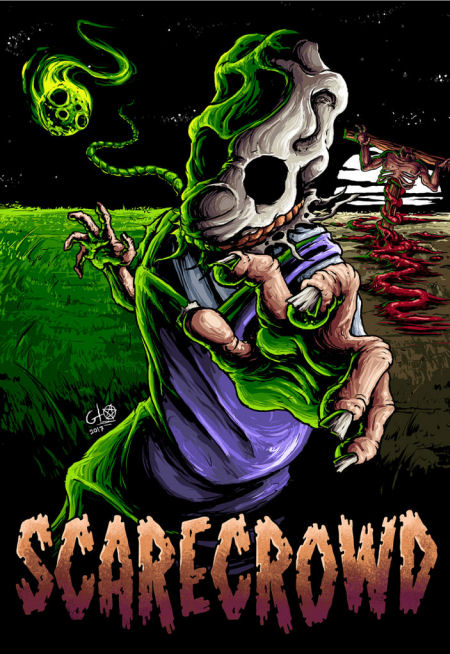
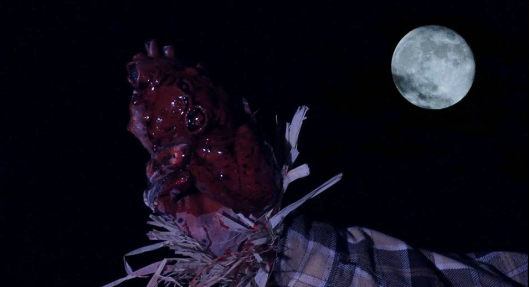
I stumbled across the IMDB page for “Scarecrowd” (formerly known as The Musk) a while back and after having networked with Antony Coia, who composed the films score, I jumped at pre-ordering the Blu Ray from the guys at http://srscinema.com/. I’m a huge advocate for low-budget and independent film making and it’s websites like the aforementioned who are releasing this type of content, so make sure you support them. I really like the Scarecrowd poster art and the Giallo inspired, psychedelic opening credits to the film. With a multitude of diverse influences, Nevada throws caution to the wind by engineering means with which to include said connections, even if the film doesn’t really call for it. The grindhouse element is present through Nevada employing a constant flickering and popping of the image. The exploitation on display with the way he lingers on female nudity, the voyeuristic component of the shower scenes comes to mind. The camera work is generally pretty good, a lot of simple still shots that coincide with the films small budget. Some of the low angle framing works nicely and there’s the odd highlight in editing, most notably when a young man’s bike headlight fades out and turns to a shot of the moon. A big portion of the film takes place at night and most of it was lit atmospherically. Coia’s heavy reliance on ambient synth in the mix complements Scarecrowd’s trace of 80’s nostalgia.

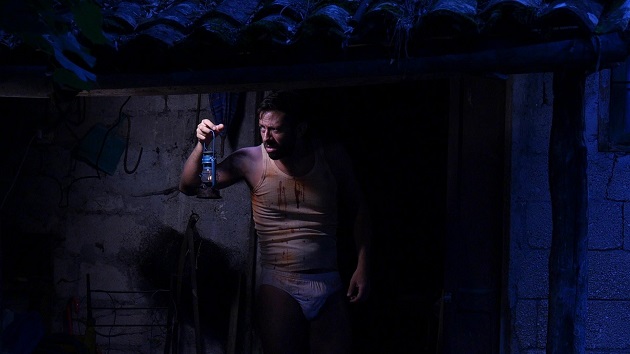
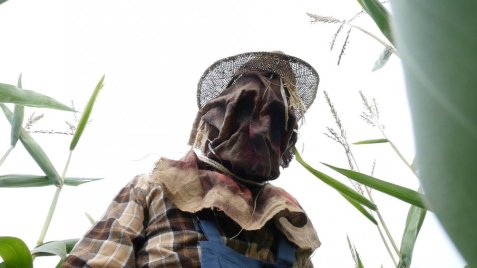
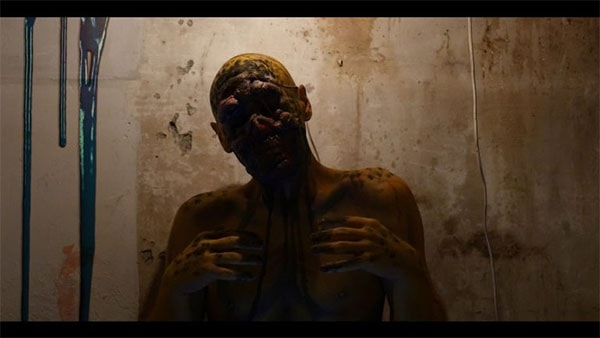
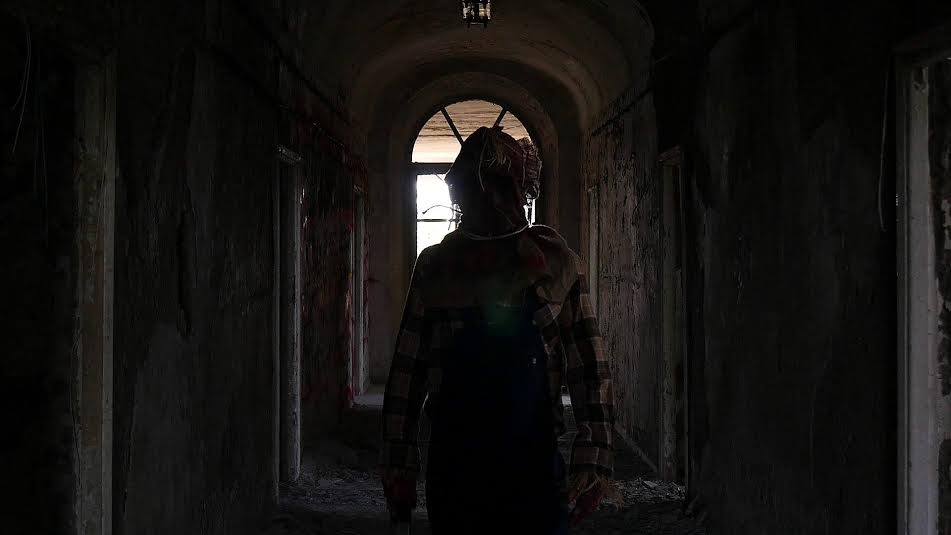
While the look of our newly modified farmer isn’t exactly original, calling to mind villains of films like “Scarecrows”, “The Redwood Massacre” and “Husk” (just to name a few), he’s still well conceived. Nevada does right by his core audience with the subsequent rules of Horror 101 by introducing an early kill and some nudity as well. Given the films short running time, the body count is relatively high and the blood flows adequately throughout. Most of the kills do occur on-screen and when they’re boasting their practical effects it’s usually resourceful. The tearing of flesh from the face of one unfortunate park-goer is probably the standout kill, though Nevada does attempt a decapitation, albeit it looks so-so. I have to commend George on his commitment to the visual effects side of the story. There’s a handful of scenes in space and others involving the crashing comet and its after effects, which generally look better than what you’d expect from a $40,000 film. The digital compositing is one of the hardest things to get right and even though some of it does look pretty cheesy, its ambitious all the same. There’s a hodgepodge of ideas at play in Scarecrowd but I’ll admit that the Psycho inspired shower scene was a good bit of fun. I say it’s inspired by, but let’s be honest, everything from the torn curtain, to the girls reaction and the crimson water gushing down the drain, it’s Hitch’s iconic scene straight up lifted, only void of suspense.

THE BAD

Like just about all low-budget films from first time filmmakers, Scarecrowd has plenty of technical issues and things that reek sub-standard. Some of the framing looks a little tight and uneven at times, only further compounded by some horribly bright and colorful filters that are used on several occasions as we watch from Tony’s point of view. The indisputable ADR (additional dialogue recording) that goes back and forth between actors, appears present in just about all the dialogue sequences (which fortunately are few and far between). The reaction times from those actors are quite poor, either that or the mix is just horribly off. A lot of the foley effects are problematic and seldom do they even match the desired action. E.g, Machete piercing skin sounds more like someone punching a bulky item. Despite the better than expected CG in early parts of the film, the digital blood was atrocious and some of the worst that I’ve seen in recent times. What makes matters even worse is that it wasn’t necessary. The practical gore wasn’t anything special but they used it during most of the films kills, so why not in all of it? Rig up some tubing and spray it back at the actor instead of editing trickling blood onto the lens. At one stage there’s even a CG car that a couple are sitting in, Why would you use a CG car for that!? At least I think it was CG, either that or someone did something very strange with the lighting and backdrop in post. This group of rather raw actors seemed determined to deliver their lines like those in a 50’s B movie and I really didn’t like it (as much as I like 50’s B movies). When you combine the delivery with the clashing ADR, you end up with a bunch of lowly performances right across the board. I did enjoy sections of Coia’s score but there’s also some very random blues music thrown in that really doesn’t fit.

Despite the speedy 77 minute run time, the pacing still seems sluggish, and if not for multiple scenes that run twice as long as they needed to, I very much doubt Nevada would’ve had enough content to warrant a full length film. There’s two repeated sequences of shots, one as Tony watches a young woman through the window and the other displays the women from the neck up as the water rolls down her. Later, horses are shown in an around a stable for what feels like five minutes, followed by a stable hand who sweeps hay and cleans up, I’m not sure what the point was of any of that. In the beginning of the film there’s a deceptively lengthy shot of a beautiful young girl frolicking through the cane fields, it’s pretty lame in all honesty. You’re sort of led to believe that someone is chasing her, though unlikely based on the way she’s dawdling along. Long story short, eventually something other than fooling around with her boyfriend happens, but with a hollow scream and a lack-lustre first kill, it’s somewhat of an uninspiring start to proceedings. Other specifics such as characters never running away from Tony with any sense of urgency tended to annoy me (unless of course you’re implying comedy), so to did a lot of the complete randomness within the film. There’s way too much patchwork in Scarecrowd that the movie loses all sense of its tone. From the graphic novel captions so far removed from the slasher sub-genre, to the bizarre science fiction sub-plot involving the entity wanting to re-populate its own planet with human seed. It all seems redundant to what is ultimately a revenge fueled slasher film about a simple downtrodden man. Cryptic other worldly narration, baffling salutes to The Wizard Of Oz and a random muscular camper playing Queen on a harmonica are just a few more examples of the obscurity in Scarecrowd, I ask again, Why? What drove all these ideas?

Scarecrowd is an extremely ambitious low-budget undertaking from a first time film maker in George Nevada, and although it wasn’t entirely what I expected or wanted, I have to commend the effort. It’s a hard film to categorize but it feels like a mix of the straight to video “Scarecrow” from 2002 and the popular 80’s film “Pumpkinhead”. I think there’s a few too many techniques on display here but the film works best with its grindhouse presentation. The camera work is solid, the lighting is nicely conveyed and the odd creative cut, if nothing else, makes for an interesting edit. Tony’s look and attitude as a killer works in the confines of a slasher flick and there is a high body count for those who get bored rather easily. The vfx aren’t too bad and a couple of sequences are pretty entertaining, especially when the practical effects are on display. Far too many of the technical aspects are well below par though and therefore become a burden to the end result. The colorful filters are amateurish, the ADR stands out like crazy, and chunks of CG blood and visuals are bordering cringe worthy. Unfortunately I couldn’t get behind any of the performances and the film continues to run over its previously established ground on more than one occasion. The mishmash of random events and character quirks took me right out of the film, and for that reason it’s not something I’d really recommend to fans of the slasher genre. That said, If you do like a mix of the bat shit crazies within your horror, you might find something here that I couldn’t.

My rating for “Scarecrowd” is 4/10